The key facts
- Cities occupy 3% of the land but account for 75% of carbon emissions
- In Shenzhen, buildings are designed for disassembly and reuse of materials
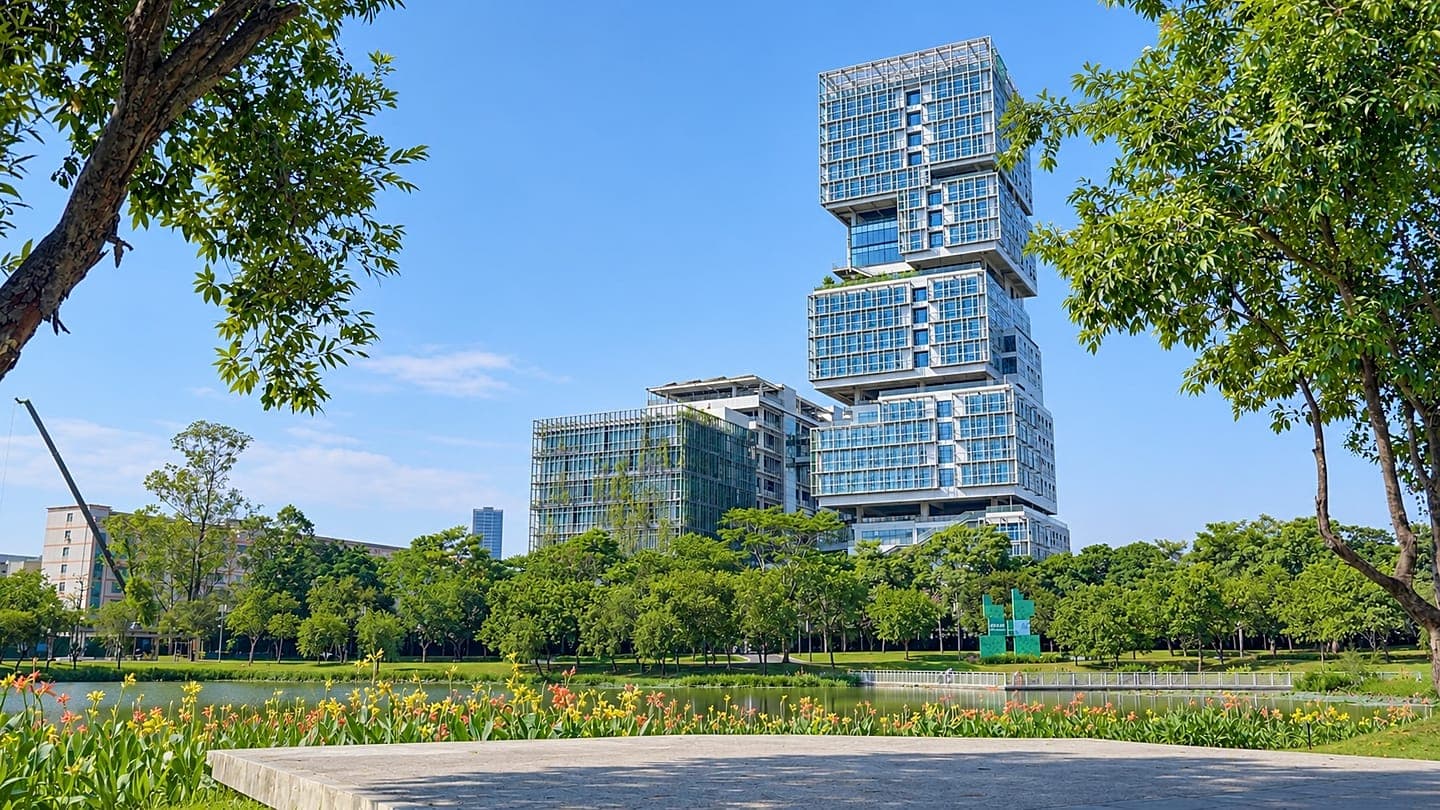
- In Guangzhou, the CCFED skyscraper with near-zero energy consumption is ventilated by the river breeze
Cities as the main source of emissions
Cities occupy only 3% of the Earth's land area, yet produce about 75% of carbon emissions — which is why reducing the 'carbon footprint' of urban development is seen as one of the key directions of climate policy. Euronews reported on how China is addressing this in a feature on eco-friendly buildings in Shenzhen and Guangzhou.
Shenzhen: buildings that can be taken apart
In Shenzhen, Professor Peter Russell of Tsinghua University's SIGS Institute explains an approach in which buildings are designed from the outset to be disassembled and their materials reused. According to him, this principle makes it possible to 'significantly reduce the building's environmental footprint over its entire life cycle': materials do not turn into waste during demolition but are returned to the construction cycle.
Guangzhou: a skyscraper ventilated by the river
Guangzhou showcases a different technique — a skyscraper with near-zero energy consumption that uses natural ventilation. 'If you switch off the air conditioners and open all the vents, the river breeze alone is enough to ventilate the entire building,' says Bai Wenhui, chief engineer of the CCFED science and technology innovation building. Reducing the load on air-conditioning systems directly cuts energy consumption, and with it the emissions associated with electricity generation.
What unites these projects
Both examples illustrate the same principle: cutting emissions not only through 'green' energy, but through the very design of buildings — from choosing materials suitable for reuse to avoiding energy-intensive air conditioning where nature does the work instead of technology. These are demonstration projects: the publication describes specific buildings and their creators' approaches, but contains no data on scaling such solutions to mass construction or on measured emission savings.