The key facts
- Driving limit — no more than nine hours in any 24-hour period, from 1 January 2027
- A heavy goods vehicle will now be defined as one weighing over 3.5 tonnes instead of the previous 2.5 tonnes
- After the crashes in Fujairah (14 deaths), the Ministry of Interior reminded the public of 11 violations and fines of up to 3,000 dirhams
New rules from January 2027
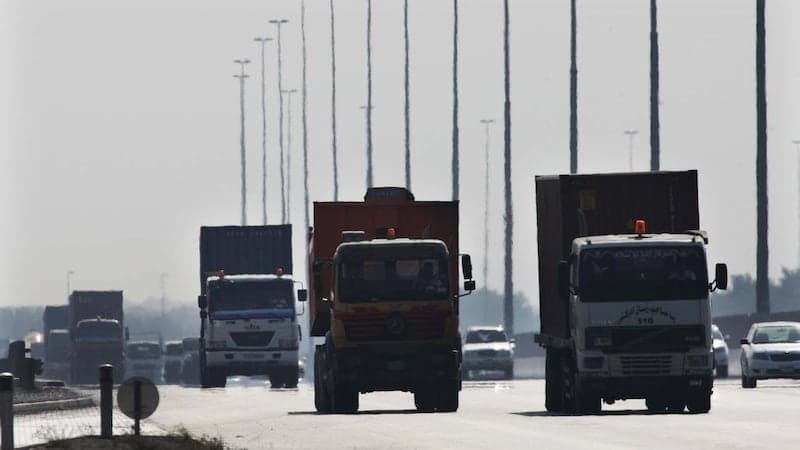
Drivers of heavy trucks and buses in the UAE will work under stricter rules from 1 January 2027. The relevant changes are set out in Cabinet Resolution No. 174 of 2026, as reported by The National. The key innovation is a limit on driving time: a driver may not operate a vehicle for more than nine hours within any 24-hour period, unless the Federal Traffic Council changes this limit. Formally, the rule applies to all drivers, but it will affect long-haul truckers and intercity bus drivers the most.
Changes to definitions and cargo transport rules
The classification of vehicles is also changing. A heavy goods vehicle is now defined as a vehicle weighing more than 3.5 tonnes unladen — the previous threshold was 2.5 tonnes. Buses carrying nine to 26 passengers are classified as light, and those carrying more than 26 as heavy. Cargo transport rules are being tightened: cargo must not extend beyond the dimensions of the heavy vehicle. Previously, oversized cargo could be transported with permission from the licensing authority, provided safety requirements were met and warning signs were displayed; separate rules continue to apply to special permits. Drivers are required to ensure that cargo does not endanger people or obstruct traffic, and to cover it against dust, sand and spillage onto the road. Carrying passengers in heavy trucks is prohibited — an exception is made for the owner's employees and those engaged in loading and unloading, for whom special seats must be provided. The previous restrictions remain in place: under Article 34, heavy vehicles and heavy buses are prohibited from overtaking one another in cities, and outside cities only if it does not create obstruction; where dedicated lanes exist, they must use them.
Context: crashes in Fujairah and a reminder about fines
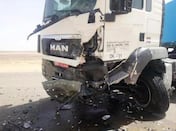
The article was published a week after the Ministry of Interior reminded the public about violations and penalties for heavy vehicles. The occasion was two crashes on the road to Fujairah on Thursday, 12 November, involving 18 cars and five trucks: 14 people were killed, and about 30 were injured. In the first crash, a car rammed a parked truck; in the second, a truck carrying two sea containers hit several cars and overturned. The Ministry of Interior listed 11 violations. For a crash in which the driver of a heavy vehicle causes his own or another vehicle to overturn, the penalty is a fine of 3,000 dirhams and a one-year licence suspension; the same applies to overtaking in an improper place. For cargo falling or spilling — 3,000 dirhams and 12 black points; for uncovered cargo — 3,000 dirhams. Loading that endangers others or damages the road will cost 2,000 dirhams and six points, and violating loading and unloading rules in designated areas — 1,000 dirhams and four points. Driving on roads not designated for heavy vehicles carries a 1,500-dirham fine and 12 points, and driving in prohibited zones — 1,000 dirhams and four points. For unsafe tyres — 500 dirhams, four points and a seven-day vehicle impoundment; for missing reflective stickers on the rear of trucks — 500 dirhams; for using construction equipment without permission from the licensing authority — 1,500 dirhams.