The key facts
- Turkish Minister Ibrahim Yumakli presented the Antalya Action Plan at a high-level dialogue at COP31 in Antalya
- According to him, fires affect about 261 million hectares of land annually, including 127 million hectares of forests, and the number of extreme fires could rise by 50% by the end of the century
- The plan includes four goals: transboundary response, early warning, landscape restoration, and access to financing and technology
Call to support the plan at COP31
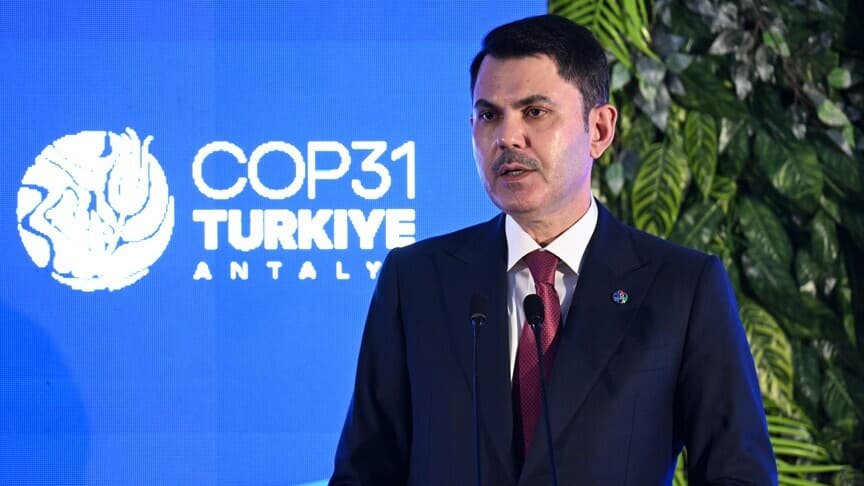
At the UN climate change conference COP31, taking place in Antalya, Turkey, the country's Minister of Agriculture and Forestry Ibrahim Yumakli called on the international community to support and join the Antalya Action Plan on integrated fire management. Speaking at a high-level dialogue on technologies and innovations for fire management in the blue zone, he stated that forest fires have ceased to be seasonal or local incidents and have turned into a 'year-round transboundary threat with extremely devastating consequences'.
Scale of the problem and its link to climate
Yumakli cited figures: fires affect about 261 million hectares of land annually, including 127 million hectares of forests, and by the end of this century the number of extreme fire events, in his words, could grow by 50%. He emphasized that fires are both a consequence and a driver of climate change: the climate crisis threatens forests, which are themselves part of the solution. The minister also noted that fire damage extends far beyond trees — soil ecosystems die, along with water-retaining roots, slopes that feed water resources, apiaries and pastures. According to him, land without trees does not retain precipitation, leading to floods, erosion and drought, and the consequences of a fire are felt for years after the flames have been extinguished.
Four goals of the Antalya Plan
Turkey, according to the minister, seeks to turn the commitments made at COP30 in Belem into concrete actions in Antalya: the plan, announced at the COP31 leaders' summit, is moving into the implementation phase. It includes four key goals — strengthening transboundary joint response capacity, building early warning systems based on science, data and innovation, promoting landscape management and restoration that takes local fire regimes into account, and facilitating access to financing, capacity building and technology, primarily for developing countries. The Global Fire Management Hub will serve as the plan's secretariat; Yumakli also thanked Brazil, South Korea, the Food and Agriculture Organization of the UN (FAO) and the Forest and Climate Leaders' Partnership.
Turkey's experience and existing initiatives
Among the international community's existing steps, the minister named the G7 Charter on forest fires (Kananaskis), the Istanbul Report prepared under Turkey's leadership, the Belem call to action at COP30 and the UN Environment Assembly resolution (UNEA-7). Their overall message, in his assessment, is: 'Solutions are within reach, but our approaches remain fragmented.' Yumakli said that after the devastating fires of 2021, Turkey rebuilt its firefighting system: it strengthened its aircraft fleet, drones and field forces, and also integrated observation towers with AI-based early detection systems, reducing initial response time to minutes. This year, according to him, 600 million seedlings and seeds have been planted in the country. 'Turkey is ready to share this experience with all partners within the framework of the Antalya Action Plan,' he added, expressing hope that the current conference will bring tangible results for forests.