The key facts
- 91.3% of the population (35.65 million) named Uzbek as their language versus 89.4% ethnic Uzbeks; Russian — 2% versus 1.6% ethnic Russians
- Uzbek predominates in all 14 regions, but in Karakalpakstan only 48.5% of residents indicated it
- 73.8% of those who indicated Russian live in Tashkent and Tashkent region; final data are promised by July 1, 2027
What the census showed
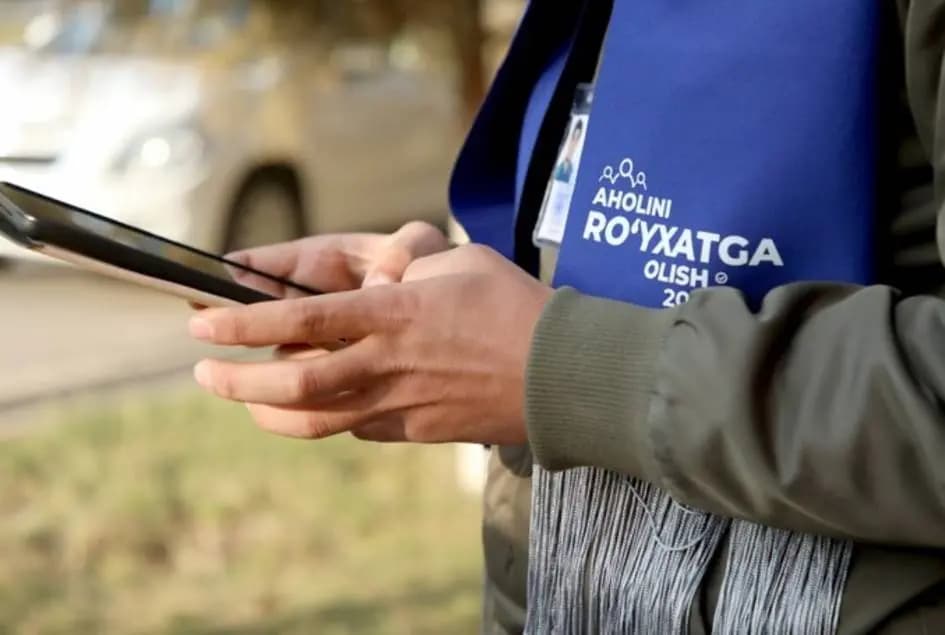
The National Statistics Committee published preliminary results of the population census, which was conducted from January 15 to February 28, 2026 (the reference date was January 15). As of that date, 39.05 million people lived in the country. Based on these tables, the Gazeta outlet prepared an analysis of the national and linguistic composition of the population by region.
Language and nationality diverge in both directions
34.9 million people (89.4%) identified themselves as ethnic Uzbeks, while 35.65 million (91.3%) reported proficiency in the Uzbek language — 753.4 thousand more. A similar picture holds for Russian: there are 606.5 thousand ethnic Russians (1.6%), but 787.5 thousand people (2%) indicated Russian as their language — 181 thousand more. For Karakalpaks, the difference also favors the language: 910.5 thousand speakers versus 841.4 thousand ethnic Karakalpaks.
Where the difference is reversed
For Tajik, Kazakh, Kyrgyz and Turkmen languages, the number of speakers is lower than the size of the corresponding ethnic group. There are 1.28 million Tajiks, but only 851.3 thousand indicated Tajik — a difference of 425.6 thousand. There are 707.3 thousand Kazakhs versus 561.3 thousand who indicated the language, 219.1 thousand Kyrgyz versus 79.6 thousand, and 194.8 thousand Turkmen versus 114.3 thousand. As Gazeta notes, the published tables do not allow determining which specific languages members of each nationality indicated: the distribution of languages by nationality is not provided in the statistics.
Regional picture
The Uzbek language predominates in all 14 regions, but with wide variation: in Khorezm, 99% of residents indicated it, in Andijan — 98.6%, in Bukhara region — 97.7%. The only region where fewer than half of residents indicated Uzbek is Karakalpakstan (48.5%): there, 39.3% named Karakalpak, 7.8% Kazakh, and 3.8% Turkmen. Next by share of other languages are Tashkent region (83.8% indicated Uzbek) and Tashkent city (84.7%).
Russian and Karakalpak languages: geography
The Russian language is concentrated in the capital region: in Tashkent, 394.1 thousand people indicated it (12.2% of the city's population), in Tashkent region — 187.4 thousand (5%). Together this is 581.5 thousand, or 73.8% of all those who indicated Russian in the country. An important caveat from the outlet: the table records only one language per person, so 787.5 thousand is not everyone who knows Russian, but only those who listed it as their primary language. The Karakalpak language, by contrast, is almost entirely concentrated in Karakalpakstan: 844 thousand of the 910.5 thousand speakers (92.7%) live there. The Kazakh language is distributed differently: nearly half of its speakers (277.2 thousand) live in Tashkent region, and another 167.2 thousand in Karakalpakstan.
What the data do not show and what comes next
The published tables provide a geographic picture but do not answer a number of questions: what language people speak at home, how many people are proficient in two or three languages simultaneously, how the linguistic landscape varies across age groups and between urban and rural areas. The results are still preliminary; the Statistics Committee plans to publish reworked and verified final data no later than July 1, 2027.