The key facts
- 19 slow worms were found in a water meter well in southern Poland, reported as venomous vipers
- The reptiles cannot be released right away: they have already entered winter torpor and would not have time to find a new shelter
- Slow worms are legless lizards, not venomous and beneficial for gardens: they feed on snails and invertebrates
False Alarm About Venomous Snakes
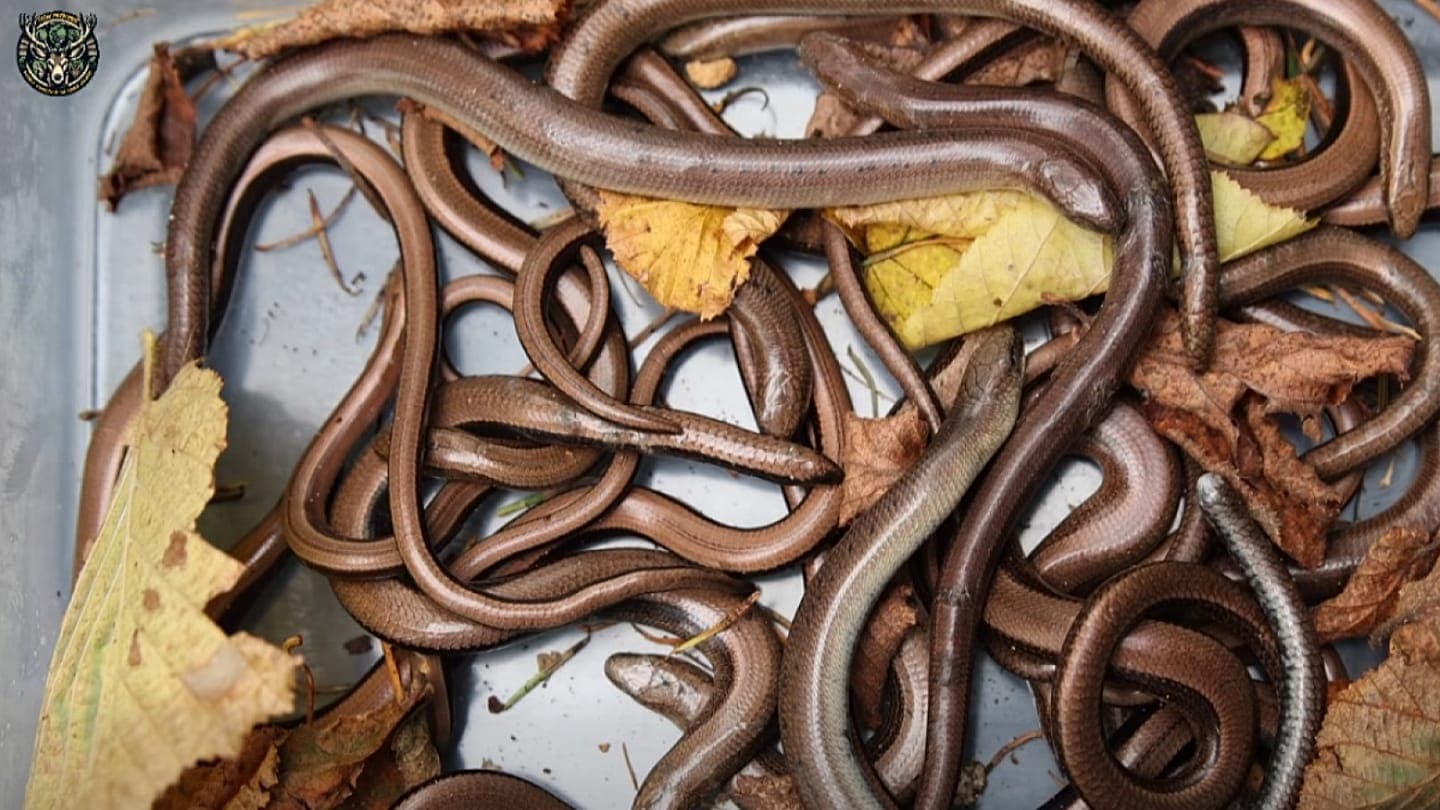
The Leśne Pogotowie wildlife rehabilitation center received a report that venomous vipers had taken shelter in an underground water meter well chamber in southern Poland. On site, rescuers found something different: 19 slow worms were overwintering there — legless lizards that are often mistaken for snakes because of their serpentine appearance.
Why the Reptiles Ended Up Trapped
The well suited the slow worms for overwintering: the cool and humid environment supported their winter torpor, while the concrete structure protected them from frost. The lizards easily climbed down the smooth vertical walls, but could no longer make their way back to the surface.
Winter at the Shelter, Return in Spring
Releasing the rescued animals into the wild right away was not possible: at this time of year the reptiles were already in a state of winter torpor, and in the cold they would not have had time to find a new shelter. Therefore, the slow worms were taken to a shelter, where they will be kept at a stable low temperature — this will allow them to continue their hibernation and reduce the risk of unnecessary awakenings. They will be able to return to the wild only in spring, when it becomes warm enough.
What Was Mistaken for Vipers
Slow worms are not venomous and pose no danger to humans. Moreover, they are beneficial garden dwellers: they feed on snails, earthworms, and other small invertebrates. Two species live in Poland — the common slow worm and the eastern slow worm; they are very similar, but differ, among other things, in the structure and arrangement of their scales, and many males of the eastern slow worm have characteristic blue spots on their backs. The latter species is found mainly in southeastern Poland.