The key facts
- IAEA reported on November 13 that it does not know the exact location of the IFEP plant in Isfahan or whether it contains nuclear materials
- Inspectors have been denied access to Iranian facilities since the US-Israeli strikes in June 2025
- The fate of approximately 441 kg of uranium enriched to 60% remains unconfirmed for over a year
Agency report in Vienna
The International Atomic Energy Agency stated it is becoming 'increasingly concerned' about the underground uranium enrichment plant in Isfahan, which Iran announced last year but has never allowed inspectors to visit. This is reported by The National and BBC, citing a confidential 13-page report distributed in Vienna on Friday, November 13. 'The Agency does not know the exact location of the IFEP [Isfahan Fuel Enrichment Plant], its safeguards status, or whether it contains nuclear material,' the document states. The Agency also could not determine whether any nuclear material had been diverted from peaceful activities.
Lost control over stockpiles
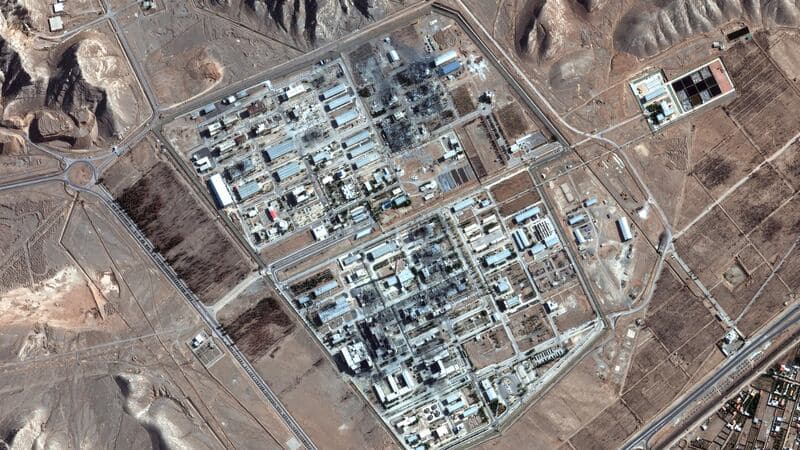
IAEA inspectors have been denied access to Iranian enrichment facilities since the joint strikes by the United States and Israel in June last year. Donald Trump then claimed that Iran's nuclear program was 'destroyed,' yet the fate of more than 400 kg of uranium enriched to near weapons-grade levels remains unclear. According to the Agency's assessment, prior to the strikes, Iran had accumulated approximately 441 kg of uranium enriched to 60% purity — whereas under the 2015 agreement, the limit was 300 kg and 3.67%. BBC clarifies that, according to the IAEA, a significant portion of the highly enriched uranium was stored in Isfahan, where strikes, particularly against surface structures, caused extensive damage; the condition of underground facilities remains unknown.
Statements from the parties
'More than a year has passed since the Agency lost continuity of knowledge regarding previously declared stockpiles of highly enriched uranium,' wrote IAEA Director General Rafael Grossi in the report, adding that the Agency cannot conclude that no diversion of nuclear material has occurred. Iran's National Security Council Secretary Mohsen Rezaei stated that the country would not allow 'a single particle' of enriched material to leave the nation. Foreign Minister Abbas Araghchi, for his part, urged the Agency and the UN to condemn the US offer of a $20 million reward for information on Tehran's nuclear program; the State Department clarified that this refers to data on facilities, equipment, and personnel, including scientists and their locations. Washington insists that the nuclear issue must be part of any negotiations with Tehran regarding the cessation of the war initiated by Israel and the US in February.
Context: the IFEP plant and inspector access
Iran notified the IAEA of its plans to establish the Isfahan Fuel Enrichment Plant on June 12, 2025 — one day before the start of Israeli strikes, to which the US later joined. Iran initially agreed to allow inspectors onto the site, but the visit was cancelled after the attacks began. In its latest report, the Agency emphasized that the lack of information on nuclear materials and access to verify them constitutes a 'serious proliferation concern' that must be addressed 'with the utmost urgency.' This is nearly a repetition of a similar appeal from a year ago: at that time, the IAEA reported having inspected only a portion of the 13 nuclear facilities 'unaffected' by the strikes and none of the seven damaged ones. Iran, as before, denies any pursuit of weapons and describes its program as exclusively peaceful.