The key facts
- Phota Labs has released a free iOS app with an AI photo assistant that fixes the shots themselves rather than just applying filters
- Founders Cecilia Zhang and Zach Xia worked at Adobe on Project Indigo, Lightroom, and Photoshop
- The company raised $5.6 million in seed funding led by a16z; plans include an Android version and a freemium model
What the App Offers
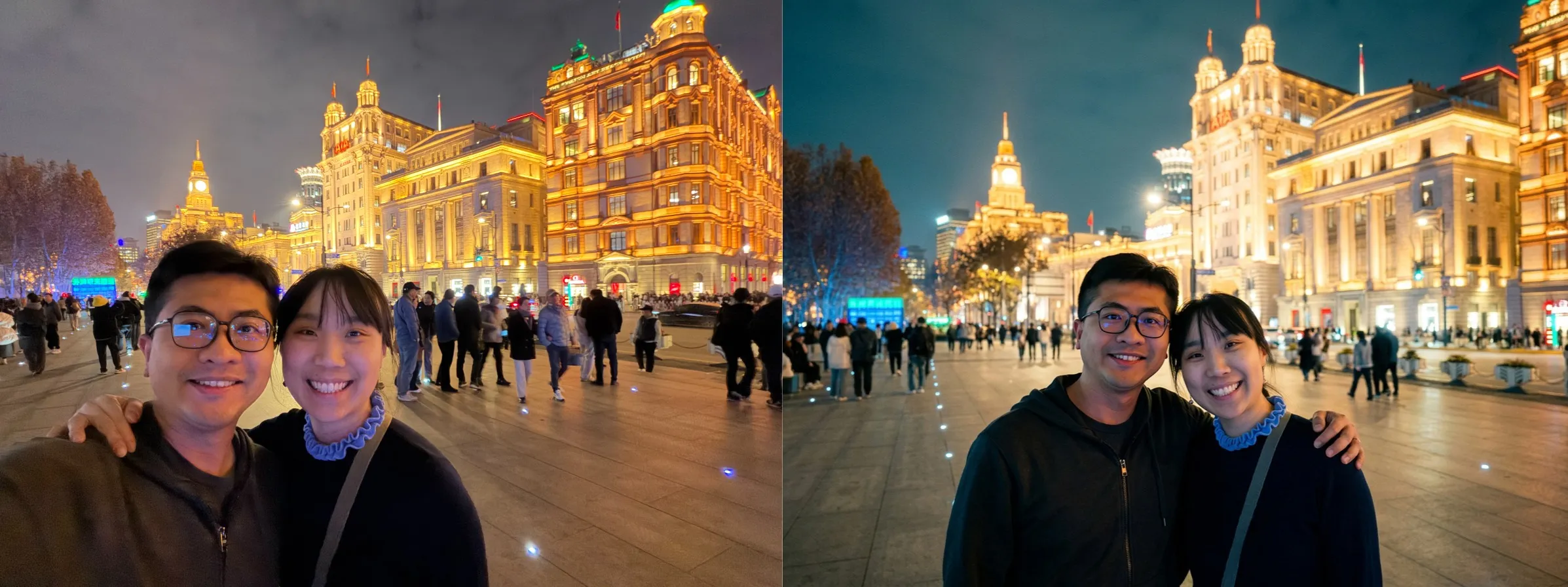
The startup Phota Labs has launched an iOS app positioned as a 'personal AI photo assistant': it automatically turns everyday snapshots into shots that look like the work of a professional photographer. Unlike conventional editors, according to the founders, the service does not merely enhance an already-taken photo but fixes the shot itself — for example, turning a wide group shot into a portrait or a selfie into a regular photo. The user chooses a processing style: from subtle edits that preserve the original lens and composition to more radical transformations with a 'fisheye' effect, different angles, and perspectives.
A Focus on Preserving Appearance
The founders emphasize the difference from generative tools like ChatGPT: those, they say, often distort a person's appearance, especially in blurry shots, because they do not know what the person actually looks like. Cecilia Zhang said the company built its own personalization technology that 'learns people's appearance and preserves it through any photo transformations.' Zach Xia added that the startup is 'obsessed with authenticity': the goal is not to create an AI image but to make 'the best photographs of the same moment.' Images processed by the app carry invisible watermarks that mark them as AI-modified when published on social media.
Team, Funding, and Plans
Founders Cecilia Zhang and Zach Xia met at Adobe, where they worked on computational photography products, including Project Indigo, Lightroom, and Photoshop. Last year the company raised $5.6 million in seed funding led by a16z. Initially, Phota Labs is targeting people who take a lot of photos and share them on social media but do not want to spend time editing; in the longer term, the founders see a broader audience — from older people creating photos for their grandchildren to parents publishing family albums. The app has launched for free to build a user base; a freemium model and an Android version are planned next. According to the founders, beta testers perceived the results as photographs of real memories, and some users began taking more photos knowing the shots could be improved later.