The key facts
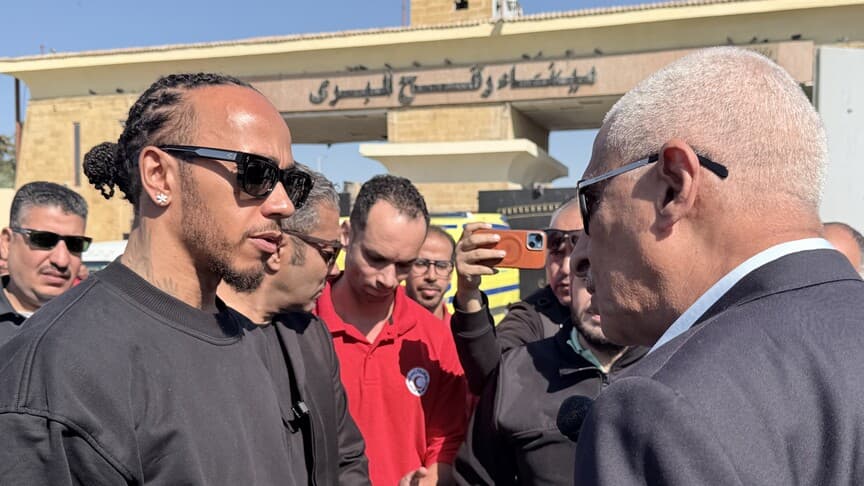
- Hamilton visited the Rafah crossing and the Egyptian Red Crescent warehouses in El-Arish
- According to him, aid trucks are regularly denied entry to Gaza or delayed; the first driver had waited more than 12 hours
- He called 'insane' the reasons for refusing entry to sleeping bags, first-aid kits, medical equipment, wheelchairs and footballs
Hamilton at the Gaza border: 'Let the aid trucks through'
Seven-time Formula 1 champion Lewis Hamilton, who races for Ferrari, visited the Egyptian side of the Rafah border crossing and then inspected the Egyptian Red Crescent warehouses in El-Arish, where, he said, he was told about the preparation and coordination of humanitarian deliveries to Gaza. On Instagram, the driver called 'three years of Israel's genocide in Gaza' horrifying, condemned the denial of freedom, security and dignity to Palestinians, and added that 'no person should be treated as if their life matters less'.
What the driver saw at the border
Hamilton described walls stretching for miles that, he said, were built to keep Palestinians contained, and compared the situation to an 'open-air prison'. He reported that food trucks are lined up and ready to enter Gaza, but are regularly denied entry or heavily delayed: the first driver in the queue, whom he spoke with, had already been waiting for more than 12 hours. At a nearby logistics centre, he praised the work of humanitarian staff but said he had seen refusals to allow items of basic necessity for what he considered 'insane' reasons — among them sleeping bags, first-aid kits, medical equipment, wheelchairs and even footballs for children.
Call to fulfil ceasefire obligations
'Israel must fulfil its ceasefire obligations and let the aid trucks through. No excuses,' Hamilton wrote. He also urged people not to turn away from the suffering of Palestinians and to turn feelings of helplessness into action: 'I don't want us to become accustomed to their suffering.' The driver's statements remain his personal position; his descriptions of the situation at the border are his own observations based on accounts from drivers and humanitarian workers.