The key facts
- Jensen Huang, who led Nvidia for more than three decades, resigned from all posts with immediate effect
- CFO Colette Kress became interim CEO; the board is searching for a permanent successor
- Nvidia's market capitalization fell to $4.2 trillion, with shares losing more than 9% in premarket trading
- Nvidia's market capitalization fell to $4.2 trillion, with shares losing more than 9% in pre-market trading
Resignation after a second scandal
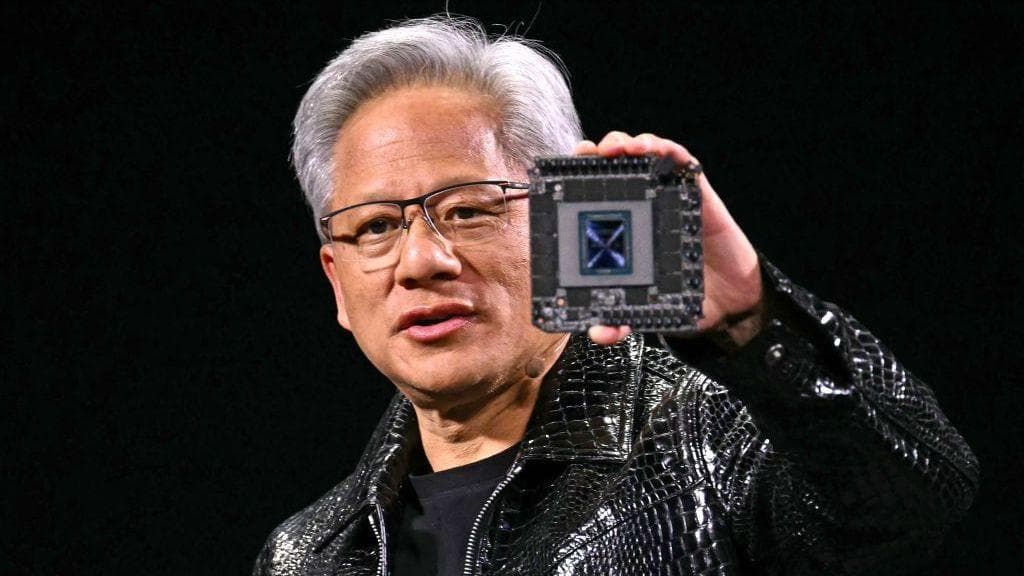
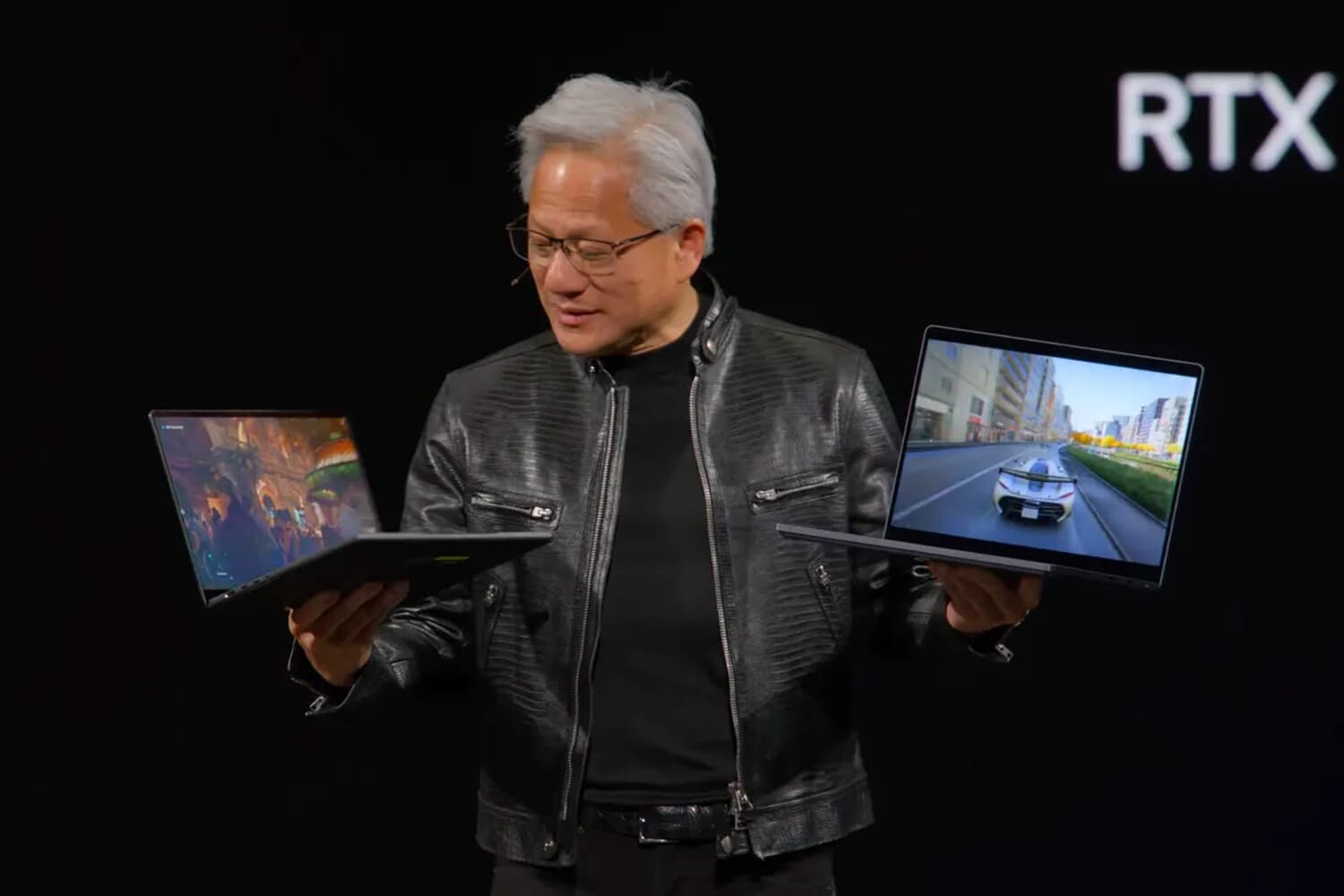
Nvidia's board of directors met on Wednesday evening to decide the fate of CEO Jensen Huang, after reports emerged of his second extramarital affair — this time with a company employee. On Thursday morning the company, the world's largest chipmaker by market capitalization, announced that Huang was stepping down from the posts of president, CEO and board member with immediate effect. Vice President and CFO Colette Kress was appointed interim head. Under Nvidia's charter, the 11-member board may remove the chief 'with or without cause' by a majority vote. The New York Times was the first to report the latest scandal: the 63-year-old Huang, married since 1985, allegedly had a relationship with a senior employee who reported directly to him. Both are married. Deutsche Welle writes about this in its analysis of the situation.
The Chinese trail: Megaspeed and espionage suspicions
The second exposé came just three days after Huang admitted to an affair with a Chinese woman whom US intelligence services consider an agent of China. The woman, known as Alice H., is a top manager at the Singapore-based cloud company Megaspeed, which operates data centers for artificial intelligence in Southeast Asia and is a major Nvidia customer. The US government is investigating the startup on suspicion of secretly shipping some Nvidia chips to China, bypassing American restrictions on the export of high-tech semiconductors. These processors are used to train and run large AI models. Megaspeed denies the accusations and has promised to cooperate with the investigation; H. herself has been barred from entering Singapore and Taiwan. After the first scandal, the board still backed Huang, but in the view of market observers, the second episode inflicted too much reputational damage on one of the three largest companies in the world by market value.
Who will succeed him and what the company stands to lose
Huang had no formal succession plan — citing The Wall Street Journal, DW notes that this is why Nvidia hastily appointed Kress as interim head. According to Bloomberg, the board is working with consultants to find a permanent successor; possible candidates mentioned include Kress, other top managers, and members of Huang's family — daughter Madison (senior director of product marketing) and son Spencer (who works in the robotics division). On India's CNBC-TV18, Jeffrey Sonnenfeld of the Yale School of Management cited former Apple chief Tim Cook and former Google chief Eric Schmidt as options. The scandals have already hit the company's market value: since Sunday, when news of the first affair surfaced, Nvidia's market value has fallen by more than $600 billion — to $4.2 trillion. On Thursday, the shares lost more than 9% in premarket trading after a 10% drop earlier in the week, even though just a month ago they hit record highs amid tech giants' billion-dollar spending on AI infrastructure. Many analysts expect only a minor impact on near-term sales due to enormous demand for advanced chips. Yorkville analyst Dan Ives said that although Huang is the 'heart and lungs' of the Nvidia story, the company and its cutting-edge GPU technologies will keep operating, and his departure does not change the firm's dominant position in the 'chip race' of the AI revolution. Analysts see the main long-term risks in strategy and execution: it was Huang who decided which ideas the company would make big bets on. His sudden departure is considered destructive for relations with AI giants, Taiwan's TSMC and foreign governments — especially China: Huang was Nvidia's chief lobbyist on export rules, and last year he persuaded President Donald Trump to ease some restrictions for China.
A 'rock star' without a succession plan
Huang was often called a 'rock star' among CEOs — for his leather jackets instead of suits. Like Elon Musk at Tesla and SpaceX, he was considered a 'key person risk': Nvidia's public image, strategy, and technical decisions were closely tied to him personally. He led the company for more than three decades, personally took part in decisions on product architecture, and insisted on a flat management structure — about 60 executives reported directly to him. Investors, according to DW, have little idea how the company will operate without him. At the same time, Nvidia is no longer the startup founded in 1993: the company has accumulated deep expertise in chip and software design, and its profit last year exceeded $120.1 billion. Some analysts believe that the company's central role in building AI infrastructure reduces dependence on Huang's day-to-day involvement.
Background: the US-China AI race
Huang's departure comes amid an intensifying US-China struggle for dominance in AI. Chinese models, which had lagged behind ChatGPT and Claude, largely closed the gap on benchmarks after updates from DeepSeek, Alibaba, and Moonshot, and often outperform their American rivals on price and speed; Beijing is investing in its own chips and data centers to reduce dependence on American hardware. The US restricted exports of Nvidia's most advanced AI chips to China, which, according to DW, only slowed but did not stop Chinese ambitions. On Thursday, Reuters reported that Chinese AI companies are trying to rent Nvidia-based computing capacity in data centers outside China, fearing further tightening of restrictions. The same day, Beijing accused the US of using espionage allegations around Nvidia as a pretext for a technological 'blockade' of China. The topic is expected to be one of the main issues at the Trump-Xi Jinping talks at the APEC summit in Shenzhen next week.