The key facts
- School heads report removing Walliams' books from libraries; the school leaders' association asks the government to issue unified guidance
- Waterstones, TG Jones and The Works have stopped sales, and HarperCollins ended its relationship with the author in September
- Kent and Surrey are not removing the books, Camden has put them into storage; Walliams rejects the allegations
What happened
On Tuesday, ITV News and The Guardian published reports in which several women accused David Walliams — the author of the bestsellers Gangsta Granny and Billionaire Boy, which have sold more than 50 million copies — of sexual harassment, including 'grooming' of teenagers. Walliams rejected the allegations: in a letter to journalists published by the newspaper, he stated that he is 'not a sexual predator' and has not 'broken the law'.
Schools and publishers respond
Some schools have already removed Walliams' books from their libraries. Paul Whiteman — no, the general secretary of the Association of School and College Leaders, Pepe Di'Iasio, said that head teachers are 'making difficult decisions' about whether to keep the books on the shelves, and called on the government to issue nationwide guidance so that the situation is not handled differently by individual schools. Darren Morgan, head teacher of Kings Road Primary School in Manchester, said he had removed Walliams' publications: the books had helped promote reading, but with allegations of this kind it is difficult to keep them on the shelves. Steve Chalke, head of the Oasis Academies network (more than 50 schools), noted that children see news about the author anyway, and encountering his name or photograph on a book in the library could be distressing for some children.
Shops and libraries: different approaches
The Waterstones, TG Jones and The Works chains said they will no longer sell Walliams' books, and the publisher HarperCollins had already ended its relationship with him in September. Public libraries, where collection decisions are made by local councils, are acting differently. Kent County Council said it does not plan to withdraw the books: its starting position is that books are available to readers as long as their content does not break the law, and collection decisions are not made through 'blanket bans' on individual authors. Surrey County Council noted that demand for Walliams' books has 'fallen significantly in recent years', but they 'are not illegal' and remain available for loan. The council of Camden in London, by contrast, has put the books into storage, explaining this by its desire to make the borough safer for women and girls. The professional librarians' association CILIP acknowledged that handling complaints about books is an 'extremely difficult and stressful situation' for staff.
The debate over whether to remove the books
The writer Chloe Combi, who studies Britain's younger generation, believes that banning Walliams' books is inappropriate: important conversations about what happened could be 'swept under the carpet'. In her words, she sympathises with schools and bookshops dropping the author as an individual decision, but 'none of this will erase what happened' — it would be wiser to talk to children about it openly, including on the part of parents. The UK Department for Education was asked for comment but had not responded at the time of publication.
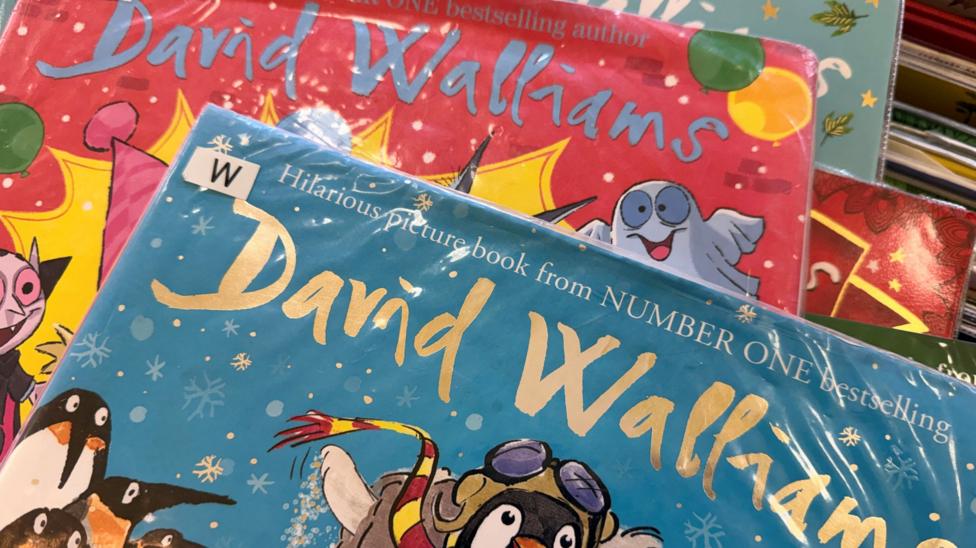 Image source, Reuters