The key facts
- Turkey presented a strategy for reducing emissions in transport and telecommunications at COP31 in Antalya
- By 2053, 28,500 km of railways and 10,000 km of highways are planned
- The aviation network is to grow to more than 60 airports and up to 400 million passengers per year
The strategy presented in Antalya
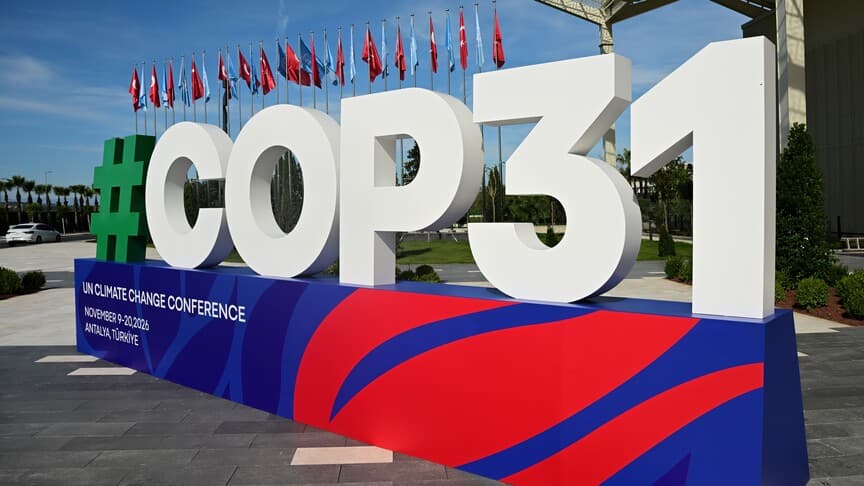
At the 31st Conference of the Parties to the UN Framework Convention on Climate Change (COP31), currently taking place in Antalya, Turkey presented a strategy for reducing emissions across all modes of transport — road, air, sea and rail — as well as in telecommunications networks. This was announced by Minister of Transport and Infrastructure Abdulkadir Uraloglu in an interview with the Anadolu agency, which was the first to report on his remarks.
Targets up to 2053
The minister named concrete benchmarks for the decades ahead: by 2053, the country's infrastructure network is to grow to 28,500 km of railways and 10,000 km of highways. Under the plan, the national aviation network will expand to more than 60 airports with a potential capacity of up to 400 million passengers per year. In civil aviation, according to Uraloglu, Turkey is working on integrating renewable energy, as well as on expanding the domestic production, use and export of sustainable aviation fuel (SAF). He also mentioned investments in telecommunications, including 6G development, and in wildlife overpasses that allow wild animals to move between parts of ecosystems.
Timelines and the role of climate platforms
Uraloglu suggested that rapid technological development and transformation could allow Turkey to reach its 2050 and 2053 targets ahead of schedule. In his words, 'everyone must contribute to the climate agenda,' and platforms such as COP31 are important for ensuring that economic growth aligns with environmental commitments. The report did not mention any legally binding decisions adopted or funding allocated — what was presented were precisely long-term goals and current lines of work.