The key facts
- Basim al-Badri, head of Iraq's National Security Service, did not rule out an internal attack by Kurdish groups on Khor Mor; Kurdish deputy minister Ahmed Mufti called this 'nonsense'
- Prime Minister Ali al-Zaidi ordered an investigation after Sunday's attack
- According to Crescent Petroleum, about 10 million people in Iraq were left without electricity and cooking fuel, and the price of electricity more than doubled
Dispute over the attack theory
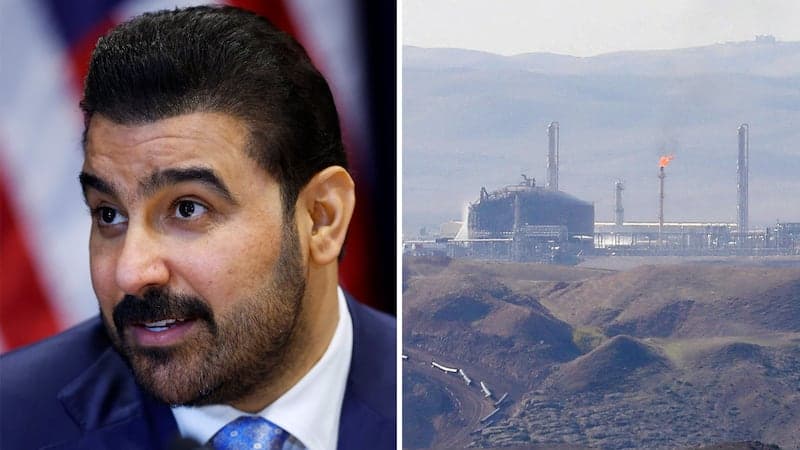
Ahmed Mufti, deputy minister of natural resources of Iraq's Kurdistan Region, rejected suggestions that a Kurdish group could have been behind the strike on the Khor Mor gas field. Speaking on a Chatham House think tank panel and in an interview with The National, he called such claims 'nonsense'. The remarks were prompted by statements from Basim al-Badri, head of Iraq's National Security Service, who earlier the same day said the government does not rule out an internal attack on the facility by feuding Kurdish groups.
Investigation and call for caution
Mufti stressed that he trusts the investigation which Iraqi Prime Minister Ali al-Zaidi ordered after Sunday's attack. 'We are open to handing over all relevant data to the party conducting the investigation,' he said. According to him, he was surprised that such a categorical statement could be made within 24 hours of the investigation beginning: 'I consider this emotional. Let's wait for the conclusions.' He advised everyone to refrain from statements until the investigation is complete.
Impact on power supply
According to Crescent Petroleum, which operated at the field, the attack left about 10 million people in Iraq without electricity and cooking fuel, and the price of electricity more than doubled. The company's chief executive, Majid Jafar, noted that this was the 12th attack on the facility during its existence, but one of the most severe: 'This latest one was a real shock, especially at a moment when the broader war seems to be winding down. We saw significant damage to production capacity. We are still assessing the scale. There is a lot of repair work ahead.' At the same time, he praised the Iraqi government's response and welcomed al-Zaidi's swift dispatch of an investigative commission.
Context and expectations for the investigation
Al-Badri's comments came against the backdrop of the Iraqi government's efforts to disarm pro-Iranian Shia militias, which, it is noted, attacked energy facilities in the Persian Gulf region in response to the US war in Iran. Sources in the oil and gas industry of Iraqi Kurdistan, interviewed by The National, said that Khor Mor's operators are able to determine the direction from which the drone arrived; one of them called al-Badri's words 'truly insulting — it's like saying the sky is green'. Jafar recalled that in June al-Zaidi met with oil and gas companies, promising them protection and compensation, followed by an official letter from the Iraqi government confirming these guarantees. 'This time we hope to see, unlike previous attacks, concrete steps on protection, identification and holding the perpetrators accountable,' he said.