The key facts
- Scammers spoof real Interior Ministry numbers, put the official emblem on their avatar, and appear on video calls in uniform
- 'Safe accounts' do not exist at the Central Bank, the Interior Ministry, or in banks
- A nondisclosure agreement cannot be issued over the phone: it is signed in person and in writing
The request gives the scammer away faster than the phone number
Phone scammers posing as police officers have learned to imitate almost everything: spoofing a real number from the ministry, putting the official emblem on their avatar, and even appearing on video calls in uniform. According to Life.ru, police in Primorye warned that scammers take photos of real officers from official ministry websites and use them in their messenger profiles. So the uniform, the emblem, and a familiar duty-officer number on the screen guarantee nothing — the Interior Ministry notes that scammers imitate calls from numbers listed on the ministry's official websites. What gives the fraudster away is not the voice or the credentials, but what they ask for. Life.ru has compiled five such requests.
Money, codes, and apps
The first and most common request is money: transfer it, withdraw cash and hand it to a courier 'to detain the criminals,' or pay to close a criminal case against a relative. Police may investigate the circumstances of a theft, but they never demand that you transfer your savings to a 'safe account' or hand them to a courier. Such 'safe accounts' — also called special, reserve, or protected accounts — do not exist at the Central Bank, the Interior Ministry, or any regular bank; any such account belongs to scammers.
A two-act performance
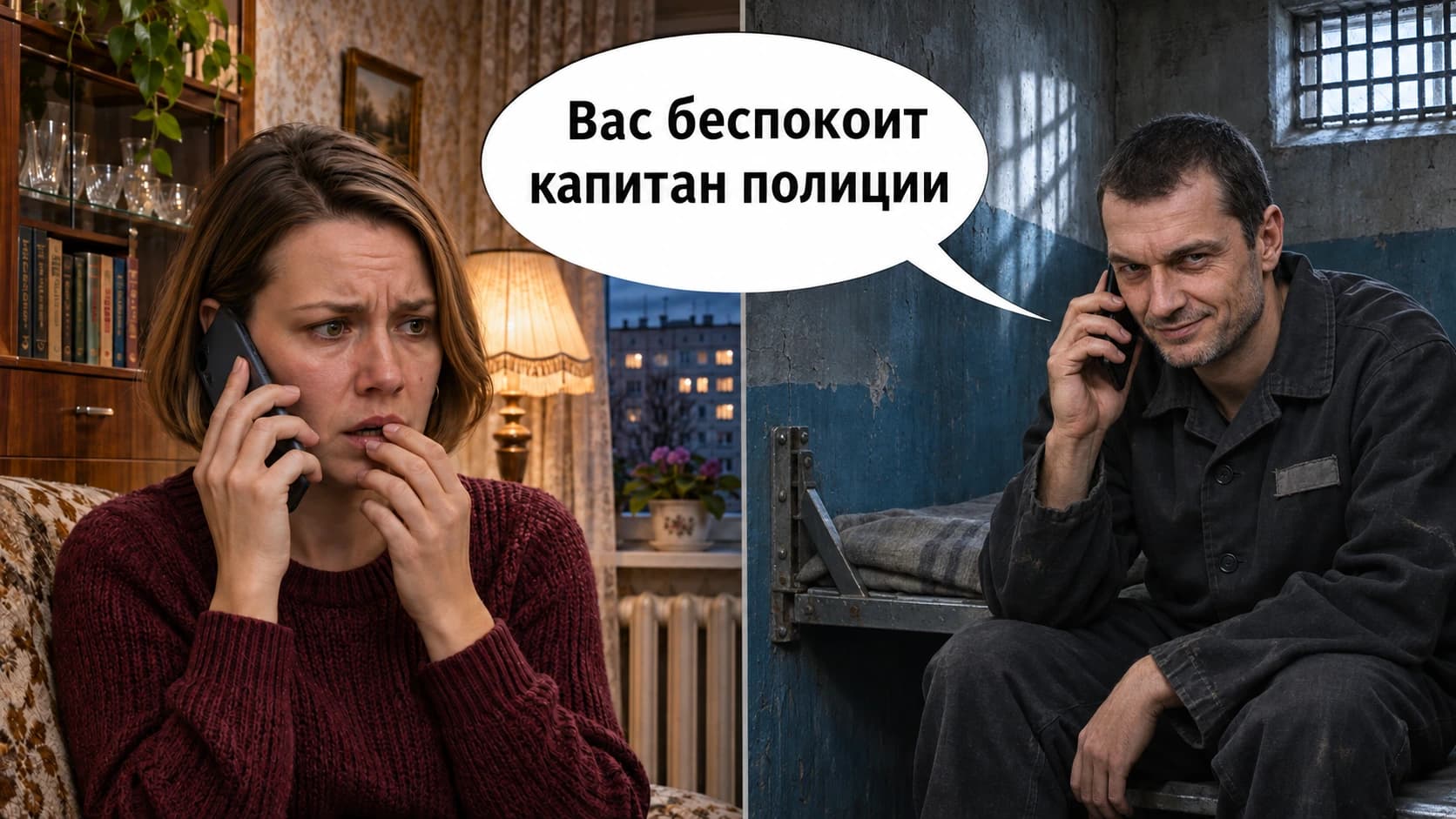
The trick is that the 'police officer' often does not appear first. First, a 'bank employee,' a 'notary,' or a 'Gosuslugi specialist' calls and reports a loan taken out in the victim's name or a suspicious power of attorney, and a few minutes later the 'police' confirm: it's serious, you need to act. In this scheme, the fake officer plays the role of a savior, which is why people trust him more readily than the first caller.
The SMS code and remote access
A request to dictate an SMS code sounds routine, but that code is the key to your banking app or your Gosuslugi personal account. The Interior Ministry warns outright: official agencies never ask for confirmation codes or access to your device. The request almost always comes with urgency — the code is needed 'right now.' The second typical request is to install a program presented as an antivirus, 'Central Bank protection,' or an app for communicating with an investigator, or to enable screen sharing. In reality, it is a remote-access program: the scammer sees your screen, reads your messages, and logs into your banking app himself. An interrogation via video link is possible, but only through official ministry systems under the procedure established by the Criminal Procedure Code — an unexpected video call in a messenger is no substitute for that process.
'Secrecy of the investigation' and what to do
The final request is 'don't tell anyone': supposedly a nondisclosure agreement, and sometimes even a ban on calling your bank, because 'bank employees are involved in the case.' A real nondisclosure agreement is a paper document signed in person by participants in a criminal case; it cannot be issued over the phone. The purpose of the ban is to cut the victim off from relatives who might stop the transfer. If the call is already underway, the advice is simple: hang up without explanations, don't call the same number back, dial 102 from your mobile, or find the duty-officer number on the official website of your region's Interior Ministry. If you've already given out the code or transferred the money — immediately call your bank using the number on the back of your card, block the card, and file a report with the police: the faster you act, the better the chances of stopping the transaction.