The key facts
- 81-year-old M John Harrison has become the oldest Booker Prize laureate in history, overtaking Margaret Atwood
- The novel The End of Everything is published by Serpent's Tail, runs 198 pages; the prize is £50,000
- The jury led by Mary Beard unanimously chose the book from six finalists selected from more than 160 novels
A record-breaking winner
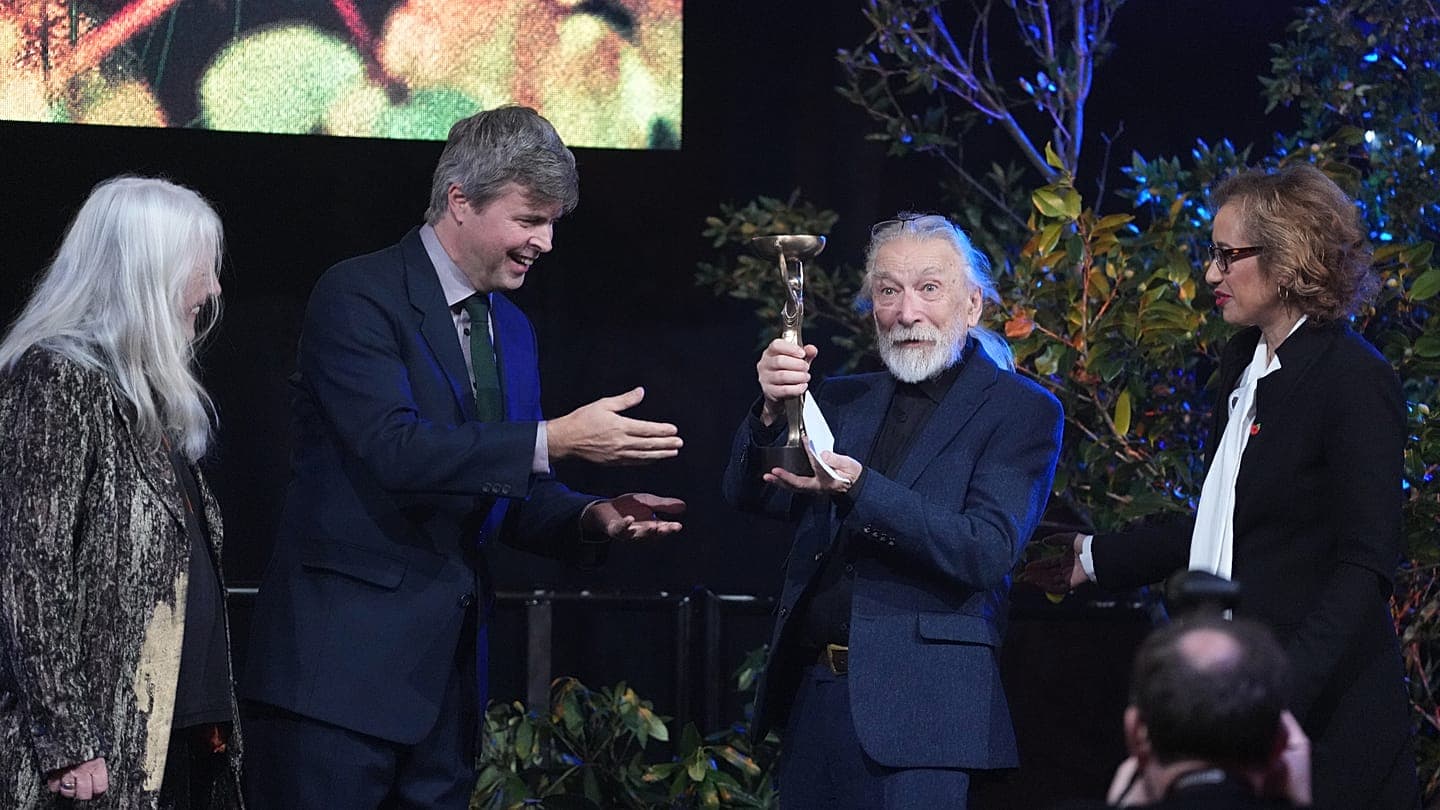
British writer M John Harrison has won the 2026 Booker Prize for his post-apocalyptic novel The End of Everything. The ceremony took place in London at the Old Billingsgate complex; the winner's name was announced by the jury chair, historian of antiquity Mary Beard. Harrison is 81 — he has become the oldest winner in the entire history of the prize, founded in 1969, surpassing the previous record of Margaret Atwood. The laureate receives £50,000 (about $67,000). This is reported by BBC News and Gazeta.Ru.
What the book is about and why it divided readers
The End of Everything is Harrison's 13th novel in a 60-year career, published by the independent London publisher Serpent's Tail; it runs 198 pages. The story is set in the near future on the south-east coast of England after an unexplained catastrophe that shattered society and the appearance of mysterious alien creatures. The protagonist is a drifter living with his aunt and collecting unusual artefacts on the shore. The author deliberately omitted almost all explanations of what is happening, so that the reader feels the same disorientation as the characters: in his words, it is 'a story about a catastrophe in which the catastrophe is the inability to understand.' The approach drew mixed reviews: The Guardian noted that the book is 'not for everyone', The New York Times wrote that the more you learn about the novel's broken world, the harder it is to grasp, while Literary Review called it 'a work of eerie beauty, tender and frightening at once.' The Telegraph critic ranked it 'head and shoulders above' the other finalists and called it 'truly timely.'
The jury and the competition
Besides Beard, the jury included poet Raymond Antrobus, Pulp frontman Jarvis Cocker, critic Rebecca Liu and writer Patricia Lockwood. Beard admitted that agreeing on the shortlist was 'hard work, to put it mildly,' and Lockwood recounted that during discussions she 'threw books across the room.' On the final day, according to Beard, the panel spent the whole day discussing the six novels and unanimously chose Harrison. The shortlist, selected from more than 160 works, also included The Disappearers by Marlon James, Black Bag by Luke Kennard, May We Feed the King by Rebecca Perry, The Things We Never Say by Elizabeth Strout and John of John by Douglas Stuart. A win for James or Stuart would have made either of them the fifth two-time laureate of the prize after J. M. Coetzee, Peter Carey, Hilary Mantel and Margaret Atwood — notes euronews.
The first 'science fiction writer' among the laureates
Harrison began writing in the 1960s and has published 13 novels, five short story collections and an 'anti-memoir.' He dislikes labels such as science fiction and fantasy, but he has been called 'a titan of literary science fiction,' and the prize's director Gaby Wood described him as the first Booker laureate to emerge 'from a genuinely fantastical world.' In her words, The End of Everything is 'a realistic book about a strange world.' The author himself said even before his win that he had 'spent 40–50 years working to shift the balance' and win recognition for well-written speculative fiction as literature. Last year the prize went to David Szalay's novel Flesh.