The key facts
- A single e-ticket can be sold to several buyers: only the first person to present the QR code will get in
- Red flags: transfer to a personal card, refusal to use the official service, the seller's brand-new account
- Victims are advised to keep the correspondence and receipt, contact the bank and the police (Article 159 of the Criminal Code of the Russian Federation)
One QR code for dozens of spectators
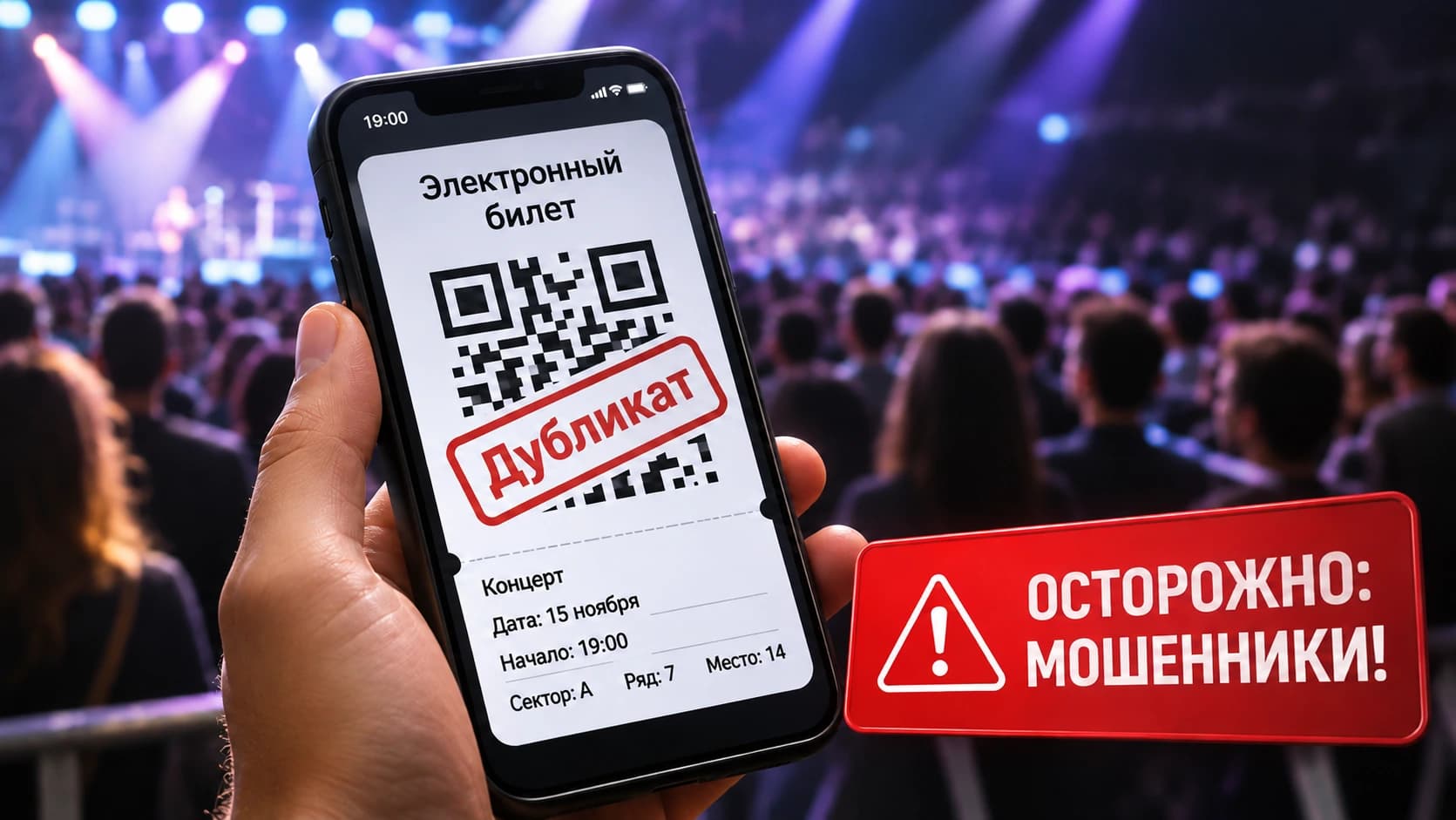
An electronic ticket by itself does not guarantee entry to a concert or a play: scammers can sell the same QR code to several buyers at once, and only the person whose code passes the entrance check first will get into the event. This was told to Life.ru by lawyer Andrey Aleshkin. According to him, a nice PDF file with a QR code is not such a guarantee — there is only one reliable option: verification and re-registration of the ticket through the official mechanisms of the organizer or the ticketing operator.
How to recognize a scam
The main red flag, in the lawyer's assessment, is the seller's attempt to bypass the official ticketing system: an offer to transfer money to a personal card, a promise to send the ticket after payment, and rushing the decision. One should also be wary of a refusal to hand over the ticket through the ticketing operator's service, unwillingness to confirm the order in a personal account, the seller's brand-new account, and the absence of any coherent history of their activity.
What victims should do
If the money has already been transferred, Aleshkin advises saving the correspondence, the listing, the electronic ticket itself, the bank receipt and the recipient's details, and then immediately contacting the bank — report the fraudulent transfer and ask to check whether the transaction can be reversed or stopped. In parallel, one should file a police report with the collected evidence and complain about the account to the social network's administration: depending on the circumstances, the seller's actions may show signs of fraud under Article 159 of the Criminal Code of the Russian Federation. The lawyer does not recommend trying to get the money back from the seller himself or from 'intermediaries' promising to help for a fee — this often becomes a continuation of the same scheme.
The resale context
The problem of ticket reselling shows up even without outright fraud: as Life.ru previously reported, resellers listed tickets for the play 'The Beggar's Opera' with Maxim Matveev at 120 thousand rubles — the theater's official website had no seats left, while on third-party platforms tickets were offered at a huge markup. The scheme described by the lawyer adds to this the risk of paying for a ticket that ultimately will not work at the entrance.