The key facts
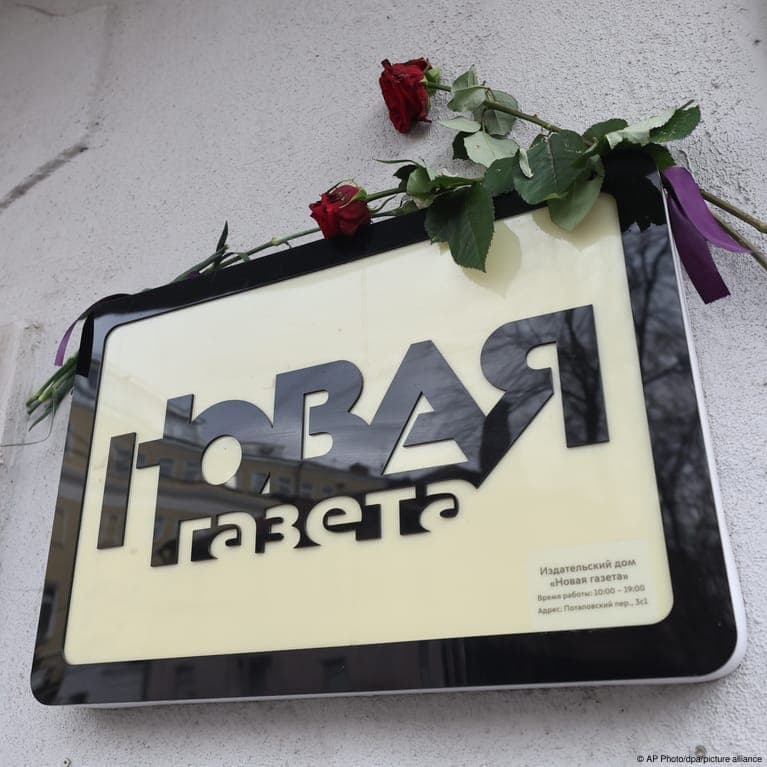
- Novaya Gazeta closed its Moscow editorial office on 9 November 2026
- The publication was designated a 'foreign agent,' ordered to vacate its office, and banks were banned from processing donations
- It is unclear whether the closure means the definitive end of the publication or whether a move abroad is possible
Closure of the editorial office
The independent Russian newspaper Novaya Gazeta closed its Moscow office on Monday, saying it could no longer continue operating amid a campaign of state pressure. This is reported by Deutsche Welle. The publication, co-founded by the late Soviet leader Mikhail Gorbachev, has faced mounting obstacles in recent years over its critical coverage of Russia's invasion of Ukraine.
What preceded the closure
The newspaper was designated a 'foreign agent' — a term revived under Vladimir Putin's administration — and the authorities ordered it to vacate its Moscow premises. Russian banks were also banned from processing donations from readers and supporters: after the publication went fully online shortly after the invasion of Ukraine, this source of income had become critically important to it. At the same time, the Russian authorities introduced new military censorship rules.
Reactions and assessments
The publication's founder Dmitry Muratov, winner of the 2021 Nobel Peace Prize, addressed a gathering of journalists at the office with a call for freedom of speech. 'Those in our country who stand for peace have been deprived of the right to read what they choose, as we see today,' he said, adding that the section of the Russian constitution guaranteeing political and civil rights 'has ceased to function.' Muratov also called for a ceasefire in Ukraine and for the release of some 4,000 people he describes as political prisoners.
The authorities' position and the newspaper's history
The Kremlin sought to downplay the significance of the closure: press secretary Dmitry Peskov called it part of a 'rotation process' amid fierce competition in the media market. Founded in 1993, the newspaper was regarded as a flagship of post-Soviet democratic Russia; Gorbachev used part of the money from his 1990 Nobel Peace Prize as start-up capital for its creation. Since its founding, six of the publication's journalists have been killed, including Anna Politkovskaya, who investigated abuses by Russian forces in Chechnya and was found dead in 2006 on the president's birthday. On Monday, Russian media published footage showing editor-in-chief Sergei Sokolov taking down photographs of Politkovskaya and other killed journalists from the walls.
What comes next — unknown
Last month, when the closure was first announced, Sokolov said the publication had been 'killed': according to him, 'the Russian authorities — the Russian security services — forced the editorial office to stop working.' It remains unclear whether the closure of the Moscow office means the definitive end of the publication: the leadership has not clarified whether it will try to regroup and operate in some format from abroad, as several other outlets, including DW, have been forced to do in recent years. Journalist Irina Vorobyova expressed the hope that the newspaper's spirit would survive as a 'good virus' and 'continue in everyone who was part of it.'