The key facts
- The III Uzbekistan–Russia Media Forum is taking place in Tashkent, organized by UzA and TASS, with more than 200 participants
- Sherzod Asadov called the fight against disinformation a matter of national security and proposed four areas of cooperation
- Data on the media sphere were presented: about 2,700 media outlets (67% private), 94% internet coverage, 32.7 million active content consumers
Forum in Tashkent
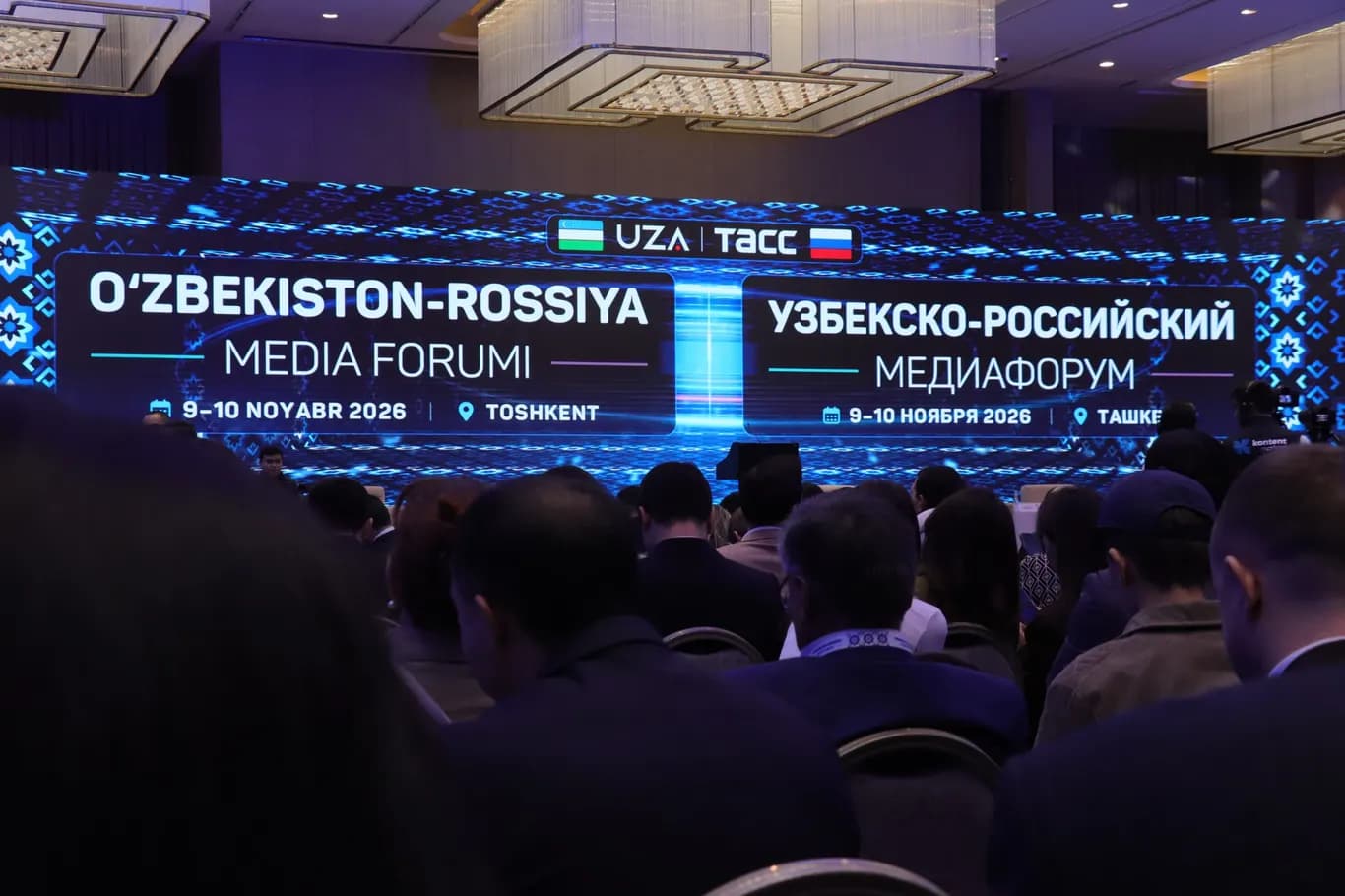
The Hilton Tashkent City hotel is hosting the III Uzbekistan–Russia Media Forum, organized by the National Information Agency of Uzbekistan (UzA) together with the Russian agency TASS. More than 200 representatives of government bodies, leading media organizations, the IT sector and the creative industry are taking part in the event. The head of the Communications Department of the Presidential Administration — Presidential Press Secretary Sherzod Asadov spoke at the opening ceremony and plenary session, describing the changes in the country's media space and the tasks facing the media communities of the two countries.
Figures on Uzbekistan's media sphere
Sherzod Asadov presented data on the state of the media industry. The country has about 2,700 media outlets, 67% of which belong to the private sector. This year, publishing output doubled: 15 thousand book titles were published with a total print run of more than 60 million copies. Internet coverage has reached 94%, and the number of active content consumers has grown from 14.7 million people in 2017 to more than 32.7 million. Over the past year, the Content Center produced more than 26 thousand media products that were viewed almost 2 billion times; for the first time in Central Asia, a National Media Bank was launched with tens of thousands of photo and video materials about Uzbekistan available in open access. The publication Kun.uz, covering the same forum, separately highlighted the growth of the private sector in the media as an indicator of the liberalization of the information space.
Disinformation as a matter of national security
According to Asadov, with the development of artificial intelligence, the number of fake and deepfake materials is growing, and the fight against disinformation has become a matter of national security. He stated that no country's media system can effectively counter such threats alone, and called for cooperation in fact-checking.
Four priority areas
Asadov proposed four priority areas for media cooperation between the two countries: exchange of experience and personnel training (systematic internships, joint journalism schools and educational platforms); joint efforts against disinformation — developing common standards for information verification and pooling expert capacity, while, according to the data presented, 11 thousand young specialistshave already been trained in Uzbekistan through a special educational platform; technological partnership in working with digital platforms, artificial intelligence and big data; and direct ties between editorial offices, journalists and bloggers. The speech ended with a quote from Alisher Navoi:
Forum program
The forum's events continue with four major panel sessions, a special seminar on information security in cyberspace and child protection, as well as B2B negotiations. It is noted that this is already the third bilateral media forum; the outcomes of the panel sessions and specific agreements were not provided in the sources as of the time of publication.