The key facts
- Kaja Kallas at the G7 meeting in Paris: 'The ICC is not against countries, it is against war crimes'
- The EU blocking mechanism against US sanctions is 'one of the options' but a last resort; less than six months to find alternatives
- US sanctions against the court were imposed last month after former ICC judge Navi Pillay was awarded the Nobel Peace Prize
EU reaffirms support for the ICC amid conflict with the US
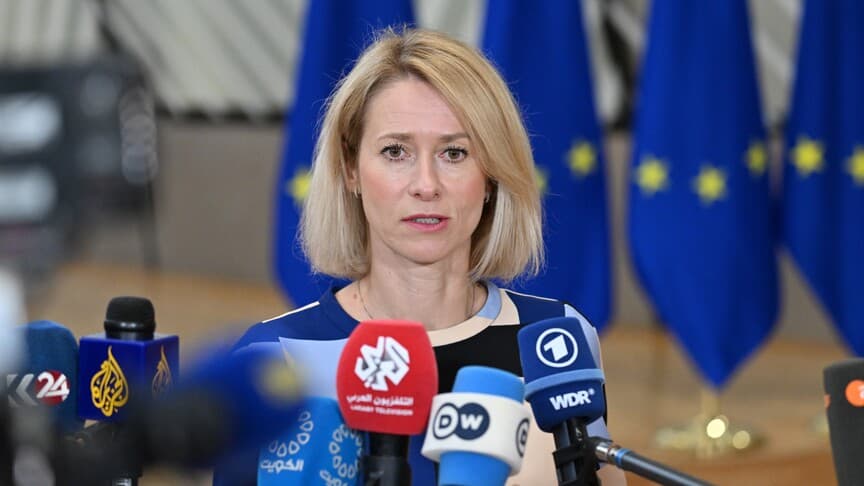
EU High Representative for Foreign Affairs Kaja Kallas on Monday, November 9, at the meeting of G7 foreign ministers in Paris once again reaffirmed the bloc's support for the International Criminal Court. According to Anadolu, she was responding to a question about a statement by US Secretary of State Marco Rubio, who demanded written guarantees that states that are not parties to the court, above all the United States itself, cannot be subject to its investigations.
'The court is against war crimes, not against countries'
'The ICC is not against countries. It is, in fact, against war crimes,' Kallas told journalists. According to her, if states themselves do not prosecute war crimes, then the ICC must do so, and it was important to voice this thesis precisely in the G7 format. She stressed that the EU is trying to show its American partners that their fears that the court is targeting countries do not correspond to the Rome Statute and the court's core mandate. 'At a time when we are seeing more and more war crimes in the world, we need more accountability, not less,' she added.
Sanctions and countermeasures: the blocking mechanism as a 'last resort'
Washington imposed sanctions on the ICC last month after former court judge Navi Pillay was named winner of the 2026 Nobel Peace Prize. This came against the backdrop of intensified US pressure on the court after it issued arrest warrants in 2024 for Israeli Prime Minister Benjamin Netanyahu and former Defense Minister Yoav Gallant on suspicion of war crimes in Gaza.
Ukraine talks: 'no high expectations'
Asked whether the EU is ready to activate its blocking mechanism in response to the American sanctions, Kallas said it is 'one of the options' but a 'last resort': according to her, the bloc has 'just under six months' to work out alternatives and allow the court to continue its work. For the EU, she noted, it is critically important that the ICC continue its activities and be able to prosecute these crimes.
Ukraine talks: 'no high expectations'
Touching on the second day of the G7 meeting, Kallas said that on Tuesday the ministers would discuss the Middle East and the war in Ukraine. She described the discussions held so far as 'good': they covered international crises, joint action to prevent and de-escalate them, as well as an exchange of views with partner countries on artificial intelligence and a conversation with the World Food Programme.
Ukraine talks: 'no high expectations'
At the same time, regarding the trilateral talks between representatives of Russia, Ukraine and the US scheduled for Tuesday in Abu Dhabi, Kallas said she does not have 'very high expectations': according to her, no 'genuine signs' of Russia's readiness to negotiate in good faith are visible.