The key facts
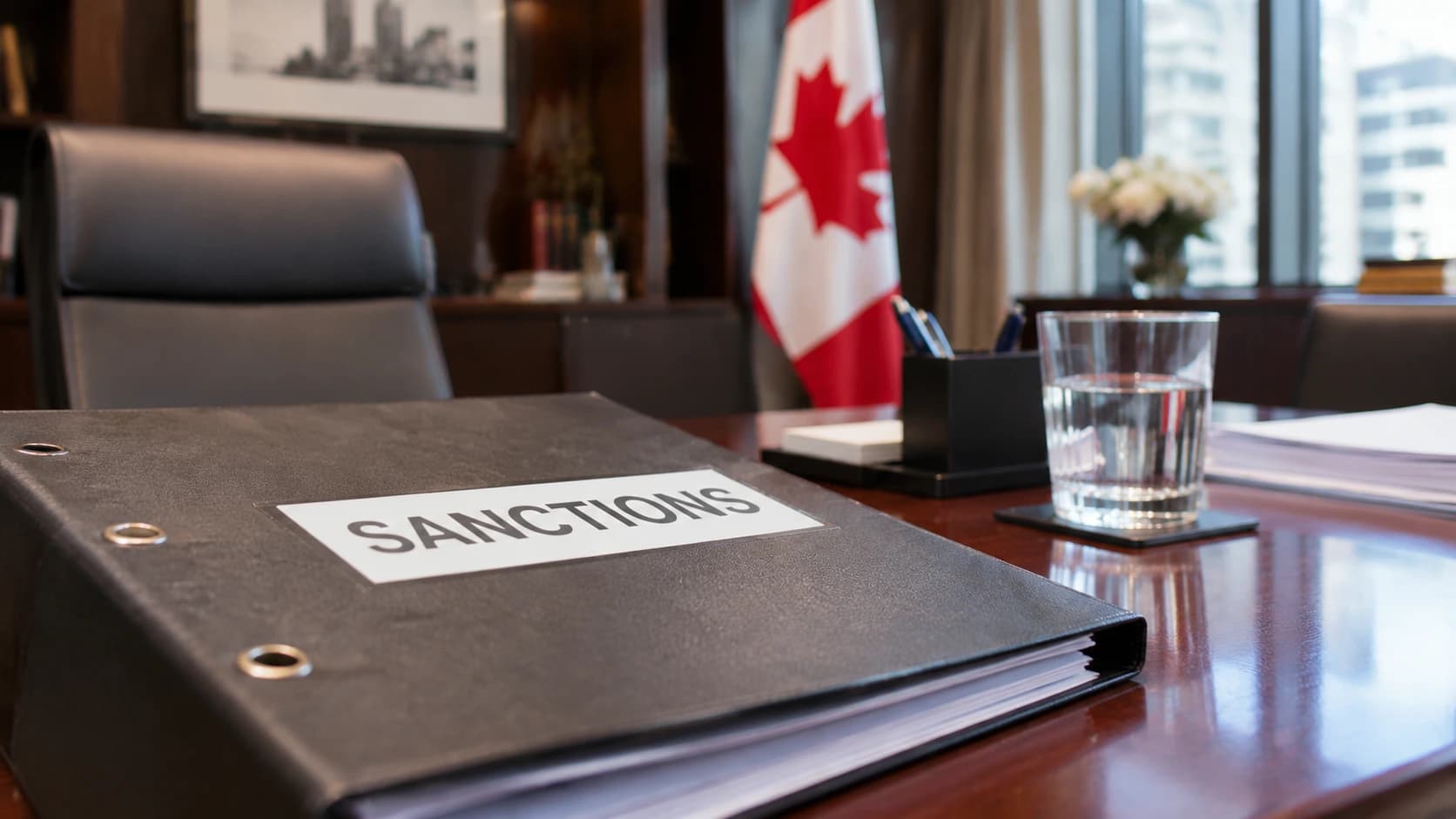
- Canada added 38 organizations and 24 individuals to its sanctions list — the announcement was made on November 9 at the G7 foreign ministers' meeting in Paris
- The grounds include links to the development of ballistic missile technologies, cyber activities, and financing of Russia's military economy through crypto exchanges
- Since 2014, according to Canada's Foreign Ministry, restrictions have been imposed on more than 3,500 individuals and organizations and over 700 vessels
New sanctions package announced in Paris
On November 9, Canada added 38 organizations and 24 individuals to its Russia sanctions list. The announcement was made by Canadian Foreign Minister Anita Anand on the sidelines of the G7 foreign ministers' meeting in Paris. According to Canada's Foreign Ministry, the list includes those whom Ottawa links to the development of ballistic missile technologies and Russian cyber activities. Anand said the restrictions are intended to reduce Russia's ability to carry out missile strikes on Ukrainian cities.
Crypto exchanges and the scale of the restrictions
The new restrictions also cover crypto exchanges which, in Ottawa's assessment, help finance Russia's military economy. Canada's Foreign Ministry calculated that since 2014 Ottawa has imposed restrictions on more than 3,500 individuals and organizations, as well as over 700 vessels.
What was already under sanctions
The expansion of the list continued a line set out earlier: in June, Canada had already imposed sanctions on the Moscow Exchange and a number of other Russian financial organizations. At that time, the restrictions covered the Saint Petersburg Exchange, SPB Exchange, the National Commodity Exchange and the Eastern Exchange, as well as Absolut Bank and Zemsky Bank. Thus, the new package targets not only financial infrastructure but also the technology sector and the cryptocurrency segment, which Ottawa links to Russia's military economy.