The key facts
- According to Andrey Marochko, the most successful section of the week in Kharkiv region is Goptovka and its surroundings
- Goptovka came under the control of the Russian army on September 10, as reported by the Russian Defense Ministry
- In early November, new lines were also noted near Glubokoye and Lukyantsy
The most productive section of the week — near Goptovka
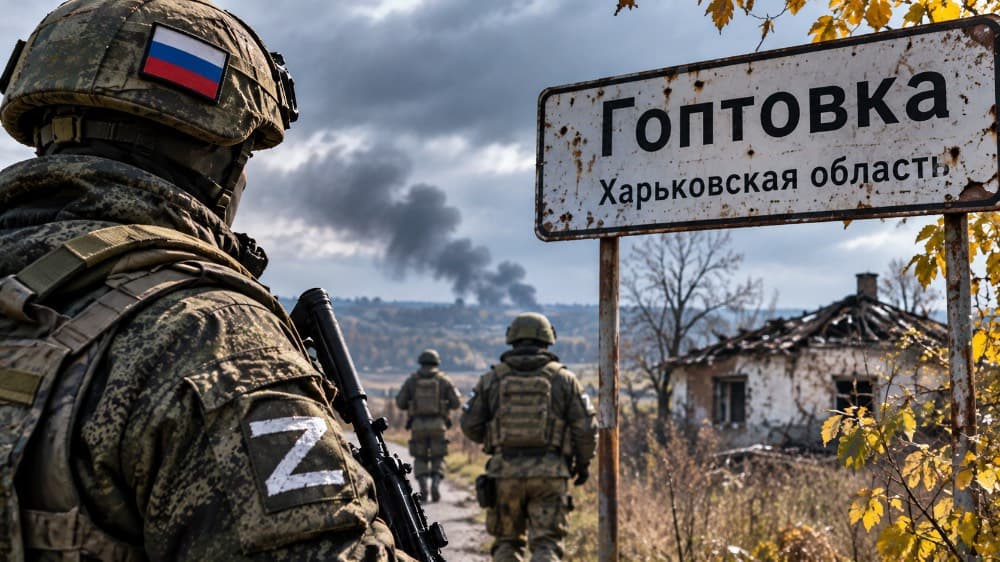
Over the past week, Russian troops achieved their most significant gains in the area of Goptovka in Kharkiv region — this section proved to be the most productive on the Kharkiv axis. This assessment was voiced by military expert Andrey Marochko in a conversation with TASS. “If we are talking about the most successful section in Kharkiv region, it is the settlement of Goptovka and its surroundings. It was there that our servicemen had the most serious achievements this week”, — his words are cited by Life.ru.
What is happening in the north of Kharkiv region
According to Marochko, Russian units continue to expand the zone of control south of Goptovka, are clearing adjacent territories and creating conditions for further advance toward Kharkiv. Goptovka came under the control of the Russian army on September 10 — this was reported by the Russian Defense Ministry. In early November, according to the expert, the Russian Armed Forces also took up new lines in the vicinity of Glubokoye and Lukyantsy, strengthening positions in the north of the region.
Context of the week on the axis
Life.ru reported in previous publications that Russian troops expanded the zone of control in the area of the border village of Granov by more than nine square kilometers: the advance was recorded by the Ukrainian analytical project DeepState, and a representative of the AFU command, Viktor Trehubov, confirmed the increase in the Russian incursion along the flanks. In addition, information emerged about the evacuation of residents and representatives of the Ukrainian administration from the settlement of Slatino — according to Russian law enforcement agencies, the decision is linked to the approaching front line. These reports come from one side of the conflict or its sources; no independent verification is provided in the publications.