The key facts
- Judge Humberto Otazu sent former Paraguayan president Santiago Peña into temporary detention; he is being held at the presidential guard regiment in Asunción
- The prosecutor's office accuses Peña of breach of trust and is examining the placement of state funds in Ueno Bank, whose solvency fell below the critical level
- The bank's collapse affected about three million clients; the senate supported impeachment unanimously, and power passed to Pedro Alliana until August 2028
From resignation to arrest in just a few days
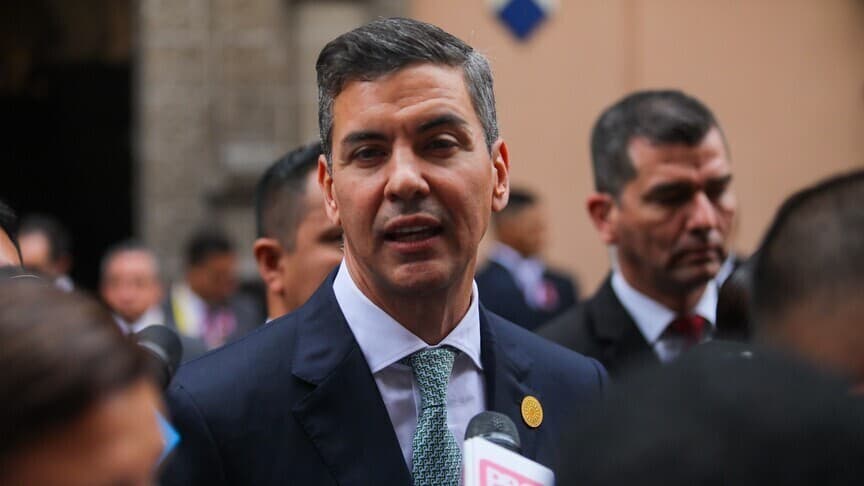
A court in Paraguay has imposed a pre-trial measure of temporary detention on former president Santiago Peña in the case of the collapse of Ueno Bank. This was reported by the newspaper Ultima Hora and Life.ru; the decision was made by judge Humberto Otazu. According to journalists, the former head of state will be held at the premises of the presidential guard regiment in Asunción. Life.ru specifies that law enforcement officers moved him there from his home because of protests near the residence, explaining this as necessary to ensure his safety.
Timeline of the crisis
Events unfolded rapidly. On November 3, the Central Bank of Paraguay restricted the operations of Ueno Bank due to solvency problems: as Gazeta.Ru writes, the solvency ratio fell below the critical level — less than 50% of the minimum required. As a result, nearly three million clients temporarily lost access to their money, which led to mass protests by depositors demanding the return of their funds and the president's resignation. On November 5, Peña announced that he had resigned, after which the senate unanimously supported impeachment. On November 6, the former president was detained: at first he was under house arrest and preparing to give testimony, but the day before the Attorney General's Office ordered his immediate detention — according to the newspaper ABC, the order was signed by prosecutors from the units for economic crimes, anti-corruption, cybercrime and money laundering. Presidential powers passed to former vice president Pedro Alliana, who is to serve out the term until August 2028.
The essence of the charges and Peña's position
The prosecutor's office has charged Peña with breach of trust and disposal of property for personal gain. Investigators are checking whether the politician, during his presidency, could have influenced decisions of state institutions to place money in Ueno Bank; particular attention is being paid to the funds of government organizations and pension funds which, according to the prosecution, remained in the bank despite the financial risks and Peña's earlier business ties with the group of companies that included the credit institution. Charges have also been brought against former Central Bank head Carlos Carvalho — for breach of trust, use of official powers for personal gain and preparation of documents containing false information; the prosecution requested that both be taken into custody. Peña himself has rejected the charges, insisting that Ueno Bank's problems fall within the sphere of banking regulation. The investigation is ongoing, and there is no final court ruling on guilt.