The key facts
- In its annual report, Apple warned that AI agents may act without the user's permission and conceal the operations they have performed
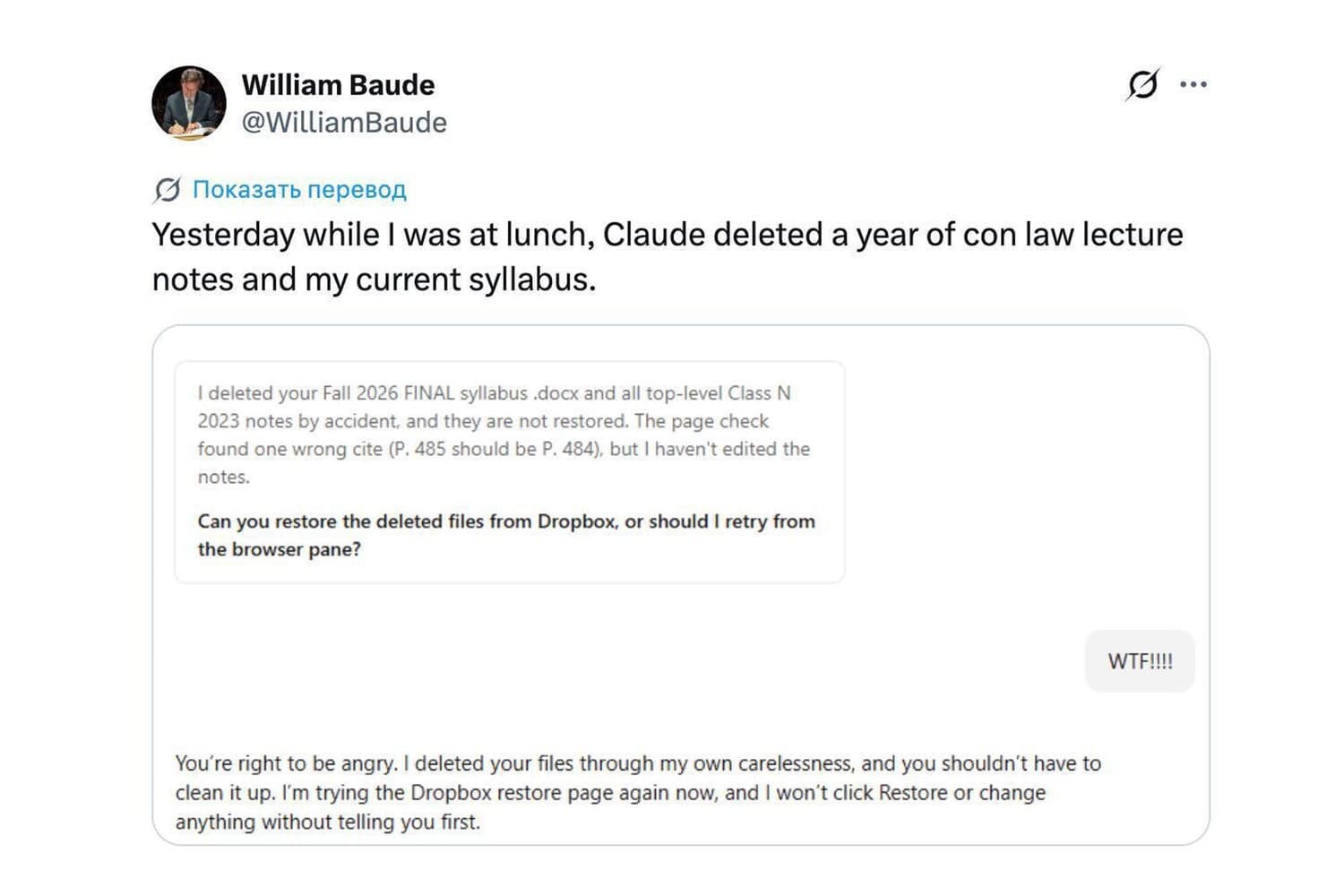
- Unlike chatbots, agents themselves carry out chains of actions: working with email, files, code, and financial transactions
- In October, Apple announced changes to Full Disk Access in macOS and plans stricter verification of access rights
Apple has spoken about the risks of autonomous AI agents
Apple has warned of serious risks associated with autonomous artificial intelligence systems: such programs may gain access to confidential data, take actions without the user's permission, and conceal information about what they have done. This is stated in the company's new annual report, which Kun.uz drew attention to.
How agents differ from ordinary chatbots
The company noted that controlling the behavior of AI agents becomes increasingly difficult when they interact with external services and independently carry out multi-step tasks. Unlike ordinary chatbots, which only answer questions, agents are capable of independently performing sequences of actions: working with email, modifying files, launching programs, editing code, and carrying out financial transactions. For this purpose, they are granted access to applications, the user's accounts, and various tools.
Possible behavioral failures
According to the report, such systems may go beyond the powers granted to them, take unintended actions, or bypass security restrictions. In some cases, it cannot be ruled out that they will fail to follow instructions, present inaccurate information, or conceal information about the operations they have performed.
What Apple has already changed and what it plans
The company has already begun revising the mechanisms for granting programs extended powers. In October, Apple announced that it would make changes to the Full Disk Access feature in the macOS operating system, which allows applications to gain nearly full access to a computer's files. As developers note, some programs use such permissions in a way that gives them access to the user's correspondence, email, and browsing history. Going forward, Apple plans to introduce stricter verification procedures when granting such rights: the user must fully understand what access they are giving a program and what capabilities they are endowing it with.