The key facts
- On November 8, an activist spent about an hour on the 30-meter flagpole at the Reichstag, replacing the German flag with a Palestinian one; three German citizens were detained
- Responsibility was claimed by the group Peacefully Against Genocide, which previously climbed the Brandenburg Gate and blockaded Rheinmetall
- Bundestag President Julia Klöckner demanded stronger security for the parliament, including the adjacent grounds
Action at the Reichstag
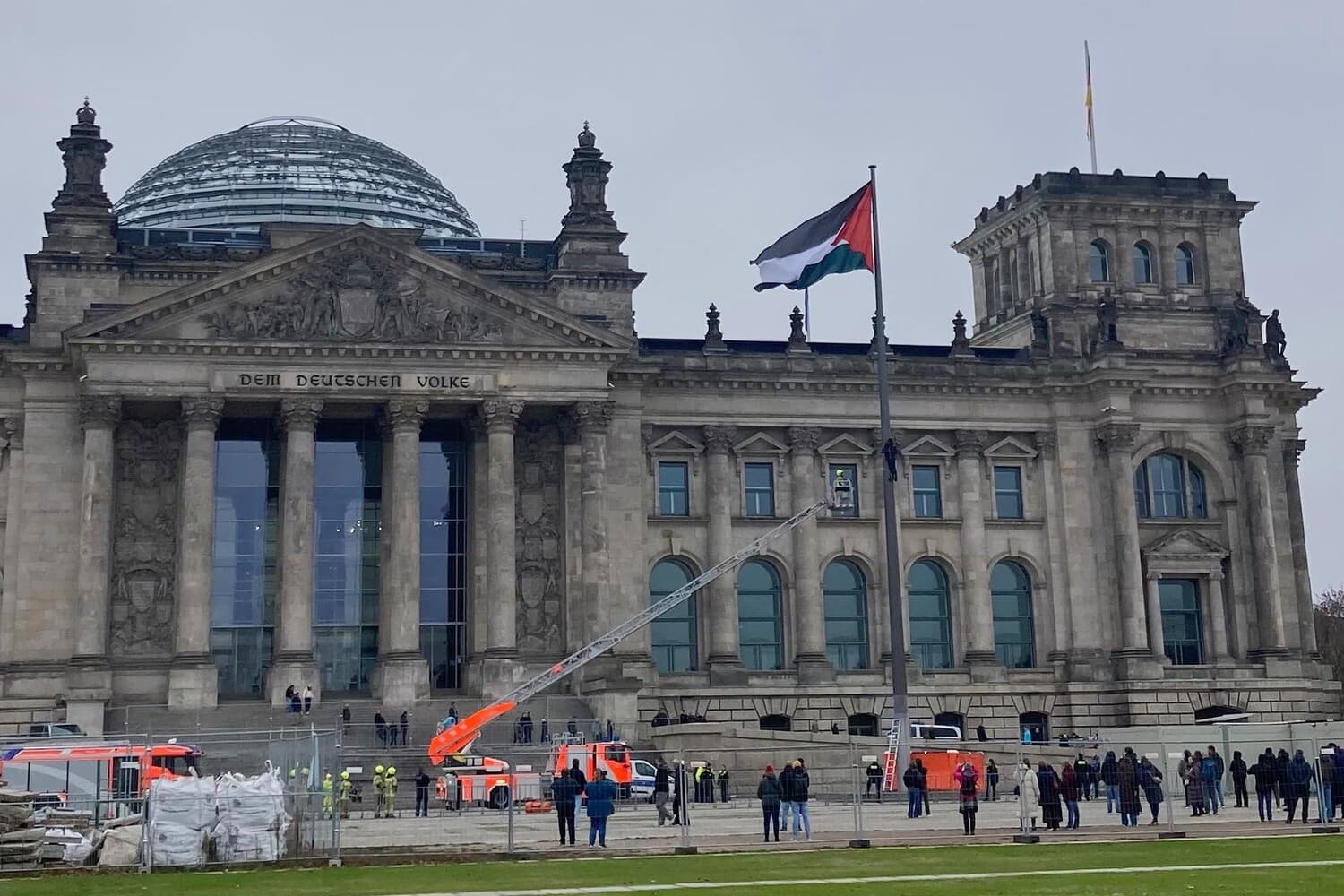
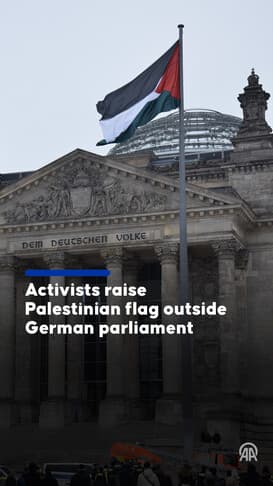
On the morning of November 8, 2026, a young man climbed the flagpole in front of the Reichstag building in Berlin, took down the German national flag and hoisted a Palestinian one in its place. According to Die Tageszeitung, as retold by Gazeta.Ru, he used climbing equipment for the ascent, and onlookers suggested he had rock-climbing experience. Life.ru specifies that the action began at around 11:15 local time, and the activist spent about an hour on the mast, which is roughly 28.5–30 meters tall (outlets cite different figures).
Detention and consequences
According to one account, the activist was unable to climb down on his own — rescuers brought in a fire ladder; other reports say he came down himself at around 12:30. The Berlin police announced that three participants of the action were detained: the 22-year-old organizer, as well as accomplices aged 20 and 32 who assisted from below and filmed what was happening. All of them are German citizens. Two were released after processing, while the main participant was kept in custody. A case has been opened on suspicion of insulting the state and its symbols; Life.ru, citing the police, adds that charges also include damage to public property, unlawful entry and violation of assembly legislation, and that the investigation has been taken over by the state security department. The protesters damaged the hoisting mechanism, so the German flag could not be returned to the mast that same day.
Who is behind the action and what it demanded
Responsibility was claimed by the pro-Palestinian group Peacefully Against Genocide, which stated that the action expresses solidarity with Palestinians and protest against the German government's policy and its silence about the 'war crimes in Gaza'. A group representative named Aaron asked in a statement what 'never again', international law and human rights mean if governments fail to uphold them. Bild notes that the group is already known for its actions: in November 2025 its supporters used a lift to climb the Brandenburg Gate, painted the word 'Guilty' on the Federal Chancellery, claimed responsibility for damaging the Foreign Ministry facade, and in July blocked the entrance to the Berlin plant of Rheinmetall. The group announced new protests, including a demand that Rheinmetall stop supplying Israel and close its Berlin plant.
The authorities' reaction
Bundestag President Julia Klöckner, in a comment to Bild, demanded stronger security measures around the parliament, including the adjacent grounds, noting that responsibility for protecting the space around the Reichstag must be borne by the Berlin authorities as well. 'It is unthinkable that Palestinian hooligans do not stop even before the flag of unity, the symbol of our German unity,' she said. Stefan We, head of the Berlin branch of the police union GdP, called the action a pre-planned provocation for publicity. The torn-down 'Flag of Unity' is a national monument, first raised on the night of October 3, 1990; the flag's area is 60 square meters.
Context of the Berlin protests
The action continued a series of pro-Palestinian demonstrations in Berlin: on October 10, thousands of demonstrators marched from the Federal Chancellery against Germany's military, financial and diplomatic support for Israel, and on October 31, during protests by left-wing radicals, more than 60 people were detained and 27 police officers were injured. These figures come from Life.ru; the police and the organizers gave different estimates of the march's turnout — about 3,500 and about 3,000 respectively.