The key facts
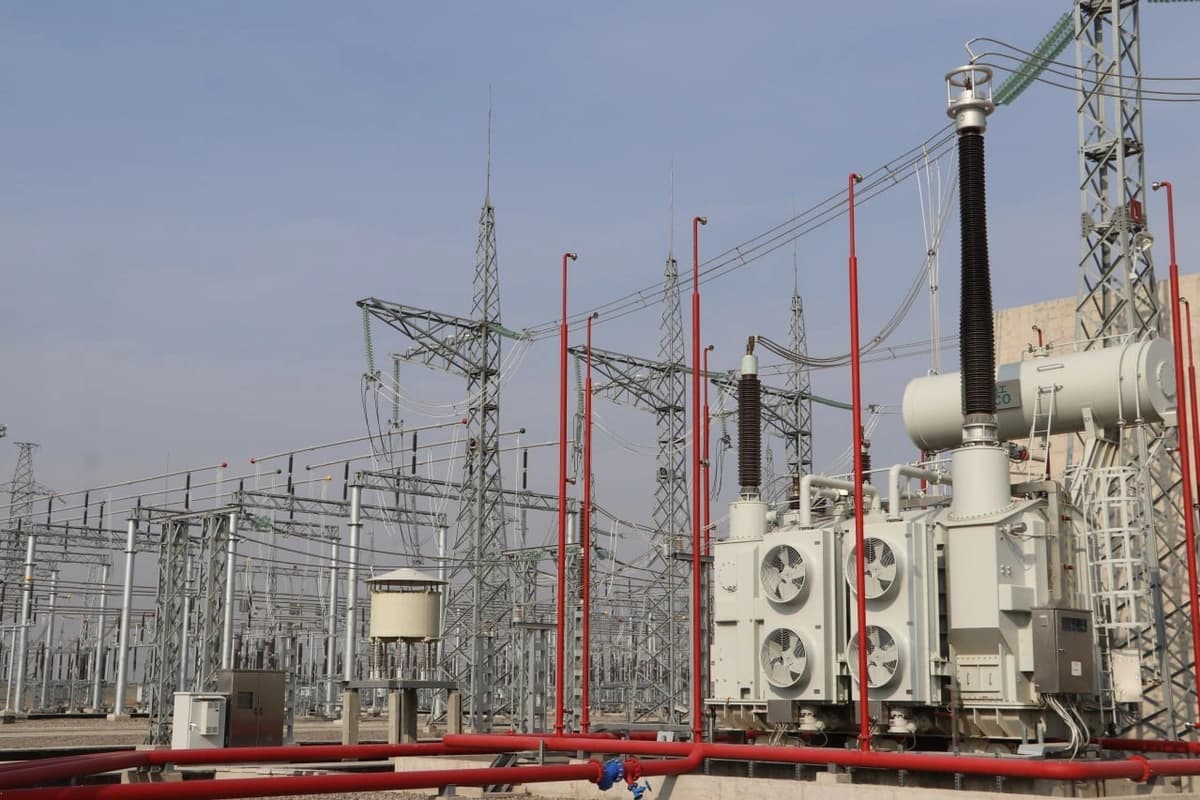
- The 500 kV Khalka substation with a capacity of 1,602 MVA was commissioned on November 7; the cost was $171.4 million with World Bank participation.
- 220 kV (213 km) and 500 kV (72 km) transmission lines were built, 285 km in total; integration into the unified power grid is ongoing.
- Ministry of Energy: the load on the Tashkent Thermal Power Plant will decrease, eliminating the need for fuel oil; this is expected to improve the capital's environment.
The Khalka (Ring) substation has been energized
On November 7, voltage was supplied to the new 500 kV Khalka (Ring) substation in Tashkent Region, the press service of the Ministry of Energy reported. The 1,602 MVA facility has been described as one of the largest and most modern high-voltage infrastructure facilities in the country. Gazeta in its November 7 publication wrote that the substation had been put into operation, whereas reports from November 8 (Zamon.uz, UzNews.uz, Kun.uz) say that voltage has been supplied; at the same time, all outlets note that work on fully integrating the new facilities into the unified power grid is still ongoing.
What changes for Tashkent and the region
According to the Ministry of Energy, the commissioning of the substation will make it possible to redistribute electrical loads in Tashkent and part of Tashkent Region and to distribute the load across existing networks more optimally. The key practical consequence: the load on the Tashkent Thermal Power Plant will decrease, and there will be no further need to use fuel oil at the plant. The Ministry also links an environmental effect to this — a reduction in emissions of pollutants into the atmosphere of the capital and adjacent areas. The wording
Project supported by the World Bank
The investment project worth $171.4 million was implemented with the participation of the World Bank. In addition to the substation, 220 kV overhead transmission lines stretching 213 km and 500 kV lines stretching 72 km were built — 285 km in total. As the World Bank reported, Khalka is the first substation in the country where control and monitoring are carried out using digital technologies; it will receive energy from power plants in Syrdarya Region and wind farms in the southwestern regions. The substation is part of the Power Sector Transformation and Reliable Transmission of Electricity project with a total value of $380 million, implemented by JSC National Electric Grid of Uzbekistan. The project was approved in 2021 and, in addition to Khalka, provides for the reconstruction and expansion of 22 outdated high-voltage substations and the construction of lines in almost all regions of the country.