The key facts
- The US Space Force is considering launching five satellites into lunar orbit by 2029
- The Pentagon has asked industry for a 'fast and low-risk' solution for a reconnaissance mission over the far side of the Moon
- Major General Stephen Purdy declared an intention to turn cislunar space into a 'zone of military operations'; publications link this to China's plans for 2030
A plan for five spacecraft by 2029
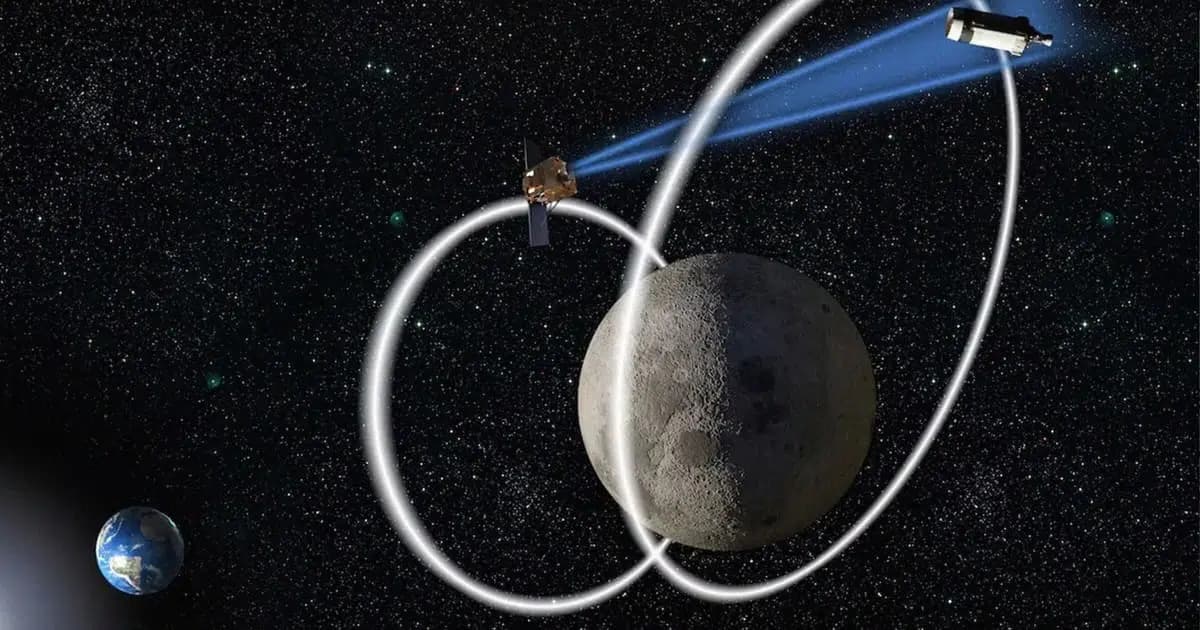
The US Space Force under Donald Trump's administration is considering the possibility of launching five satellites into orbit around the Moon by 2029. This is reported by the Uzbek publication Kun.uz citing a publication by Air & Space Forces. If the plan is implemented, American military spacecraft will fly around the Moon, including passing over its far side — an area invisible from Earth and therefore inaccessible to conventional observation.
What the Pentagon is requesting
The information is contained in a special notice sent to aerospace manufacturers. It indicates that the Pentagon has shown initial interest in launching spacecraft that would essentially perform reconnaissance missions around the Moon, using a gravity assist. The document states that the spacecraft could become the first experimental platforms, and the results of their use will inform the procurement strategy for a future distributed constellation of satellites in cislunar space. The US government is asking industry representatives for a 'fast and low-risk' solution for conducting a reconnaissance mission over the far side of the Moon.
Motives and context
According to statements by US Space Force representatives, in particular Major General Stephen Purdy, the Pentagon is seriously intent on turning cislunar space into a 'zone of military operations'. Publications cite the People's Republic of China as the main driver of the growing American military interest in the space between Earth and the Moon: specifically, Beijing's plans to land humans on the Moon by 2030. For now, this remains a matter of consideration: the document records initial interest and a request for proposals, not an approved procurement program.