The key facts
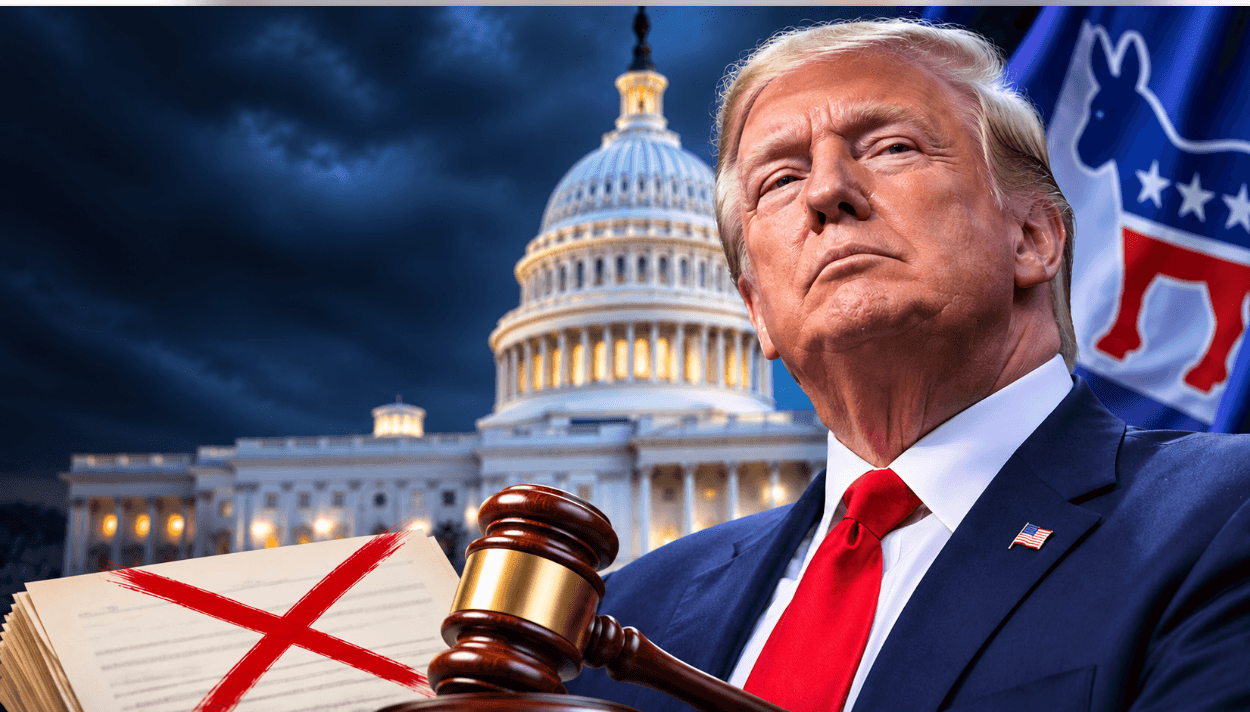
- Democrats won the majority in both chambers of Congress in the November 3, 2026 elections
- Trump retains the veto power, which can be overridden only by a two-thirds vote
- From January 2027, Democrats can begin impeachment but cannot convict the president in the Senate
A 'blue wave' in the midterm elections
As a result of the midterm elections on November 3, 2026, the US Democratic Party achieved a decisive victory, taking the majority away from Donald Trump's Republicans in both chambers of Congress — the House of Representatives and the Senate. Democrats also won gubernatorial elections in former Republican strongholds, including Texas. This is reported by Deutsche Welle, which calls the result a 'blue wave', while some observers, according to the outlet, are already speaking of a 'blue tsunami'.
The limits of the new Congress's power
Victory in Congress does not mean that Democrats will be able to pass legislation bypassing the White House. As the presidential administration reminded readers on the social network X the day after the election, 'Trump is still your president.' The president can veto any bill, and overriding it requires a two-thirds majority in both chambers — which the Democrats do not have. Moreover, in the past Trump has sometimes simply ignored Congress's decisions.
Is it possible to override a veto and begin impeachment
Patrick Malone, a professor at the School of Public Affairs at American University in Washington, commented to Deutsche Welle that a presidential veto is 'not necessarily the end of the story': some Republicans, especially in the House of Representatives, will not want to tie themselves too closely to Trump after the crushing result, and, he predicts, the two parties could easily join forces to override a veto.
Impeachment, investigations, and Hegseth's fate
The question of impeachment remains open. One possible ground cited is the start of the war with Iran without congressional approval: the US Constitution assigns the power to declare war to Congress, but as commander-in-chief the president holds certain military authority whose boundaries, without legislators' approval, are legally contested. From January 2027, Democrats will have the simple majority needed to bring charges in the House of Representatives, but they will not be able to muster the two-thirds in the Senate required for conviction and removing Trump from office. Some Democrats believe the process should be started anyway as a means of restraining the president; Senator Cory Booker, by contrast, warns: 'If we make Donald Trump the center of our attention, we will lose this historic moment. We need to solve Americans' problems.' At the same time, investigations into Trump, his family, and his administration will certainly be initiated by the Democrats, in Malone's view — they, he says, have more influence on public opinion than on legislation.
The budget as leverage and internal divisions
Defense Secretary Pete Hegsethcould come under pressure from the Democrats, as he is considered at least partly responsible for the relative US setbacks in the war with Iran; observers suggest the Democrats will demand his replacement, but dismissal is the president's decision, and all of the Democrats' options boil down to political pressure. Brandon Conradis, a former DW journalist and now an editor at Bloomberg Government, points to the budgetary lever: from January, Democrats will control the allocation of government funds and could tie funding for Trump's priority projects to conditions — for example, demanding Hegseth's resignation in exchange for money for military operations. Within the party itself, unity, by Malone's estimate, lasted 'maybe 24, 36 hours': it includes progressive Democrats led by Alexandria Ocasio-Cortez, moderates, and pragmatic liberals, and many winning candidates received mandates in former Republican districts and will not be able to return home with Ocasio-Cortez's program. In Malone's view, the Democrats will have to develop a coherent positive governing agenda — opposition to Trump alone is not enough to sustain their success.