The key facts
- A 60 MW liquefied air energy storage facility has been launched in Golmud (Qinghai province)
- It can store about 600,000 kWh per day; expected annual output is about 180 million kWh
- The equipment is fully localized in China, and the technology rights belong to CGDG
Launch of the Golmud facility
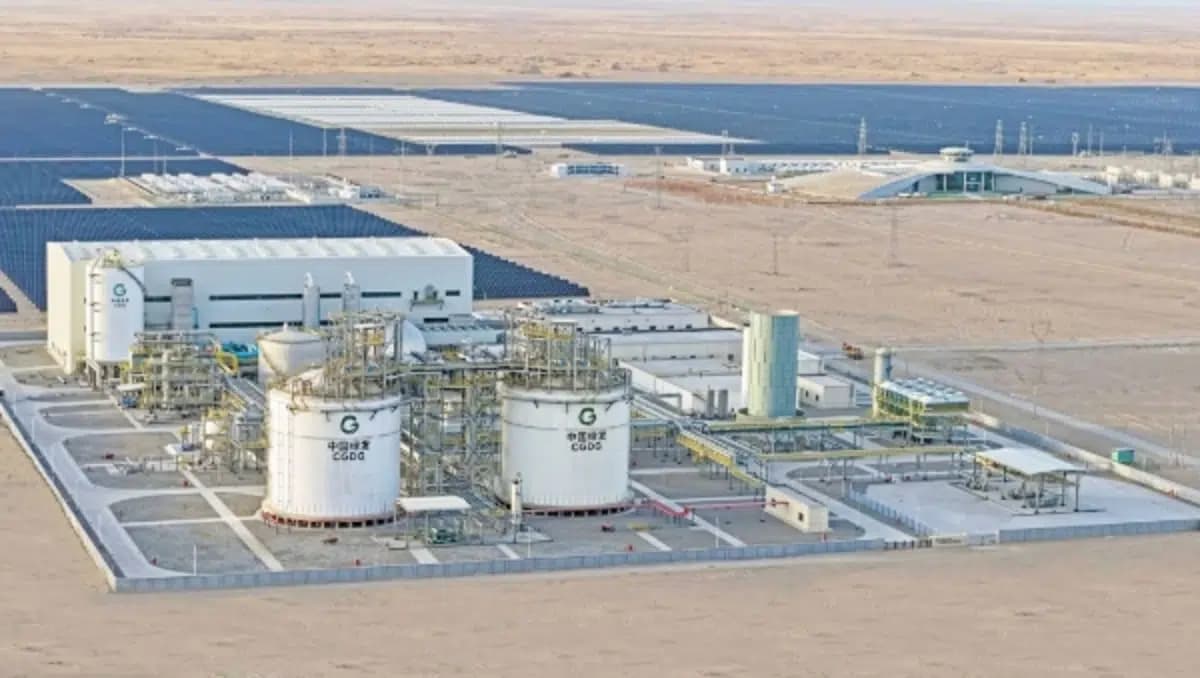
In the northwestern Chinese province of Qinghai, a 60 MW facility that stores energy in the form of liquefied air has been connected to the power grid. The facility in the city of Golmud began generating electricity over the past weekend; its construction and financing were provided by China Green Development Investment Group (CGDG). According to the company, it is the world's largest energy storage system of this type by installed capacity. This was reported by Kun.uz.
Scale and specifications
According to the company, the facility can store about 600,000 kWh of electricity per day from clean energy sources. The expected annual output is approximately 180 million kWh, which, according to CGDG's calculations, is enough to supply about 30,000 households with electricity for a year. Golmud uses deep-cooling technology that allows air to be liquefied at a temperature of minus 194 °C. The company also said that equipment production is fully localized: all components of the facility are made in China, and the project uses technologies whose intellectual property rights belong to CGDG itself.
How the technology works and how it differs
Energy storage using liquefied air is a relatively new long-duration storage technology. During periods of low electricity demand, energy is spent compressing and cooling air to a liquid state; when energy is needed, the liquefied air is heated and expanded, and the resulting flow spins turbines that generate electricity. Unlike pumped-storage hydropower plants, such a system does not require special geographic conditions. According to available estimates, compared with battery storage, the technology offers advantages in scalability, duration of energy storage, and equipment lifespan. The launch of the facility has been called an important step in China's plans to develop energy storage technologies, which are needed by a power grid with a growing share of renewable energy sources.