The key facts
- The ANC received less than 31% of the vote — the worst result in the party's history
- The party lost its majority in six of the eight metropolitan regions
- The Democratic Alliance won 24% and retains Cape Town with an absolute majority
The worst result in the party's history
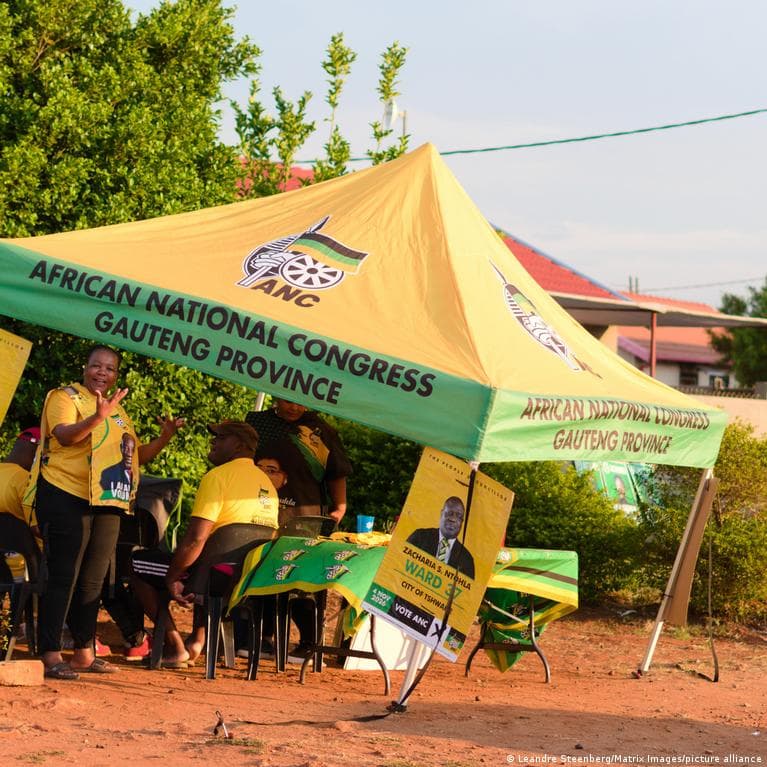
South Africa's ruling African National Congress (ANC) delivered a historically weak result in the municipal elections: according to final figures published on Sunday, the party received less than 31% of the vote in Wednesday's municipal elections. According to the Electoral Commission of South Africa, after 98% of votes were counted, the ANC also lost its majority in six of the eight metropolitan regions. This was reported by Deutsche Welle.
Reasons for voters' discontent
Among the main reasons for voters' discontent in 2026 are disruptions to water and electricity supplies — voters hold the ANC responsible for the state of the municipalities — voters hold the ANC responsible, as well as high unemployment, crime and large-scale corruption. South African President and party leader Cyril Ramaphosa had not yet commented on the result by Saturday evening, but during the week he acknowledged in his weekly presidential letter that 'failures of municipalities have contributed to a decline in public trust in democratic governance.' ANC Secretary-General Fikile Mbalula called the outcome 'catastrophic' for the movement and said the party cannot ask for people's trust 'solely because of our history.'
A continuation of the decline that began in 2024
Although the ANC remains the largest party by vote share, the result continues a protracted decline: in 2024, in the national elections, the party for the first time in South Africa's democratic era lost its absolute majority in parliament, receiving just over 40%, while in the previous municipal elections in 2021 it won 46%. After that, the ANC formed the current multiparty government of national unity with the participation of all parliamentary parties; small parties that draw voters away from the congress have also gained strength on the political scene. The party, which played a key role in ending apartheid and came to power in 1994 after Nelson Mandela's victory, now faces voters' frustration with corruption, ineffective governance and unemployment.
Coalition negotiations and the DA's position
Difficult coalition negotiations on forming municipal governments lie ahead. Second place went to the centre-right, business-oriented Democratic Alliance (DA) with 24% of the vote: the party won an absolute majority in Cape Town and will retain control of the city, performed well in the capital Pretoria and the economic hub of Johannesburg, where it is expected to form coalitions without the ANC. DA leader Geordin Hill-Lewis said that after the elections the time has come 'to put together governments that can actually get these cities in order,' and that the party has already approached many parties over the past 24 hours. Political analyst Daniel Silke, in a comment to AFP, called the result the worst in the ANC's history and noted that it would weaken the party's ability to exert influence at both the local and national level, and could also serve as an indicator of voter sentiment ahead of the 2029 general elections.