The key facts
- Preliminary reserves estimated at about 200 billion cubic feet of gas
- A gas-bearing layer about 15 meters thick was found at the Nasseem-1X exploration well
- A pipeline about 22 km long to existing facilities is planned
Discovery and preliminary estimates
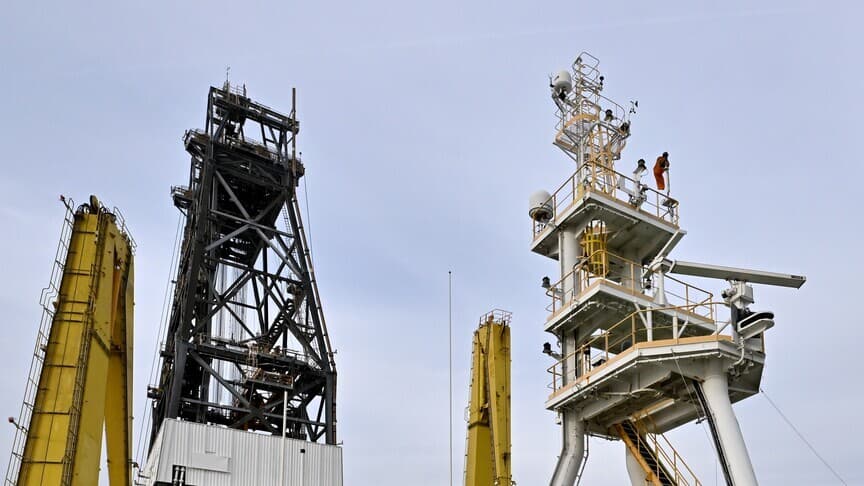
Egypt announced on Friday the discovery of natural gas in the Mediterranean Sea: according to preliminary estimates, the reservoir holds about 200 billion cubic feet of gas. As reported by the Anadolu agency citing the country's Ministry of Petroleum and Mineral Resources, drilling and evaluation of the Nasseem-1X exploration well on the Tiba concession area revealed a gas-bearing layer with promising geological and physical characteristics, approximately 15 meters (49 feet) thick.
Who is working on the field and what is planned next
The Tiba concession is operated by the Italian energy company Eni in partnership with Australia's Woodside, while drilling at the site is carried out by Egypt's Petrobel on behalf of the partners. Technical studies are ongoing to determine recoverable reserves and potential daily production; the ministry has not yet announced a timeline for the start of production.
Connection to existing infrastructure
The ministry plans to connect the well to existing production facilities via a pipeline approximately 22 kilometers (13.7 miles) long. Connection to the Abu Madi — El Gamil pipeline will make use of already existing infrastructure and shorten the time needed to bring the new gas into production. According to the ministry's assessment, the discovery could increase domestic gas production after the completion of technical evaluations and confirmation of commercial viability. The ministry links the positive exploration results to growing investment and exploration activity, an improved investment climate, and progress in settling debts owed to international energy partners. Egypt seeks to boost domestic gas production by developing existing discoveries and accelerating exploration in order to meet domestic demand and reduce dependence on imports.