The key facts
- Abandonment of 90 cm and 60 cm sowing schemes in favor of 76 cm row spacing and a single-row scheme
- Plant density increased from 80–110 thousand to 160–240 thousand per hectare depending on the scheme
- 68% of the area was sown with foreign varieties resistant to bollworm and herbicides, 32% with early-ripening local ones
Harvest results and new sowing schemes
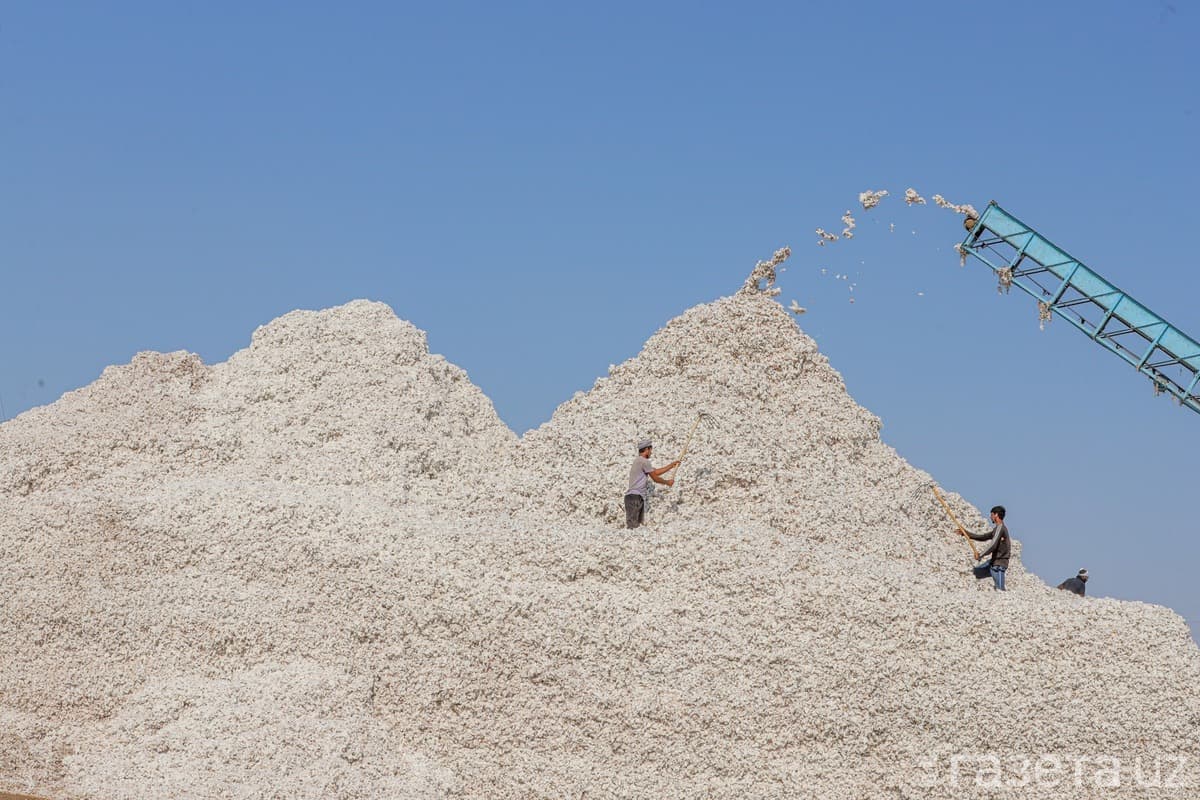
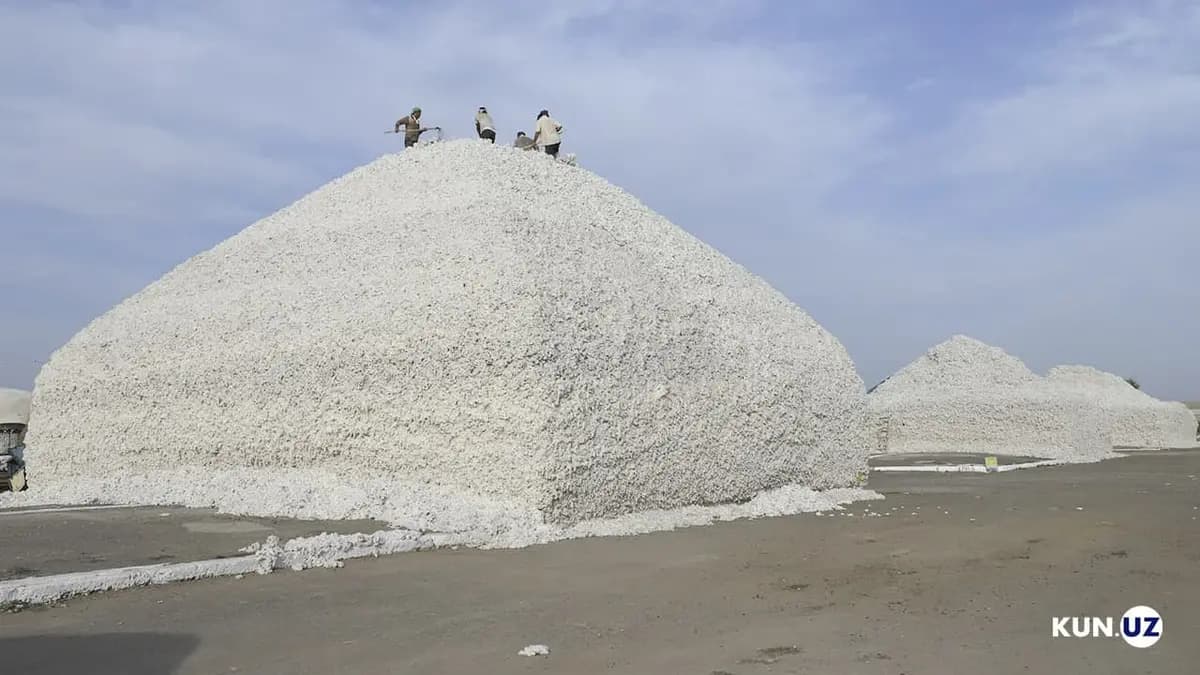
In Uzbekistan, a cotton harvest of 5 million tons has been formed — Kun.uz reported on how this was achieved. The key change was a complete abandonment of the previous sowing schemes with 90 cm and 60 cm row spacing: farms switched to 76 cm row spacing and a single-row scheme. With sowing under the 76×10 cm scheme, the number of plants per hectare was raised to 220–240 thousand seedlings, and with sowing under the 76 cm scheme to 160–180 thousand, whereas previously there were only 80–110 thousand plants per hectare.
Varieties, areas and agrotechnics
The 76×10 cm scheme covered 670.7 thousand hectares (75% of the area), and sowing under the 76 cm scheme covered 218.8 thousand hectares (25%). By variety composition, 603.8 thousand hectares (68%) were sown with foreign varieties resistant to the cotton bollworm and herbicides, while 285.7 thousand hectares (32%) were sown with early-ripening local varieties with high fiber quality. The 'Xinjiang' method was applied on 305.2 thousand hectares — 124 thousand hectares more than a year earlier.
Scientific recommendations and treatments
For farmers and clusters, based on scientific recommendations, eight mandatory 'rules' of cotton growing have been developed: seedling density, sowing scheme, plant management, nutrition, boll ripening, organization of protective strips, adherence to field culture and rules, and an environmentally clean field. To increase resistance to heat, drought and pests, crops were treated with boric acid, aspirin, yeast and silicon fertilizer. Defoliation and desiccation were carried out systematically in three stages for the first time: treatment with ethephon to accelerate the 'aging' of bolls, then with mild defoliants and, finally, with harsh chemicals and desiccants (diquat+ion), which accelerated the full opening of the bolls and made it possible to gather the harvest in a short period.