The key facts
- 43% of Turkey's electricity last year came from clean sources, of which 22% was wind and solar (Ember)
- Coal provided 33.5% of generation in 2025; almost two-thirds of coal is imported
- The Energy Ministry plans to triple solar and wind capacity to 120 GW by 2035
Record pace of green generation
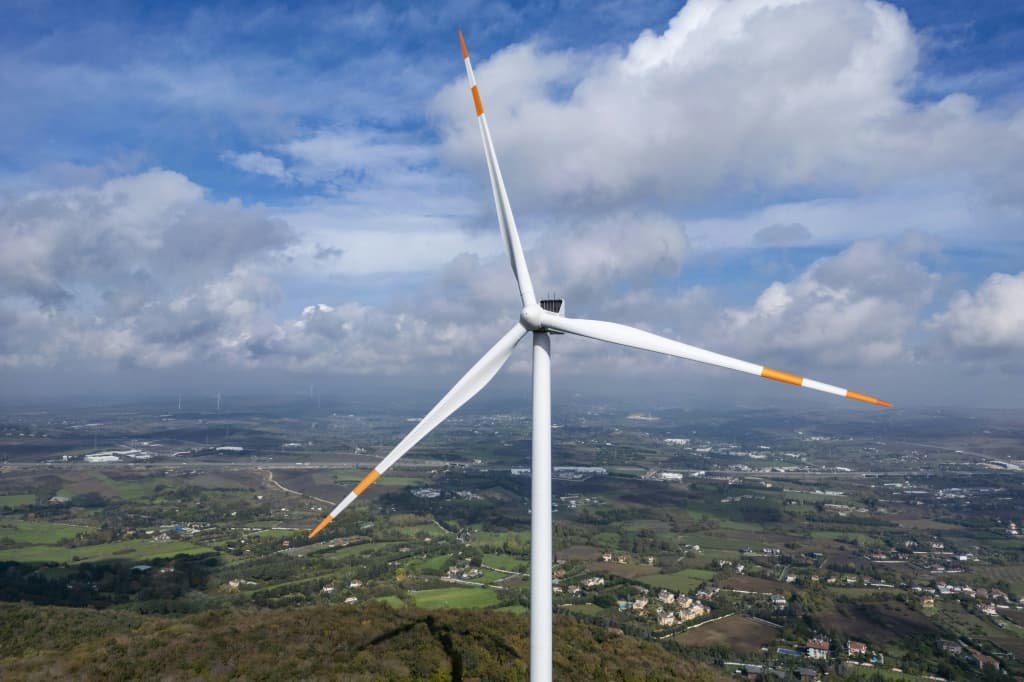
An hour's drive northwest of Istanbul, the 93 MW Çatalca wind farm has been feeding about 287 million kWh a year into the grid for 18 years — enough for roughly 115,000 households. According to its operator Sanko Enerji, this output avoids about 185,936 tonnes of carbon emissions annually. Today the country has nearly 300 wind farms, and Turkey, hosting the UN climate summit COP31 opening on Monday in Antalya, is emphasizing 'electrification' as the central theme of the agenda and pushing for the summit to focus on the practical implementation of climate commitments already made. This is reported by AFP.
Goals and the contradiction with coal
According to the think tank Ember, last year 43% of Turkey's electricity came from clean sources, of which 22% was wind and solar. Energy Minister Alparslan Bayraktar announced a plan to triple installed solar and wind capacity — from about 40 GW to 120 GW by 2035. At the same time, coal remains the leading source of generation: according to the ministry, in 2025 it accounted for 33.5% of electricity production, and almost two-thirds of coal is imported, according to Ember. Turkey continues to build coal plants and has not set a date for phasing out fossil fuels. 'Turkey's continued dependence on coal alongside expansion plans underscores the contradiction at the heart of its current trajectory,' Duygu Kutluay of the organization Beyond Fossil Fuels told AFP, warning that the growth of green capacity must replace fossil generation rather than simply cover additional demand.
Why the coal phase-out is being postponed
In February, Bayraktar explained to AFP that Ankara prioritizes energy affordability and reducing import dependence: 'Coal may first be replaced by gas, and in the medium and long term by nuclear energy.' The head of the Turkish Wind Energy Association, İbrahim Erden, noted that there is no 'single path suitable for everyone,' and the infrastructure does not yet allow simply shutting down coal plants and relying only on wind and solar. According to Emin Emrah Danış, CEO of the consulting firm MOBEN, reducing coal's share will require major investment in electricity storage and nuclear generation; the first reactor of the Akkuyu nuclear plant is expected to start operating by early 2027, but in his view, nuclear plans (two more plants under development) will not replace coal baseload generation until around 2040, and a complete coal phase-out is unlikely before 'the mid-2050s.' An additional argument in favor of domestic green generation is energy security: Turkey is heavily dependent on imports of oil, gas and coal from Russia, Iran and Azerbaijan.