The key facts
- Only 4 of 16 Russian weightlifters underwent ITA out-of-competition testing in the first nine months of 2026
- All 13 members of the North Korean team, unlike the Russians, received at least one ITA test over the same period
- WADA confirmed it is investigating allegations against RUSADA head Veronika Loginova
Few out-of-competition tests
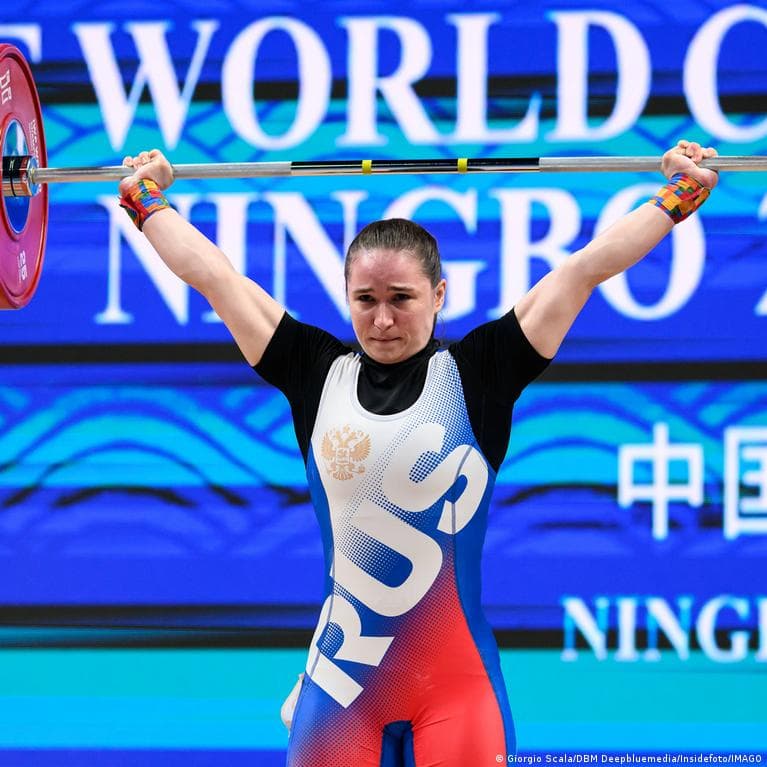
The Russian weightlifting team is competing at the 2026 World Championships, but quarterly anti-doping reports from the International Testing Agency (ITA), examined by Deutsche Welle, show that in the first nine months of the year only 4 of the 16 Russian weightlifters were tested out of competition. Among the untested is two-time European champion Anastasia Romanova, who previously served a two-year doping ban. For comparison: all 13 members of the North Korean team, which also has a history of doping violations in this sport, received at least one ITA test over the same period.
ITA's position and criticism
ITA, which oversees the anti-doping program for weightlifting, told DW that all 16 Russians were tested 'prior to participating in the tournament'; according to information available to the outlet, the tests took place in the Chinese city of Ningbo, where the championship is being held. The agency's press secretary, Marta Nawrocka, added that Russian athletes are among the ten most-tested nationalities in the sport in 2026, and that the fact only two Russians are in the highest-priority testing pool is explained by results- and risk-based criteria. Rob Koehler, head of the Global Athlete movement and former deputy director general of WADA, called the absence of out-of-competition testing 'absurd': in his words, such checks are the foundation of the anti-doping system, and 'you cannot treat Russia like any other country.' The International Weightlifting Federation did not respond to DW's request.
Context of the doping scandal and RUSADA's status
Weightlifting was one of the sports most affected by the doping scandal exposed after the 2014 Sochi Olympics: in Richard McLaren's 2016 report it ranked second only to athletics in the number of detected positive cases. RUSADA has remained disqualified for most of the past decade, and its Moscow laboratory cannot analyze samples, which are sent abroad under a 'strict chain of custody,' as WADA described it. The organization told DW that it cannot enter the country to verify the agency's status due to 'the current geopolitical situation,' but continues monitoring: according to its data, RUSADA has collected thousands of samples this year, including hundreds from weightlifters. At the same time, the disqualified RUSADA retains the right to investigate and pursue anti-doping cases involving Russian athletes, which Koehler called a problem lacking oversight and accountability.
Questions about RUSADA's leadership
Critics point out that questions about RUSADA's leadership and independence show that little has changed in the decade since the McLaren report. Even the IOC, whose president Kirsty Coventry supports the full return of Russian athletes, acknowledged a 'lack of trust' in the agency's governance. Nawrocka said the IOC 'recently entrusted' ITA with an expanded role in Russia ahead of the 2028 Los Angeles Olympics, but did not explain what it would involve or when it would begin. In April, the investigative outlet The Insider reported that RUSADA head Veronika Loginova was in a long-term relationship with an alleged FSB officer; Loginova herself rejected the claims at the time as 'all this nonsense,' and WADA confirmed to DW only that its intelligence and investigations unit is examining these allegations and that the investigation is ongoing.