The key facts
- Russia supports the rotation under which candidates from Latin America and the Caribbean are nominated in the current cycle
- If the region's nominees fail the Security Council straw polls, Moscow will consider a broader range of candidates
- Russia calls on the permanent members of the Security Council to reach consensus on António Guterres's successor before his term expires
Moscow on the choice of the UN Secretary-General
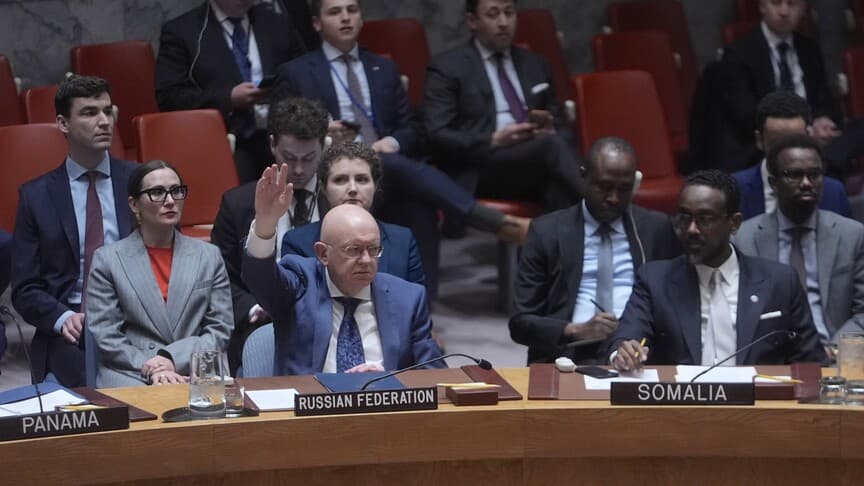
Russia is ready to consider candidates for the post of UN Secretary-General not only from Latin America and the Caribbean if none of the nominees from that region gains sufficient support in the Security Council. This was stated by Kirill Logvinov, director of the Russian Foreign Ministry's department of international organizations, as reported by Anadolu. According to him, the situation around the selection of a candidate is developing dynamically: 'tension is growing and expectations are rising,' and consultations among the five permanent members of the Security Council are being held ever more frequently and in various formats.
Rotation and conditions for candidates
Moscow continues to support the informal principle of geographic rotation, under which Latin America and the Caribbean should nominate candidates in the current cycle. 'At the start of the election campaign, we promised our Latin American partners that we would respect this tradition,' Logvinov noted, adding that if none of the region's candidates passes the 'filter' of straw polls in the Security Council, Russia will be ready to consider a broader range of nominees from other regional groups. Candidates, in his words, must meet Russia's requirements and enjoy broad support among the members of the Council. He named the ability to perform the duties impartially and not succumb to external pressure as the key criterion. Russia calls on the other permanent members to make every effort to reach consensus on António Guterres's successor before his term expires. No visits by candidates to Moscow have been scheduled so far; Logvinov called the briefings in the General Assembly and the Security Council the most suitable venue for presenting their platforms.
On AI in UN reform
Separately, Logvinov commented on the possible use of artificial intelligence in reforming the UN. In his assessment, AI can improve the efficiency of the Secretariat by speeding up routine tasks and reducing the workload on staff: such tools are already used for translation, preparing meeting summaries, drafting and editing internal documents, preliminary analysis of materials, and information searches. At the same time, he emphasized that 'AI is a useful tool, but it remains a tool in the hands of the user, not a replacement for humans,' and decisions at the level of UN reform must remain with professionals. The diplomat pointed to the risk of errors and 'hallucinations' of such systems, as well as to the complexity of diplomacy, which requires trust and personal interaction. He also raised the question of whose algorithms would be used in the Secretariat, noting that their development is currently dominated by Western countries; instead of AI models of reform, he would prefer Model UN conferences, held in particular at dozens of Russian universities.