The key facts
- Adaptation to a scent can set in within the first minutes, although others still smell it
- Longevity depends on the composition: amber, woody and musky notes last longer
- On hair and clothes perfume lasts longer due to the lower surface temperature
Adaptation, not disappearance
If your favorite perfume stops being noticeable after just a few hours, there is no need to rush for the bottle again: according to the perfumer, Letoile expert Anna Borisova, in most cases the fragrance does not go anywhere — the brain simply gets used to the familiar scent, and those around you still smell it. She told Life.ru about this.
How olfactory adaptation works
This phenomenon is called olfactory adaptation and can set in within the first minutes after application. It is especially common among fans of rich compositions: the brain quickly adapts to a high concentration of scent and dampens receptor sensitivity, so a person applies more and more. By midday you may almost stop noticing your morning perfume, while a colleague entering the office will still catch its trail. Borisova advises first asking someone to assess the intensity of the scent from a short distance, and if the fragrance is used daily — switching to another one for a few days and then returning to it.
What longevity depends on
Longevity also depends on the composition: top, middle and base notes evaporate at different rates, and formulas with woody, amber and musky components last longer. «For all-day longevity, choose a perfume with amber-woody materials, vanilla, tonka beans, gourmand notes, leather, woody ones,» the specialist advised. You can test the composition on a paper blotter or napkin, noting the application time, but such a test is not indicative of longevity on skin: the fragrance behaves differently on different surfaces.
Practical techniques
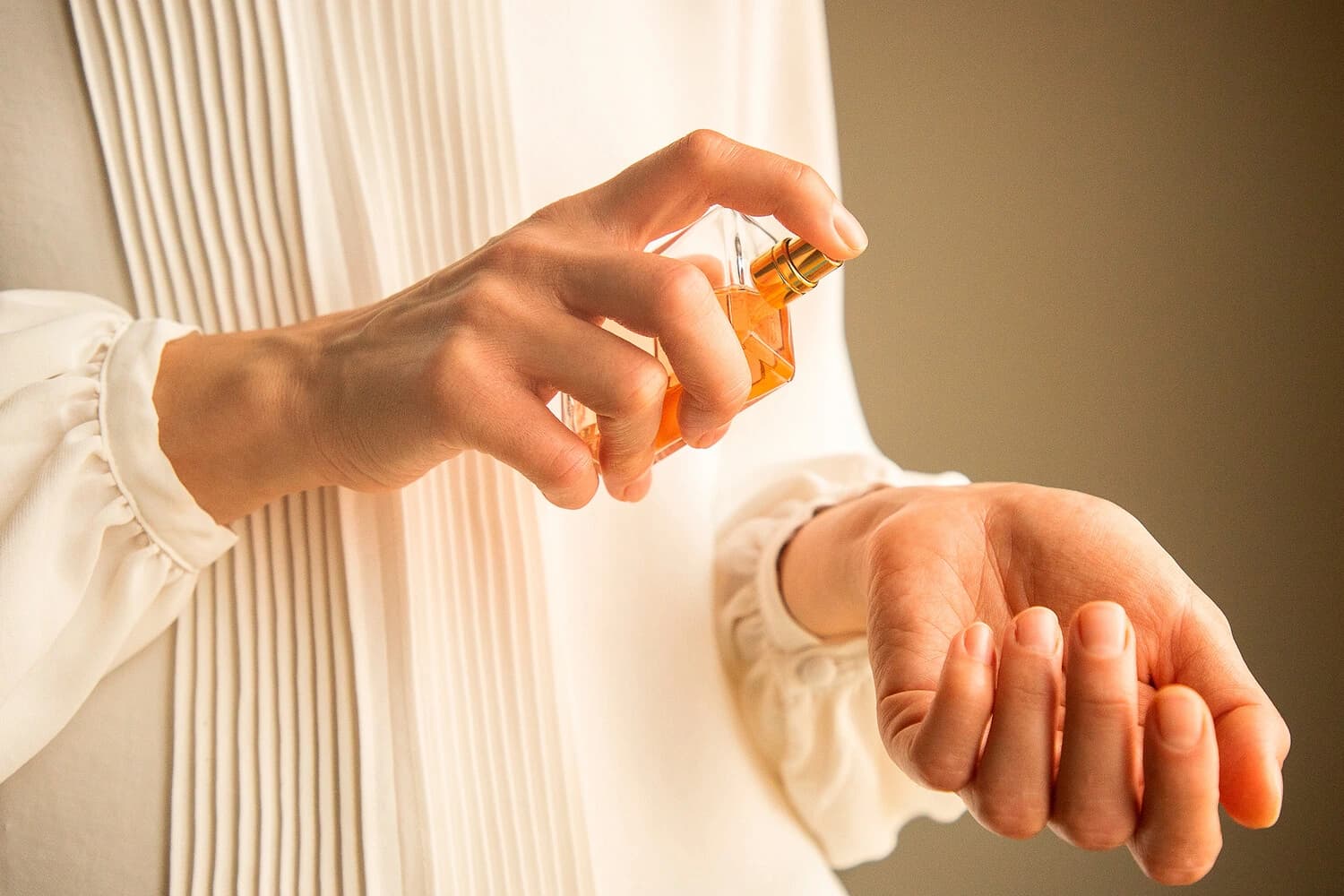
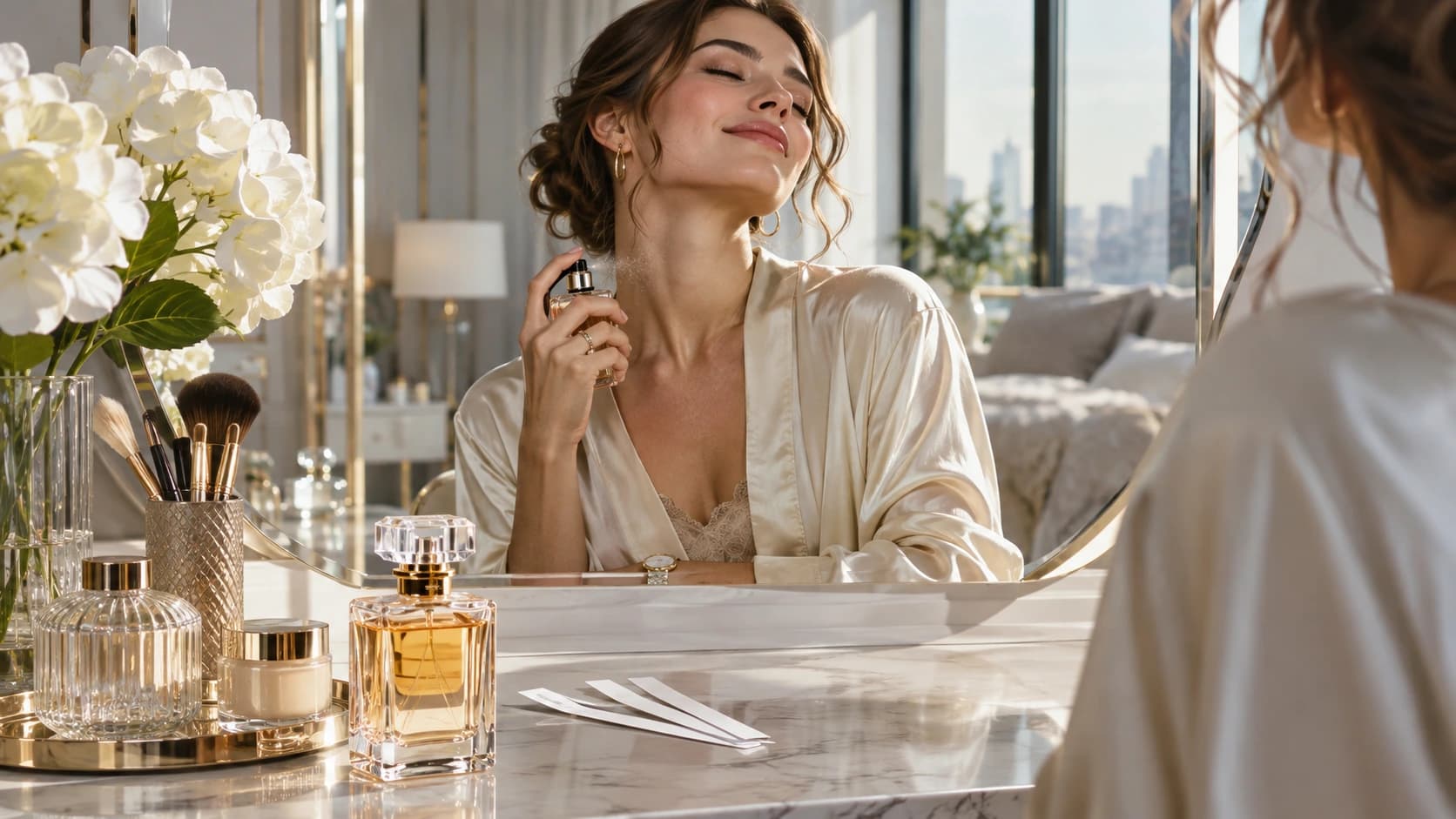
On dry skin, perfume evaporates faster, so Borisova recommends first applying a moisturizing cream or lotion without a strong fragrance — preferably after a shower, once it has been absorbed. Traditional application points (wrists, neck, elbow creases, areas behind the ears) are warm, which speeds up evaporation; on hair and clothes the scent lasts longer thanks to the lower temperature. «To make the perfume last longer, we apply it to hair and clothes. There the temperature is much lower than body temperature,» the perfumer noted. However, alcohol-based perfumes can dry out hair — special perfumed products are better for it, and before spraying on clothes you should make sure the composition does not leave stains. Another common mistake is rubbing the wrists after application: friction heats the skin and accelerates the evaporation of volatile components; it is better to let the fragrance dry naturally. There is no universal number of sprays: to start with, one or two is enough, especially if the fragrance is rich.
Context
Earlier, as noted in the publication, a cosmetologist warned about the dangers of home beauty procedures with lemon juice, baking soda and other improvised remedies: such experiments can cause chemical burns, irritation and acne flare-ups, while harsh scrubs and the independent use of professional peels increase the risk of inflammation, pigmentation and scarring.