The key facts
- UCLA experts in The BMJ propose professional shows instead of home fireworks, school campaigns and graphic warnings on packaging
- Netherlands: 1,239 injured over New Year 2025–2026 (+7% year-on-year); Italy: 283 injured, 54 hospitalised
- EU fireworks imports in 2024: 120,000 tonnes worth €406.7 million, up 9.5% in volume and 21.5% in value
Doctors demand stricter rules
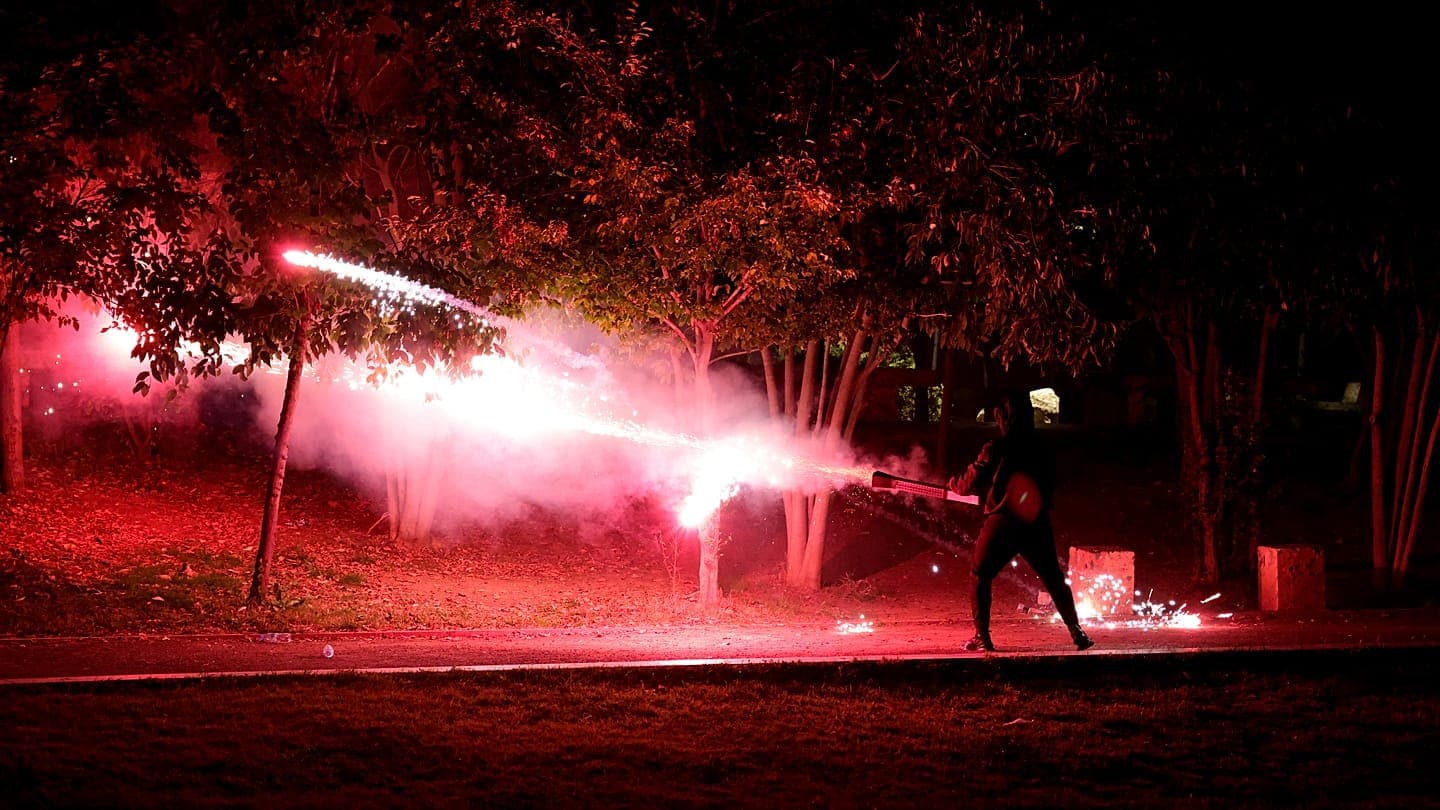
Fireworks remain a familiar attribute of New Year and national holidays, yet every year they injure thousands of people. Experts from the University of California, Los Angeles (UCLA), in a opinion article in the journal The BMJ, call the danger of fireworks an underestimated threat to public health and advocate stricter regulation. Among typical emergencies they list severe burns, barotrauma from the blast wave, traumatic brain injuries, amputated fingers and irreversible blindness. The victims are most often children, young men, rural residents, people from low socio-economic groups and random passers-by.
What the authors propose
The authors call for sustained awareness campaigns and propose three specific measures: promoting professional public shows instead of home launches — as a counterweight to social media that popularise private use; running school campaigns for primary and secondary school pupils with real stories and images of the injured; and introducing graphic warnings with images of injuries on firework packaging — by analogy with cigarette packs.
The scale of the problem in Europe
According to euronews, every year thousands of Europeans seek medical care for fireworks-related injuries. The Netherlands systematically collects statistics: over the 2025–2026 New Year holidays, an estimated 1,239 people received emergency care — 7% more than a year earlier. In Italy, the Interior Ministry reported 283 people injured on New Year's Eve, 54 of whom were hospitalised. Meanwhile, many countries have no national registries of such incidents, and doctors insist on systematic data collection to assess the true scale of the problem.
A growing market amid growing risks
Despite the risks, the fireworks market in Europe is growing. According to Eurostat data published in December 2025, in 2024 the EU imported 120,000 tonnes of fireworks from third countries worth €406.7 million — 9.5% more by volume and 21.5% more by value than in 2023. A 2025 European Commission working paper cites a different overall figure for pyrotechnic imports — a record €452 million in 2024, with fireworks accounting for the largest share; the discrepancy is explained by different product coverage and methodology. The largest importers are the Netherlands (37.0% of extra-EU imports) and Germany (35.6%), followed by Poland (7.4%).
How it is regulated in the EU
In the EU, the circulation of consumer fireworks is governed by a directive that harmonises safety requirements but leaves countries the right to impose additional restrictions on sale, storage and use. Products are divided into four hazard categories: for the safest indoor items such as sparklers and party poppers the minimum age is 12, although in Germany and France it is higher for low-hazard outdoor fireworks — 16 and 18 respectively; for medium-hazard items requiring special knowledge, the EU minimum is 18. A number of countries, including the Netherlands, Germany, France and Italy, have set stricter national rules.