The key facts
- The towel rack withstood only about 90 kg and the belt about 70 kg, which exposed the staged suicide
- Traces of petroleum products under the car revealed the burning of a body to conceal a murder
- Dubai Police's forensic engineering section is the first in the Middle East and operates under 23 protocols
How forensic engineering exposes staged crime scenes
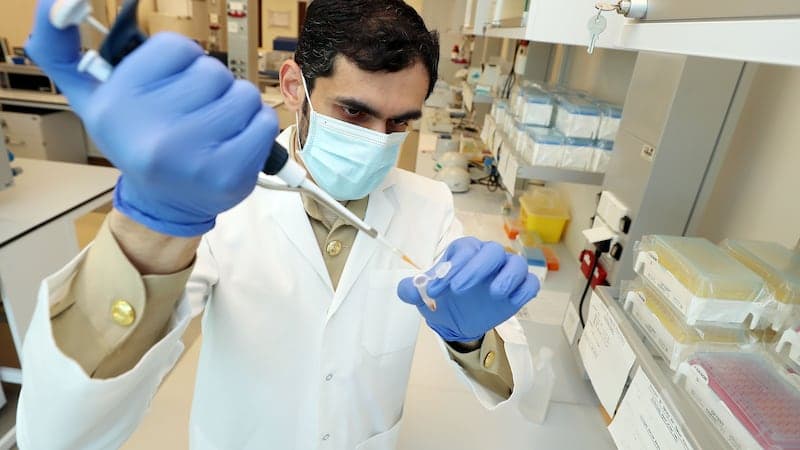
Dubai Police have revealed details of several investigations in which forensic engineering played a decisive role. The working methods were described by Lieutenant Colonel Dr. Engineer Mohammad Ali Al Qasim, who heads the forensic engineering section at the General Department of Forensic Science and Criminology of Dubai Police. The material was published in an episode of the Dubai Police Podcast, released on Friday at 6:00 PM on YouTube, Apple Podcasts and Spotify.
The fire that failed to hide a murder
In one case, a woman and her lover tried to cover up the murder of her husband by burning his body along with his car near an industrial area. They attempted to stage the scene as an accident, but traces of petroleum products were found under the vehicle. Chemical and DNA analyses linked materials from the scene to the victim's body, confirming that the fire had been deliberately set to destroy evidence. The perpetrators were convicted. Al Qasim noted that fire investigations follow different procedures for buildings and vehicles: experts examine physical traces, materials, digital data, the point of origin and the spread of the fire.
The belt that could not have held the weight
In another case, an Asian national was found hanged from a towel rack in a villa — a scene resembling a suicide. Tests showed that the rack breaks under a load of about 90 kg, while the belt can hold only about 70 kg. These results contradicted the circumstances in which the body was found and made it possible to establish that the scene had been staged to conceal a murder; further investigation led to the perpetrator's arrest.
Facial reconstruction from a skull and other methods
In a third case, a decomposed body was found in the desert and could not be identified by conventional methods. Specialists applied 3D scanning, genomics, DNA analysis and digital forensics to reconstruct an approximate facial likeness from the skull, as well as to determine the victim's sex, age group and possible nationality. The reconstructed image was distributed to criminal investigation units — the victim was identified, the killer was found and arrested. According to Al Qasim, the case demonstrated the importance of combining different forensic disciplines in complex investigations.
23 protocols and digital reconstruction of incidents
The forensic engineering section operates under 23 approved examination protocols — covering buildings, vehicles, electrical and mechanical systems, fires, electrocution, structural collapses, falls and road accidents. According to Al Qasim, Dubai Police were pioneers in this field, establishing the first forensic engineering unit within a forensic science system in the Middle East. The department cooperates with specialists in forensic medicine, chemistry, biology and digital forensics, compiling its findings into technical reports for the judicial authorities. Digital twins and 3D scanning help document and reconstruct explosions, collisions and falls from height, verifying whether physical evidence supports the claimed account of events. A separate area is prevention: after identifying a defective airbag linked to fatal crashes, the police coordinated a recall of the affected vehicles and published their findings in a peer-reviewed scientific paper.