The key facts
- Operations of enterprises in Namangan and Tashkent have been temporarily suspended for violations
- Operations of enterprises in Namangan and Tashkent were temporarily suspended for violations
- From January 1 to September 21, 2026, the average PM2.5 concentration in Tashkent decreased by 25%
- Goals set through the end of 2026: a 2% reduction in emissions and modernization of 30% of industrial enterprises
- By the end of 2026, targets have been set: a 2% reduction in emissions and modernization of 30% of industrial enterprises
Suspension of violators' operations
The National Committee for Ecology and Climate Change reported strengthened oversight of enterprises affecting ambient air quality — this is reported by UzNews.uz. In Namangan, after residents of the 'Porloq' mahalla complained about an unpleasant odor, the 'H.S.' laundry soap manufacturing enterprise was inspected. It was found to have been operating without dust-and-gas capture filters, laboratory tests revealed exceedances of standards for certain chemical indicators, and the state environmental expertise conclusion was missing. The enterprise's operations have been temporarily suspended until the violations are remedied.
Raids and modernization
Similar measures were taken in the Sergeli district of Tashkent: in the 'Yuqori Darkhon' mahalla, inspectors found a greenhouse whose boiler was running on coal in violation of environmental requirements with a faulty filter. The greenhouse's operations were suspended and the responsible person was fined. According to the committee, the raids continue around the clock. Monitoring is being expanded in parallel: 459 automatic stations have been installed at Category I–II enterprises, 554 enterprises have been inventoried in Tashkent, and 186 dust-and-gas purification units have been modernized at 67 facilities. More than 280,000 vehicles have been covered by environmental control, and over 2.2 million eco-stickers have been issued; according to the agency's estimate, the measures taken have prevented the emission of 2.52 thousand tons of pollutants.
Scientific monitoring and greening
At the Green University laboratory, a thermal-optical carbon analyzer is being introduced to determine the content of organic and elemental carbon in particulate matter. The initiative is being implemented under a UNDP project on the resilience of Central Asian cities, with financial support from the Government of Japan and in cooperation with the National Committee for Ecology. In Tashkent, automatic sampling has been organized at ten sites to determine PM2.5, and the 'Eco-Control' online platform has been launched. In the Tashkent and Syrdarya regions, a 'green belt' covering 330 hectares is being created, and along 33 kilometers of the capital's Small Ring Road — a 'Green Corridor'.
Fines for burning leaves
Since the beginning of 2026, more than 4,100 cases of burning fallen leaves, branches and other plant residues have been identified; together with the 'Uzspace' Agency, 915 cases of burning crop residues in fields have been detected through space monitoring. Fines for citizens range from 1 million 320 thousand to 2 million 200 thousand soums, and for officials from 8 million 800 thousand to 13 million 200 thousand soums; in case of a repeat violation within a year, the amount increases. Experts warn that burning releases PM2.5 and PM10, carbon monoxide and nitrogen oxides, and that children, the elderly and citizens with respiratory and cardiovascular diseases are especially vulnerable. Composting and using the residues as fertilizer are recommended instead of burning. Pollution can be reported via the short number 1157 or through the Telegram bot @ecogovuz_bot.
Why the air is worse in winter and what results have been achieved
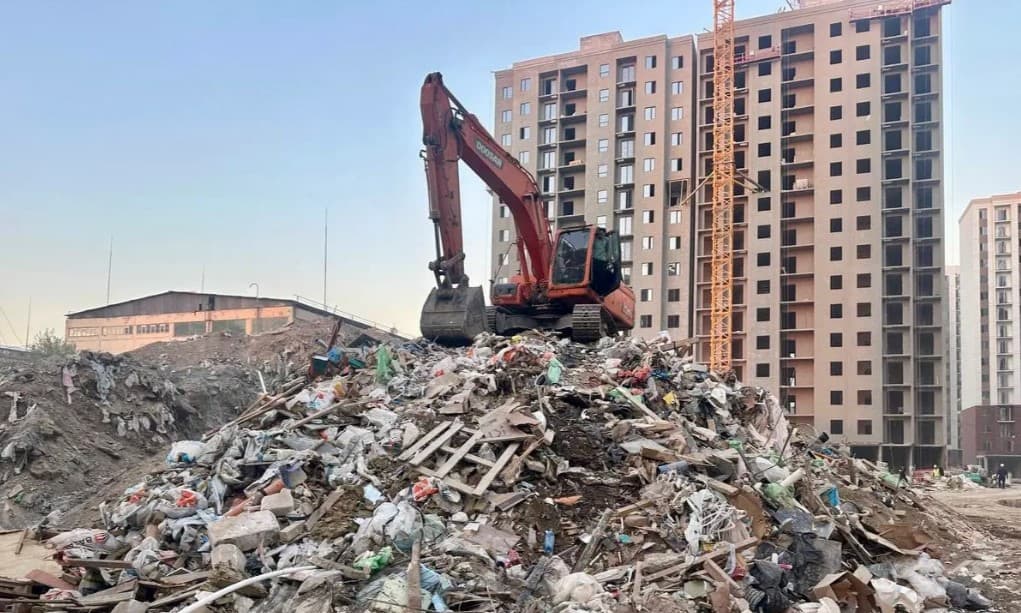
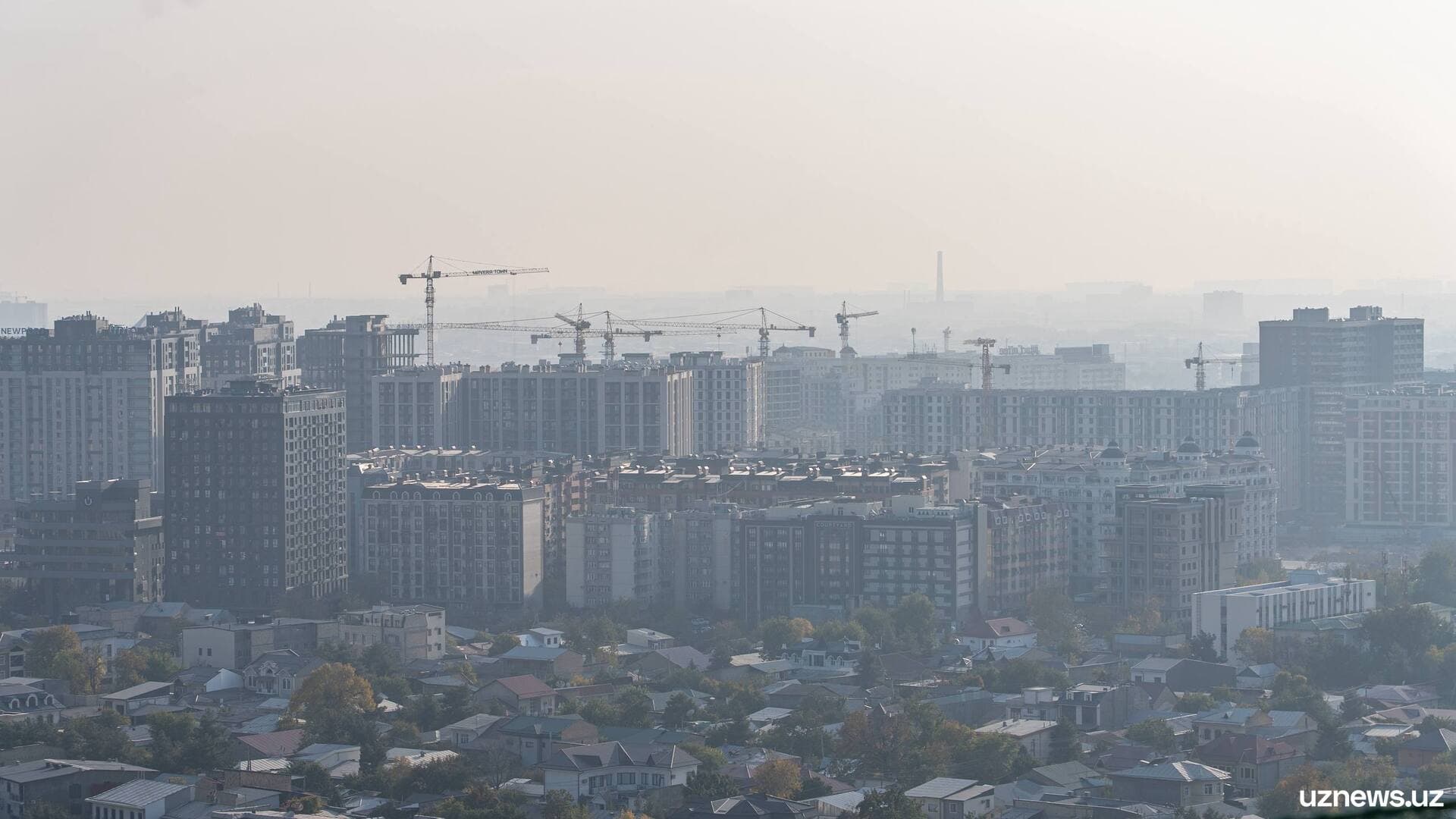
Experts attribute the seasonal deterioration in air quality to increased emissions from heating and unfavorable meteorology: Katja Loven, head of the air quality group at the Finnish Meteorological Institute, points to the weakening of vertical mixing of air masses in winter, while Ben Jarichani, a professor at James Cook University, points to temperature inversions, during which PM2.5 concentrations rise even without an increase in emissions. Timur Khojanazarov, an associate professor at Kyoto University, lists industry, energy, transport, heating and construction work among the sources of pollution in Tashkent, and names climate change as an additional factor, intensifying droughts and dust storms in the region. According to the committee, from January 1 to September 21, 2026, the average PM2.5 concentration in Tashkent decreased by 25% compared with the same period last year, and the number of days with good air quality under the national standard increased from 81 to 147. By the end of 2026, the following targets have been set: reduce emissions, including transport-related ones, by 2%, cut the number of days exceeding PM2.5 standards by 7%, equip 40% of construction sites with dust suppression systems, and modernize 30% of industrial enterprises.