The key facts
- Polls give the Democrats the advantage, but their reliability is in question
- The 'wave' scenario: control of both chambers with a margin, including Texas and Kansas
- The Republican scenario: keeping both chambers if the polls are wrong
Three possible election outcomes
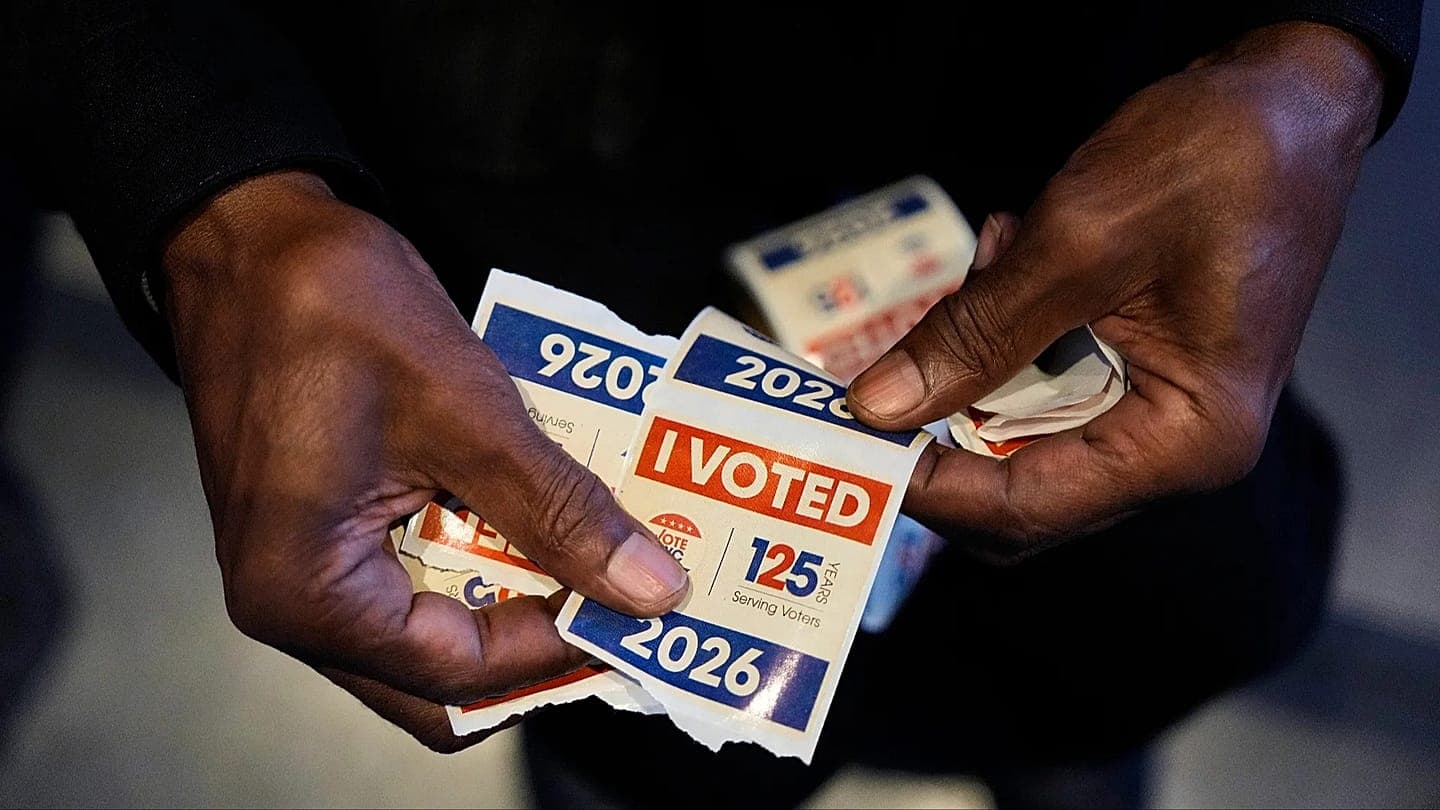
The day of the US midterm elections has arrived: after months of campaigning and billions of dollars spent, Americans are deciding the composition of Congress. According to the latest polls, the Democrats have the advantage, but, as BBC North America correspondent Anthony Zurcher notes, polls are not always reliable. He describes three possible outcomes, the early signs of each, and the consequences for the country.
Scenario one: a big Democratic wave
Historically, midterm elections favour the party out of power. To this add, according to the BBC, a historically unpopular president, a war with Iran that has driven up consumer spending, and contentious policies — tough immigration enforcement and support for data centre construction. In this scenario, the Democrats not only take the House of Representatives but exceed the required 218 seats by a wide margin, flipping even 'safely conservative' districts. To control the Senate, they would need to win nearly every competitive race, including upsets in Texas (which has not elected a Democrat in a generation) and Kansas (almost a century). Early signs: holding targeted districts in Florida, wins in Republican districts in North Carolina, Michigan, New York, Virginia and Kentucky, and flipping a Senate seat in South Carolina.
Scenario two: a 'Democratic trickle'
The polls may prove only partly right: the Democrats win a majority in the House, but a narrow one, forcing their leadership into constant negotiations with the left and centre factions. In the Senate, a flip of one or two seats: North Carolina looks almost guaranteed, but conservative states may remain out of reach. Possible twists: the resilient Republican Susan Collins holds Maine, the left-wing candidate Abdul El-Sayed fails to hold Michigan, and the dispute over the two Dan Sullivans on the Alaska ballot (a court rejected the Trump administration's lawsuit over the matter) sinks the Democrat Mary Peltola. The scenario's condition is Republican turnout on election day matching the Democrats' early voting. The result — a divided Congress and political gridlock. Signs: Florida solidly Republican, Democrats taking individual seats in Virginia and Pennsylvania, but Republicans holding on in safer districts.
Scenario three: a good night for the Republicans
This outcome requires that the polls — which previously underestimated Trump's support — be wrong, and that the competitive races mostly break in the Republicans' favour: high turnout among their voters and a return of independent and Latino votes. Control of the House could be decided in California, with its multi-day counting of mail-in ballots, and a narrow majority could be secured for the Republicans by the new district boundaries in Texas, Florida and North Carolina. In the Senate, a flip of Michigan is possible, where a Democrat held the seat before the election. In that case, Trump could declare a renewed mandate the next morning and continue his agenda with the support of a Republican Congress. Signs: easy re-election of senators Ashley Moody (Florida) and Jon Husted (Ohio), holding positions in Pennsylvania and Virginia, and flipping Democratic seats in North Carolina, Ohio and Florida.
 Image source, Getty Images
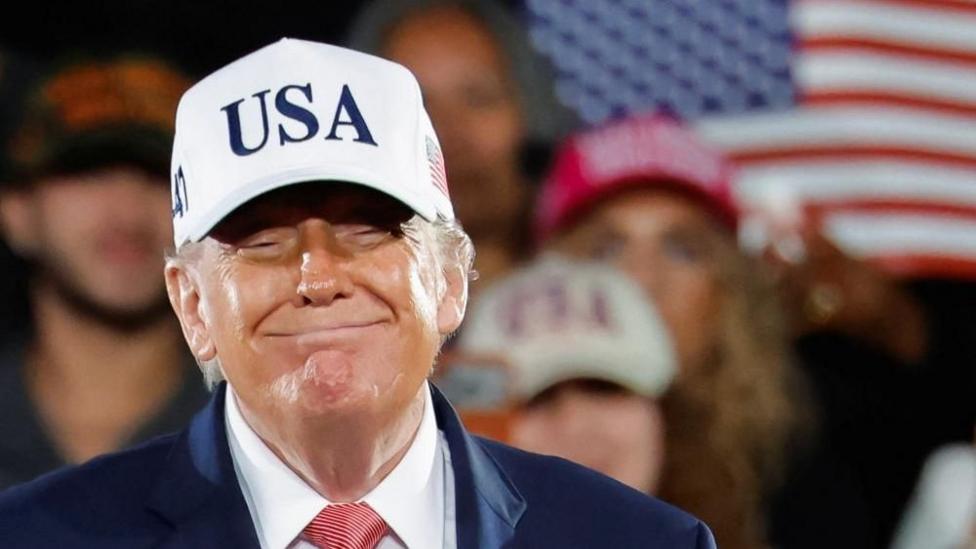 Image source, Reuters