The key facts
- FBI linked the $6 billion theft from Binance to the North Korean hacker group TraderTraitor; Kim Yo-jong called the accusations a 'political provocation'
- North Korea tested cruise missiles with a new cluster warhead capable of destroying an area of 5–6 hectares, according to KCNA
- An expert estimates the stolen amount equals nearly a quarter of North Korea's estimated annual GDP
FBI Accusations and Pyongyang's Response
On Saturday, the FBI stated that the North Korean-linked hacker group TraderTraitor was involved in the hack of the cryptocurrency platform Binance and the theft of $6 billion. In response, Kim Yo-jong, sister of North Korea's leader, described the accusations as 'absurd rhetoric containing nothing new,' pointing to previous US claims regarding Pyongyang's involvement in the Bybit exchange hack a year earlier, and characterized the FBI's statements as a 'serious political provocation.' This is reported by AFP.
Scale of the Theft and Reasons for Denial
Experts consider this incident potentially the largest cryptocurrency theft in history. According to Michael Bosack, founder of the Parley Policy Institute and a former UN Command official, the stolen amount equals 'nearly a quarter of North Korea's estimated annual GDP.' He believes North Korea had to respond due to the level of international attention the incident attracted, and the goal of denial is to preserve the channels through which the stolen cryptocurrency can continue to be laundered and utilized: if external parties begin to 'close the doors,' the funds will not support the regime's current priorities. AFP also recalls the conclusion of a 2024 UN report stating that revenues from North Korean cyberattacks, according to available data, helped finance the development of weapons of mass destruction.
Missile Test on the Same Day
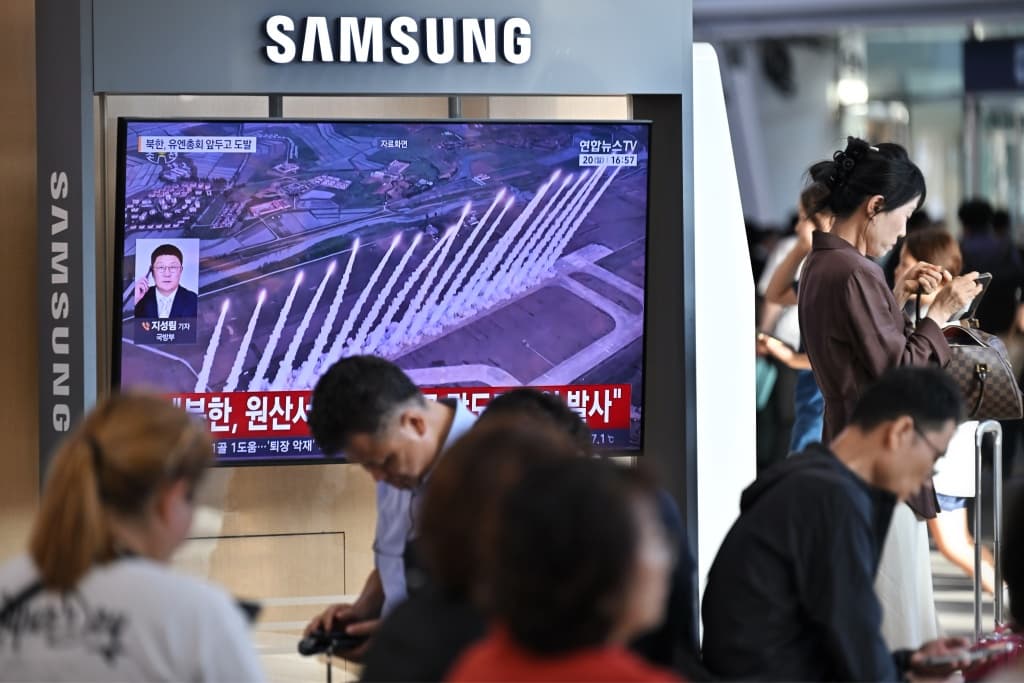
On Monday, parallel to the diplomatic reaction, North Korea conducted a launch of strategic cruise missiles equipped with a new cluster warhead, the KCNA agency reported on Tuesday. According to its data, the medium-caliber warhead is capable of 'turning the target zone covering 5–6 hectares into ashes,' and the test 'perfected' the ability for vertical strikes due to improved maneuverability during the final phase of the trajectory. Professor Lim Eul-chul from Kyungnam University believes that North Korea is demonstrating the ability to disable 'key military infrastructure of South Korea and the United States' with a single cruise missile—runways, radar bases, air defense batteries, and troop concentrations—ensuring 'dual deterrence' up to the stage of nuclear weapon deployment.
Seoul's Reaction and Test Status
The South Korean military did not report on the launch, nor on the test conducted on Sunday. A representative of the Joint Chiefs of Staff, Jang Do-young, stated that Seoul and Washington are 'closely coordinating and conducting a detailed analysis of the characteristics' of the launch, adding that the military 'does not announce all North Korean launches' due to operational security concerns and the protection of intelligence assets. Unlike ballistic missiles, North Korea's cruise missile tests are not prohibited by UN Security Council sanctions. Recently, North Korea also tested attack drones, a new torpedo system, and a medium-range hypersonic missile.