The key facts
- Belarus has received several Rassvet devices for testing; they are primarily being considered for the Ministry of Emergency Situations.
- First Deputy Minister of Communications of the republic Pavel Tkach called the system modern and claimed it has technologies that Starlink lacks.
- The developers plan to expand the constellation to 900 satellites by 2035.
Testing in Belarus
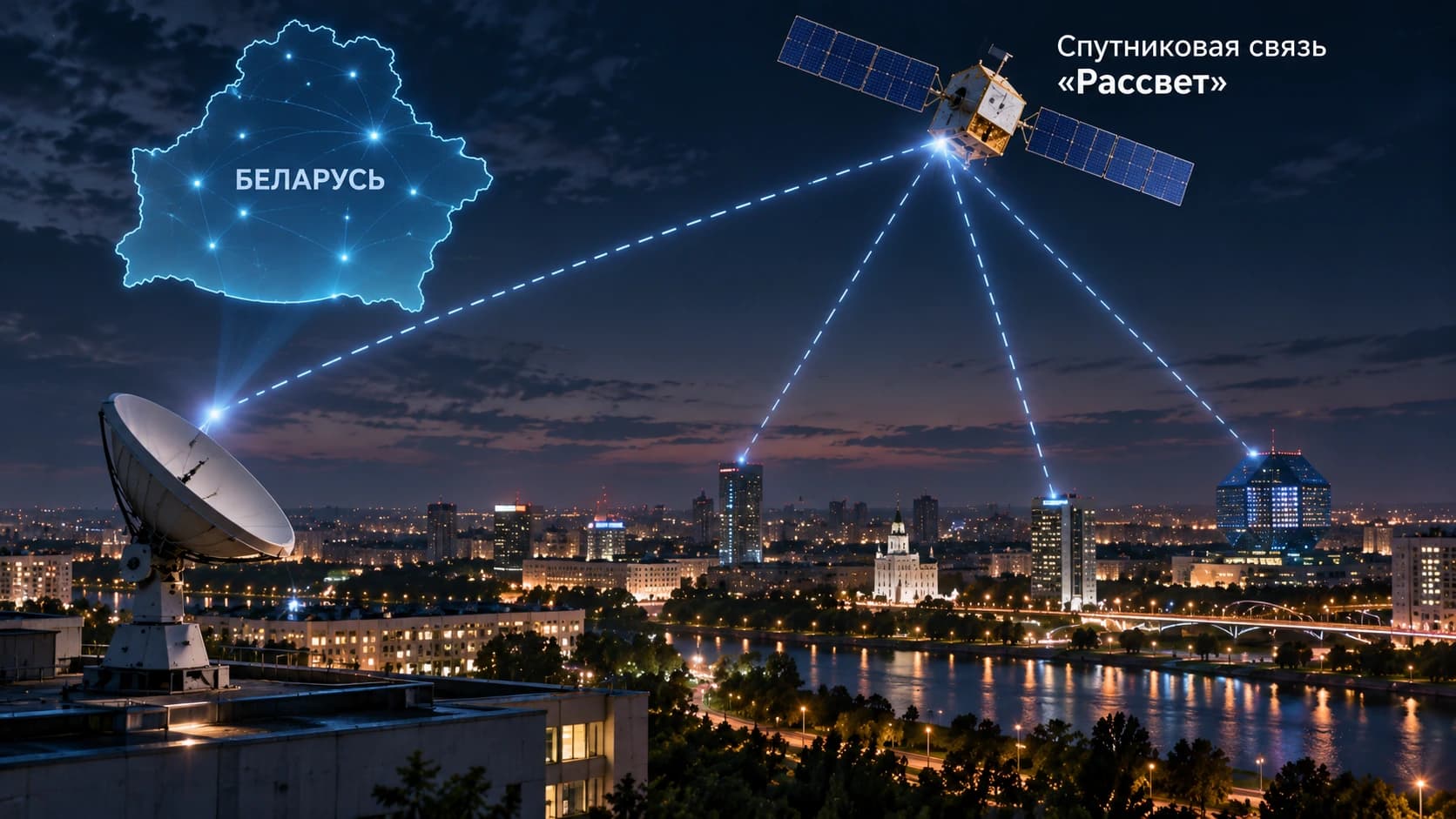
Belarus has begun testing the Russian satellite communications system Rassvet — a domestic counterpart to Starlink. Minsk has received several devices for testing, and they are primarily planned to be trialed in the work of the republic's Ministry of Emergency Situations. This was announced by Pavel Tkach, First Deputy Minister of Communications and Informatization of Belarus, on the STV television channel, as reported by Life.ru.
Why the Ministry of Emergency Situations needs the system
Tkach explained the practical value of the equipment using the example of a hurricane in Mozyr, Gomel Region, which left the city without electricity. Due to communication outages, emergency services found it difficult to coordinate clearing streets of fallen trees and repairing networks: the equipment worked only as long as battery charge lasted, and staff had to return to recharge, which did not solve the problem. According to him, the Russian devices allow a terminal to be quickly set up and the necessary communications connected.
Prospects and limitations
For now, this is specifically about testing: the devices are being considered 'in special agencies,' and no decision on implementation has been announced. Tkach noted that if the developers launch a sufficient number of satellites into orbit, Rassvet will begin operating as a commercial communications system that residents of Belarus will also be able to use. He called the system a modern development meeting world standards and stated: 'It uses certain technologies that even Starlink does not have' — he did not specify exactly what these advantages consist of.
Constellation plans
The development of the system depends on scaling up the orbital constellation. As Life.ru previously reported, citing the developers, the number of Rassvet satellites is planned to be increased to 900 by 2035. Doctor of Technical Sciences Alexander Nikitin explained that the constellation will be built up gradually: constant communications will require several orbital planes, each of which will host dozens of satellites. Thus, the system's availability to Belarusian users is directly tied to the pace of this build-up.