The key facts
- Thomas Barnouin is the first of the 47 French detainees handed over to Iraq by France whose involvement in extremism dates back to the Iraqi insurgency of the 2000s
- He pleaded guilty to membership of ISIS and participation in terrorist acts; the verdict is expected on 18 November
- Last week ten other French nationals received long prison terms, and three more were given life sentences
A confession in a Baghdad court
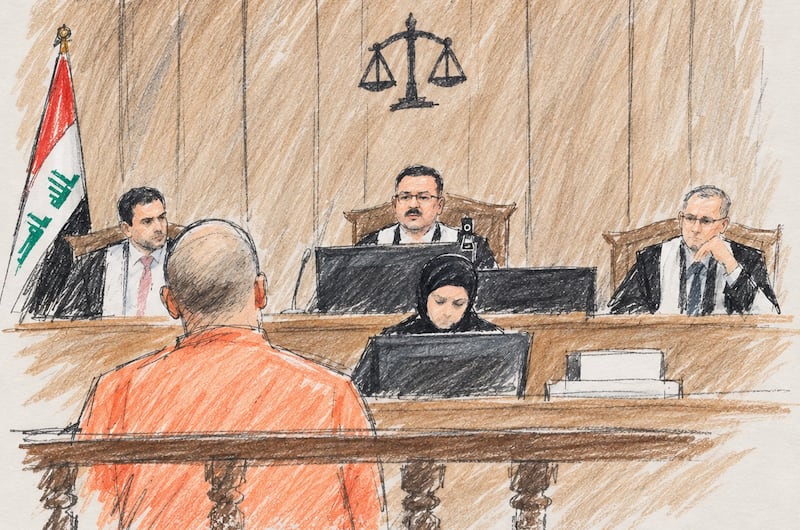
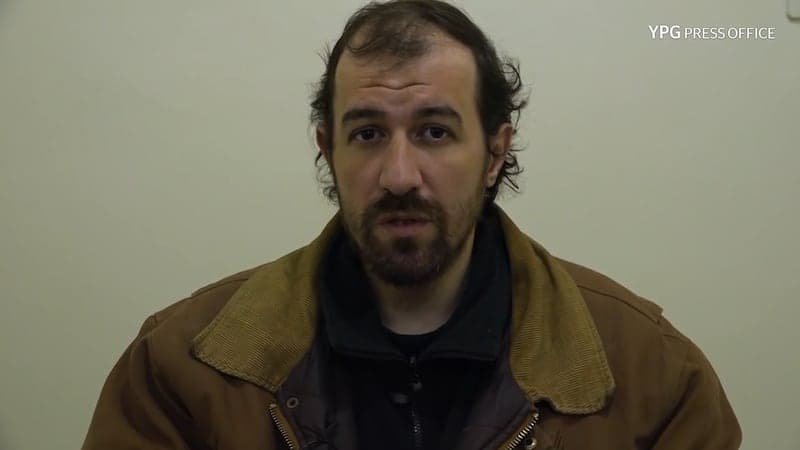
On Sunday, 45-year-old Frenchman Thomas Barnouin appeared before the Karkh Criminal Court in Baghdad. He converted to Islam and in 2014 travelled to Syria to support ISIS. He pleaded guilty to membership of the group and to taking part in terrorist acts that threatened public order and people's lives. According to Barnouin, it was propaganda for war against Bashar al-Assad that brought him to Syria: 'In 2012 the propaganda was strong — to fight Assad in factions such as Jabhat al-Nusra and Ahrar al-Sham,' he said, adding that he considered defending the religion a Muslim's religious duty. The National reported this.
A biography that goes beyond a typical case
Barnouin is one of 47 French detainees handed over to Iraq last year, and the first of them whose involvement in extremism dates back to the Iraqi insurgency of the 2000s, marking a shift in the nature of trials of French ISIS members. Most of the others were radicalised around 2013–2014. According to materials presented to the court, Barnouin, the son of teachers from Toulouse, converted to Islam around 2000, in 2006 went to Medina to study theology and Arabic, and then, via Jordan, tried to enter Iraq to fight against American and Iraqi forces as part of the Mujahideen Army group. He was arrested by the Syrian authorities and handed over to France; in 2009 in Paris he received five years in prison for membership of the so-called Artigas network and for recruiting young people. After his release in 2011, according to the investigation, he re-established a cell in the Toulouse area, and in December 2017 he was captured by Kurdish militia in Hasaka along with six other French nationals.
Remorse and the question of the court's legitimacy
In court, Barnouin, like other French defendants in recent weeks, sought to distance himself from the group's actions, claiming that he did administrative and propaganda work: in 2014 he served in Latakia, then was transferred to the translation office of the Al Hayat media centre in Raqqa province, and later worked as an imam in Al-Mayadeen. 'I did not take part in criminal operations and condemned them. I deeply regret joining this organisation,' he said, adding that the organisation 'tortured opponents' and 'has neither religion nor morality.' He also questioned the very procedure: 'I spent nine years in detention and have not seen my family. The treatment here is better than in Syria, but why was I handed over to Iraq? Do I have the right to ask this question?' Judge Mohammed Salman replied that 'Iraqi law allows you to be tried for joining a terrorist group.' The verdict is expected on 18 November.
Context: a series of sentences for French nationals
Barnouin's case is being heard against the backdrop of a series of trials of French ISIS members in the same court. Last week ten French citizens received long prison terms, and on 29 October the court sentenced three more French ISIS members to life imprisonment, as The National reported. Thus, hearings in the cases of detainees handed over to Iraq by France have been continuing for several weeks in a row.