The key facts
- Baghdad claims a national consensus on neutrality in the event of a renewed US-Iran war
- Iraq's pro-Iranian factions previously attacked Kuwait, Saudi Arabia, Bahrain and the UAE
- The deadline for armed factions to hand over their weapons to state control has been extended to 30 June 2027
Statement at the Manama Dialogue
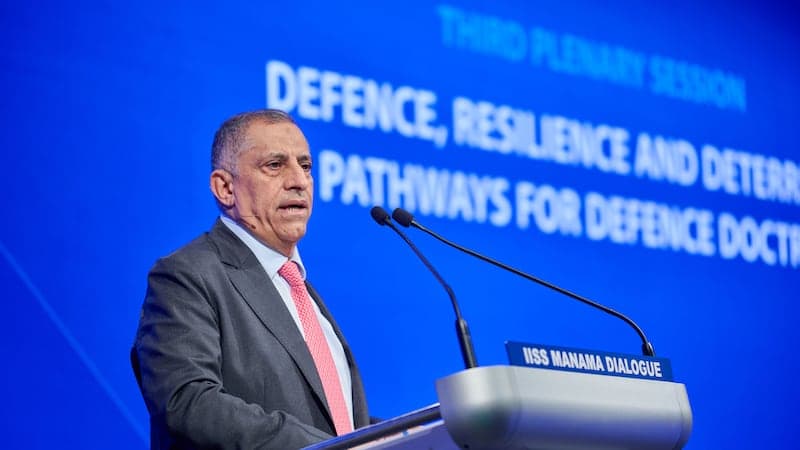
Iraq intends to remain neutral in the event of a renewed war between the United States and Iran and will do everything possible to ensure that no threats to its Gulf neighbours emanate from its territory. This was stated by Iraq's National Security Adviser Qasim al-Aabudi in an interview with The National on the sidelines of the annual IISS Manama Dialogue security forum in Bahrain. According to him, there is a broad national consensus in the country that Iraq should not intervene in the conflict or become part of it.
Context of the war and internal factions
The statement came against the backdrop of Tehran-backed armed factions in Iraq launching drones and missiles at Kuwait, Saudi Arabia, Bahrain and the UAE after the outbreak of the war in the Middle East in February — with American and Israeli strikes on Iran. Al-Aabudi acknowledged that sympathies for one side or the other are possible in the country, but stressed that the government is obliged to prevent such sentiments from turning into action. He also noted that the war hit Iraq hard: for months the country was unable to export oil, and the economic situation was extremely difficult.
Peace talks have reached a deadlock
The interim agreement reached in June failed to secure a lasting ceasefire and did not restore normal shipping through the Strait of Hormuz. Iran proposed that Washington lift the blockade of Iranian ports in exchange for the strait being opened within seven days. Qatari mediators arrived in Tehran again on Friday, but the parties still disagree on what should come first: nuclear talks or easing the blockade and oil sanctions.
Disarming the factions and relations with Kuwait
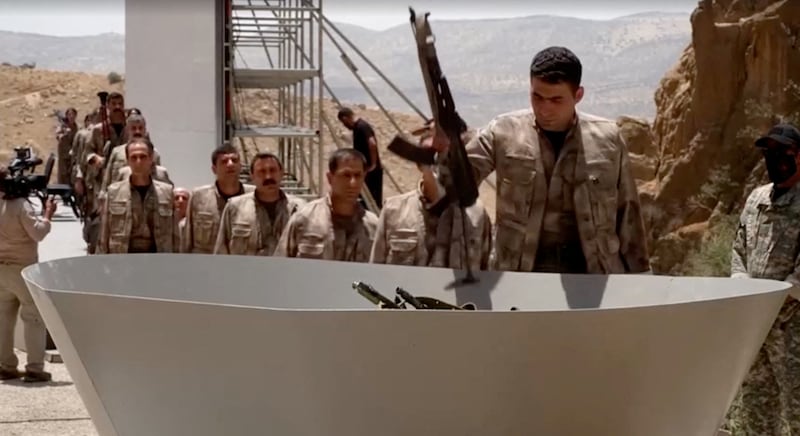
On the question of bringing the armed factions' weapons under state control, al-Aabudi said that Iraq is 'on the right track' and has made significant progress in a short time: within a few months the issue was formalised into a clear national framework document. Earlier this month, Iraq's Foreign Minister Fuad Hussein expressed confidence that the country would meet the deadline of 30 June 2027, despite resistance from some powerful pro-Iranian factions; the original deadline of 30 September was extended.
Kuwait and the ISIS threat
Baghdad is also seeking to resolve disputes with Kuwait: these concern the maritime border and the Khor Abdullah waterway, as well as missing Kuwaitis and property taken away since Iraq's 1990 invasion. In September the two countries agreed to establish a joint working group; al-Aabudi personally visited Kuwait twice and called on it to expand economic cooperation and investment in Iraq. According to him, Iraq's Prime Minister Al Zaidi intends to visit Kuwait in the near future. As for ISIS, the adviser described the remaining threat as limited and the situation as fully under control: small groups operate only in remote areas, although earlier this month, in an ISIS attack on a police facility near Kirkuk, at least one federal officer was killed. Iraq continues its cooperation with the Global Coalition to Defeat ISIS, including intelligence sharing, and al-Aabudi highlighted the ideological dimension of the fight, calling to 'dry up the ideological sources' that feed such groups.