The key facts
- Mbappe publicly apologized after joking about the Mao Zedong meme
- Mengniu and Dongpeng ended their cooperation, while CCTV and The Paper reported halting broadcasts
- The Chinese Football Association demanded a public apology from Real Madrid
A joke that turned into a scandal
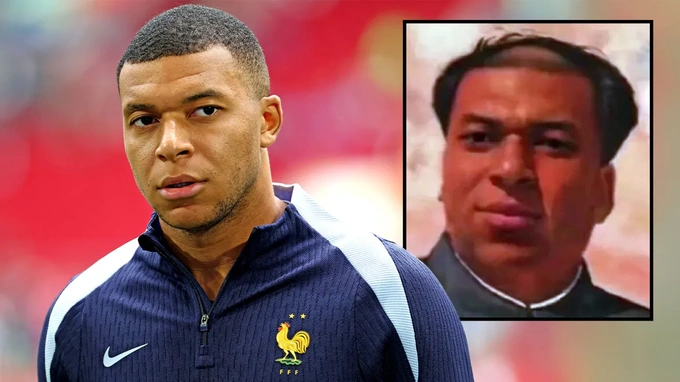
Kylian Mbappe found himself at the center of a major conflict with China after a short video spread online in which he humorously comments on a meme showing his face superimposed onto a portrait of Mao Zedong. According to Gazeta.uz, the recording appears to have been made before an episode of The Bridge, co-founded by his Real Madrid and France teammate Aurelien Tchouameni: a makeup artist works on the footballer while he answers questions about his favorite memes. Asked which meme featuring him made him laugh the most, Mbappe replied that someone had made a video of 'one man — if I'm not mistaken, a Chinese dictator' with his face, adding that he often uses it when playing PlayStation with friends. Mao himself was not named in the recording, but the video then shows an edited portrait of the Chinese leader with Mbappe's face.
China's reaction: sponsors, television and the association
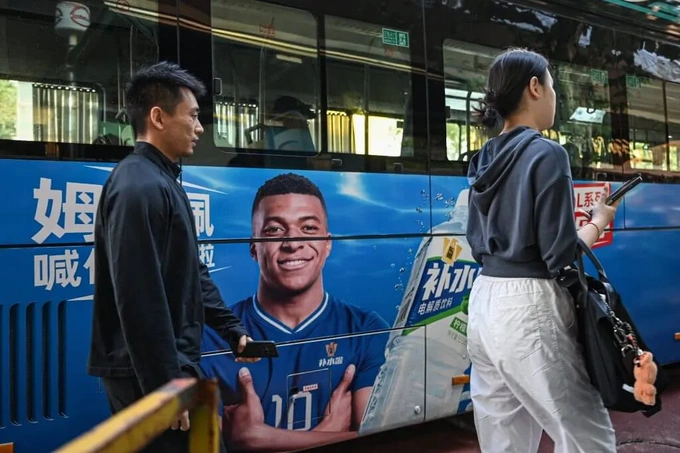
The video clip first surfaced on a football forum at the beginning of this week, after which attention to it in China grew rapidly. According to Gazeta.uz, dairy giant Mengniu and beverage maker Dongpeng announced they were ending their cooperation with the footballer, while the Chinese outlet The Paper and state broadcaster CCTV said they would stop airing matches featuring Mbappe. The Chinese Football Association publicly demanded that Real Madrid apologize. The 27-year-old striker himself issued an official statement: he admitted he had 'spoken without thinking' and said his words had 'deeply hurt many people in China and in Chinese communities around the world,' adding that he 'deeply respects the Chinese people and their history.' La Liga president Javier Tebas and the league itself also apologized to 'the Chinese people' and said they were working with partners and official bodies in China to resolve the situation.
Why the topic of Mao is sensitive in China
Mao Zedong, who died in 1976 at the age of 82, founded the People's Republic of China in 1949, but his legacy is controversial: the 'Great Leap Forward' of 1958–1962 led to a famine that claimed tens of millions of lives, while the Cultural Revolution was accompanied by violence and a cult of personality. Journalist Cameron Wilson, who has lived in China for more than 20 years, explained in a comment to The Athletic that the Communist Party fiercely guards Mao's memory: his portrait still appears on banknotes, and criticism or even an impression of disrespect toward leaders is socially and politically taboo in China — for some Chinese, criticism of Mao is perceived as criticism of the country itself. According to him, the reaction to Mbappe's words was partly 'performative outrage,' since political correctness is a strong motivating factor, especially for organizations connected to the person at the center of the scandal.
Precedents and possible consequences
Mbappe is not the first well-known athlete to face such a reaction from China: in 2019, Mesut Ozil criticized Beijing for its treatment of Muslim Uyghurs, after which Arsenal matches disappeared from Chinese TV schedules and China's Foreign Ministry accused him of spreading 'fake news'; that same year, Houston Rockets general manager Daryl Morey reportedly cost the NBA millions of dollars in revenue with a tweet supporting Hong Kong protesters. Simon Chadwick, a professor at EM Lyon Business School, warned in an interview with The Athletic that the 'chain reaction' could have serious consequences: Mbappe recently signed a major contract with the brand On, which sees China as a key market, Real Madrid is developing a network of football schools in the country, and the Chinese market matters to La Liga — according to Chadwick, there is talk that state broadcasters may not air certain league matches. The footballer himself had previously acknowledged the duality of these memes: in an interview with France Football he said that comparisons with dictators like Stalin are partly amusing in their naivety, but 'not that funny,' because people to whom the deaths and suffering of millions are attributed are not a subject for jokes.