The key facts
- The IMF forecast for 2026 covers 103 countries
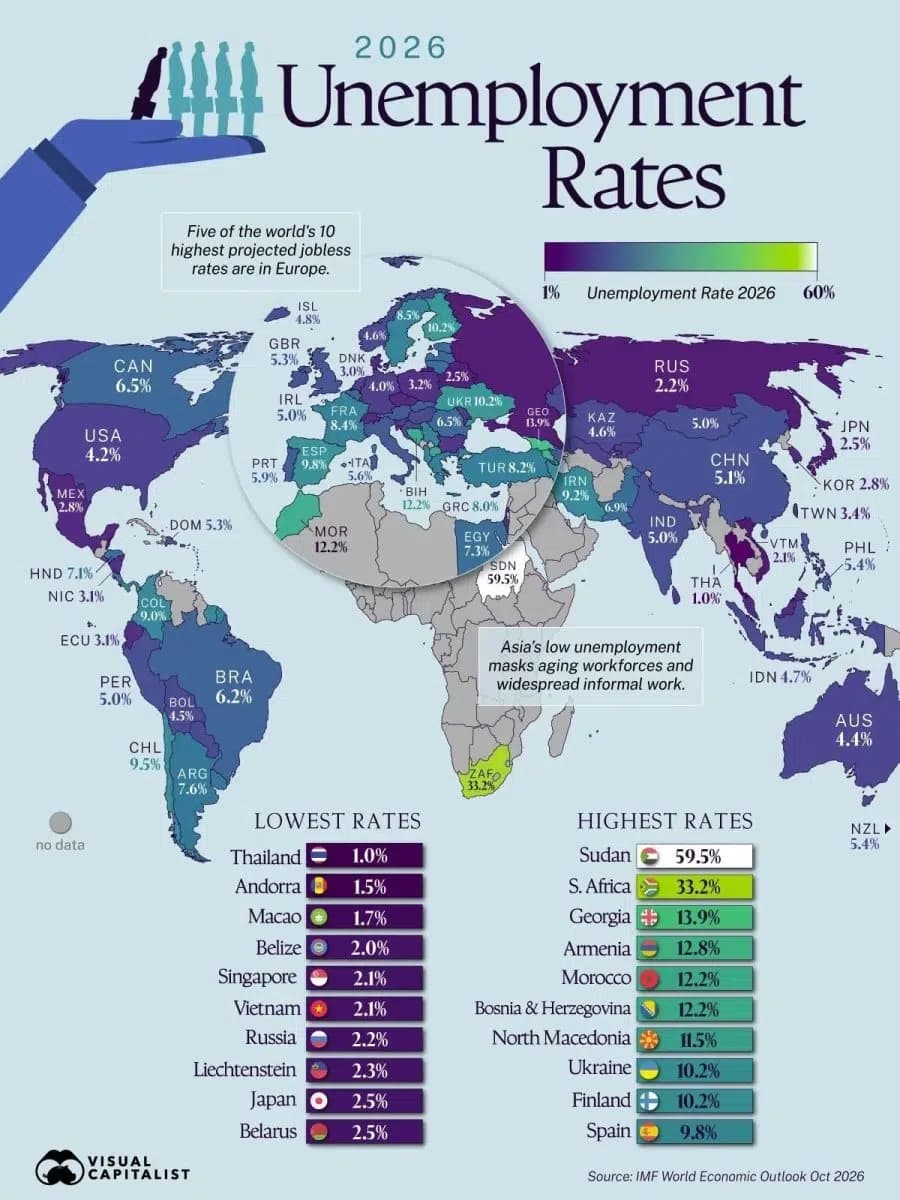
- Sudan — 59.5%, South Africa — 33.2%, Finland — 10.2%, France — 8.4%, Germany — 4%
- In the US, employed people keep their jobs, but finding new work is becoming harder
IMF forecast for 103 countries
The Visual Capitalist portal has published an infographic with unemployment rate forecasts for 2026 covering 103 countries. The data comes from the October edition of the IMF's World Economic Outlook report, prepared on the basis of the fund's database. The authors of the map note that the spread of figures between countries is linked to the pace of economic growth, the demographic situation, and the specifics of national labor markets.
The highest figures
The highest unemployment is expected in Sudan — 59.5%; the analysis attributes this to the severe damage the prolonged conflict has inflicted on the economy. South Africa ranks second with a forecast of 33.2%, where long-standing structural problems in the labor market prevent millions of people from finding work.
Developed countries: a wide spread within Europe
Unemployment remains a notable problem in developed economies as well, and the differences within Europe are large. Finland is forecast at 10.2% for 2026 — more than three times higher than Poland (3.2%). According to Kun.uz, Finland's labor market is affected by weak domestic demand and a prolonged downturn in construction, which limit the hiring of new staff. In France, unemployment is forecast at 8.4%, and in Germany at 4%, although difficulties persist in German industry as well.
The US and countries with low unemployment
The picture in the US labor market is different: activity is low both in hiring new staff and in layoffs. There are no mass layoffs, but finding a new job is becoming increasingly difficult — those employed keep their positions, while opportunities for job seekers are narrowing. The group of countries with low official unemployment includes Thailand, Vietnam, Japan, and Russia; China and India also have relatively low overall figures.