The key facts
- Over the past ten days, about three thousand Russians suffered tick bites — data from the Telegram channel SHOT
- In the Ryazan region, 74 people sought help in a week, in the Kursk region 70, in the Pskov and Volgograd regions 11 and 7 respectively
- In the Pskov region, causative agents of borreliosis (Lyme disease) were found in 4 out of 10 examined ticks
The tick season is not over
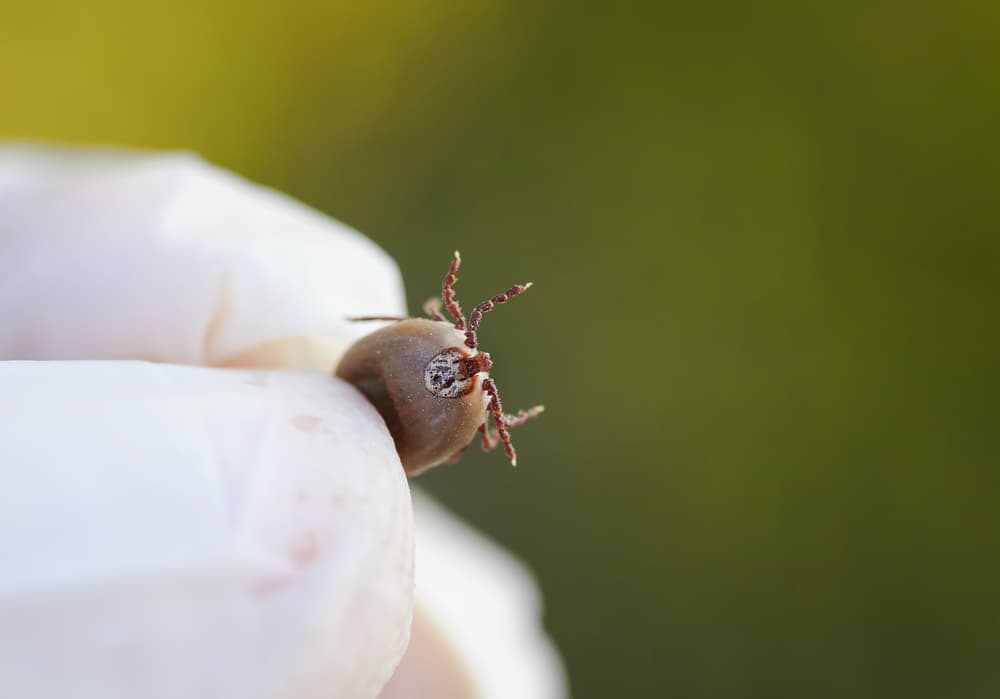
An abnormally warm autumn is not letting the tick season end in Russia: the parasites remain active even on the eve of November. According to the Telegram channel SHOT, which Life.ru cites, about three thousand people have suffered tick bites over the past ten days. Gazeta.Ru addsthat ticks attack not only in forests but also in country plots, city parks and the courtyards of residential buildings.
Regional statistics
The regional figures in the publications largely match but differ in details. According to SHOT, in the Ryazan region 74 people, including 18 children, sought medical help after bites during one of the October weeks; in the Kursk region there were 70 visits during the preceding week. Gazeta.Ru cites the same 74 and 70 people for the last week, but states that in the Kursk region there were 23 children — a detail absent from Life.ru's retelling. In the Pskov region, 11 people were affected from October 12 to 18, including five children, and from October 19 to 25 another eight residents, two of them children; Gazeta.Ru mentions only 11 bite victims for the week. Seven tick bite cases were registered in the Volgograd region.
Infected ticks and the second wave of nymphs
The danger is not limited to bites: the Pskov Regional Infectious Diseases Hospital reported that when ten ticks received by the laboratory from October 12 to 18 were examined, four were found to carry the causative agents of borreliosis (Lyme disease). At the same time, as Life.ru notes, such a small sample does not allow conclusions about the share of infected parasites across the entire region. Gazeta.Ru recalls the particular danger of the second wave of nano-ticks reported in late September: hungry nymphs the size of a poppy seed are active in autumn and practically invisible.
Experts' forecasts and recommendations
Experts warn that ticks will keep hunting until sustained cold sets in. Earlier, according to Life.ru, virologist Georgy Vikulov warned about the expansion of ticks' habitat range: they can now be encountered even outside areas traditionally considered dangerous. Ecologist Yaroslav Volpin suggested that, due to temperature swings, ticks in Central Russia may remain active even in winter — during thaws the parasites are able to come out of dormancy. Until sustained cold sets in, after spending time outdoors it is recommended to check clothing, the body and pets, choose covering clothing and use protective products, and seek medical help if a parasite attaches.