The key facts
- COP17 talks in Yerevan are going into overtime; the 'global review' was not adopted on time
- The world spends roughly $700 billion a year less than needed to restore ecosystems
- The Cali Fund has raised about $10,000 against a $1 billion-a-year target
Summit on the brink of the deadline
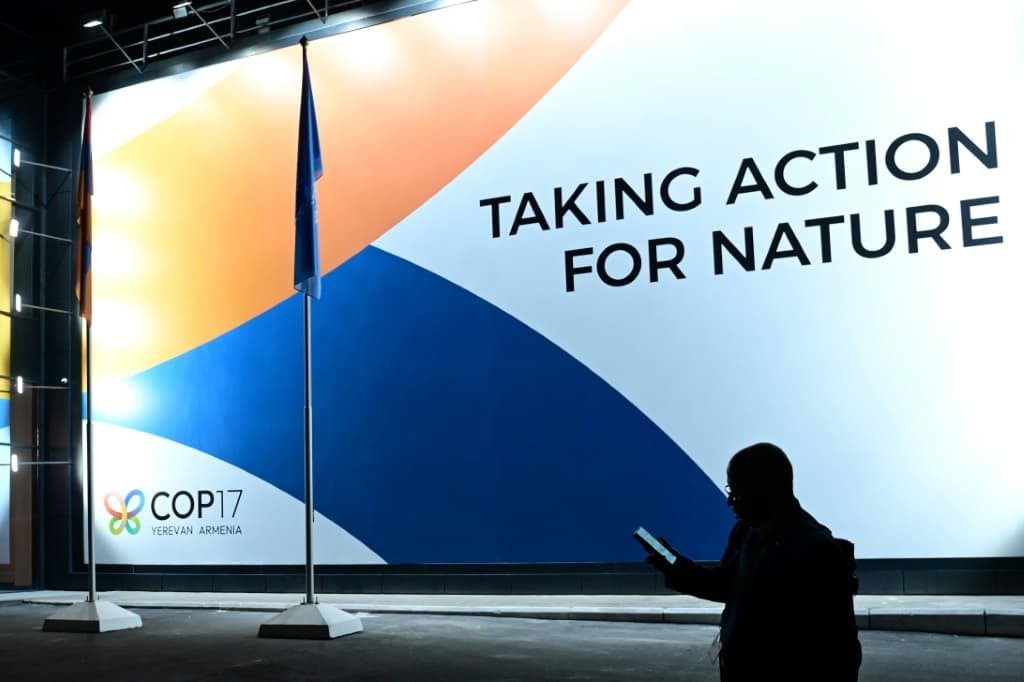
Talks at the UN biodiversity summit COP17 in Yerevan went into overtime on Friday: nearly two weeks of discussions failed to resolve key disagreements between countries on how to save the global agreement on restoring nature. Before the summit, the UN warned that the world would miss the 2030 goal — to halt and reverse the destruction of nature — unless countries urgently changed course. The observer from WWF International Guido Broekhoven noted that delegations were 'working very hard', but a number of key issues remain unresolved.
Money and subsidies are the main sticking points
The central dispute concerns wording on subsidy reform: the commitment to cut government spending on activities harmful to nature, such as fossil fuels, is virtually not being met. The second conflict is the search for new sources of funding for nature protection: it is estimated that the world needs roughly $700 billion more per year than is currently spent to restore ecosystems, save endangered species, and preserve forests and wetlands. The European Union is pushing for wealthy developing economies such as China to contribute to global conservation efforts, but those talks have stalled; Broekhoven predicted there would be no consensus on this issue at the summit. The problem is exacerbated by strained public budgets amid the energy crisis and the conflicts in Ukraine and the Middle East.
Cali Fund and scientific reports
No progress was made either on finalizing the Cali Fund — a UN mechanism for distributing the profits of corporations that use genetic data from plants and other organisms. The fund, launched in early 2025 with the aim of raising $1 billion a year for nature protection in developing countries, has so far attracted only about $10,000. In addition, several countries were accused of blocking the adoption of key scientific reports by the UN-supported biodiversity body.
Context and what comes next
In 2022, nearly 200 countries adopted a historic pact to halt biodiversity loss with ambitious goals for 2030, but most of them are not being met — including protecting 30% of land and oceans, fighting pollution, and increasing conservation funding for poor countries. At the previous summit in Colombia in 2024, funding talks also dragged on and ended without a deal; an agreement was reached only at resumed talks in Rome in early 2025. In Yerevan, about 70 ministers joined the negotiations, but major decisions are expected only in the final hours of the summit. Broekhoven noted that the COP17 presidency is striving for a conclusion, but there is a risk that this will come at the cost of reduced ambition. On Friday, a decision is also expected on which country — Panama or Ecuador — will host the next biodiversity summit in 2028.