The key facts
- A drone struck the platform of the Dnipro railway station, where people were waiting for a regional train to Zaporizhzhia; DW, citing Zelensky, reported 14 killed, while euronews and AFP reported 13.
- A drone struck the platform of the Dnipro railway station, where people were waiting for a regional train to Zaporizhzhia; DW, citing Zelensky, reported 14 dead, while euronews and AFP reported 13.
- Air defenses intercepted three drones, while a fourth broke through, Ukraine's Air Force said.
- Zelensky linked the strike to the recent Trump-Putin deal easing part of the sanctions; EU leaders condemned the attack.
- Zelensky linked the strike to the recent Trump–Putin deal easing part of the sanctions; EU leaders condemned the attack.
Attack on a platform crowded with waiting passengers
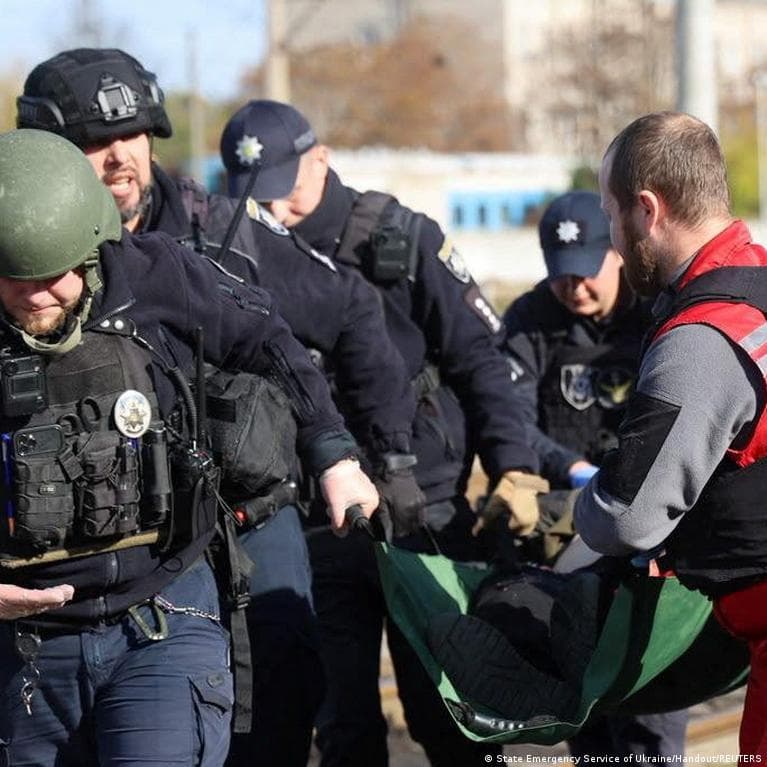
On Thursday morning, October 29, 2026, a jet-powered drone struck the platform of the Dnipro railway station, where people were waiting to board a regional train to Zaporizhzhia. According to Ukraine's state railway company, despite an announced elevated threat warning, many people remained on the platform. The head of the railway operator, Oleksandr Pertsovskyi , wrote on Facebook that the threat level had been raised in advance, but that 'unfortunately, there were still a large number of people on the platform.'
Casualty figures: discrepancies between outlets
Reports on the death toll differ. Deutsche Welle initially reported 13 killed and five wounded, and later, citing President Volodymyr Zelensky, wrote of 14 killed. euronews quoted the head of Dnipropetrovsk region, Oleksandr Hanzha, as saying 13 people were killed and at least five wounded, while Ukraine's national police put the number of casualties at no fewer than 10. AFP also reported 'at least 13' dead. Ukraine's Air Force said it intercepted three drones during the daytime attack, but a fourth managed to break through the defenses and hit the station. The mayor of Dnipro, Borys Filatov, confirmed the incident, calling it a 'tragedy.' Russia gave no comment at the time of publication.
Reaction from Kyiv and European leaders
Zelensky called the strike 'horrifying' and demanded international action from allies. 'Sanctions against Moscow and its military machine must not be weakened while this Russian war continues,' he said, asking 'how many such terrorist strikes Russia has carried out against our people since sanctions were lifted from some Russian oligarchs and the energy sector.' He was reacting to a deal concluded earlier this month between US President Donald Trump and Russian President Vladimir Putin: it eased part of the sanctions and allowed Russia to supply diesel fuel to world markets. Ukraine's Prime Minister Serhiy Koretsky said that 'Russia is deliberately hunting civilians: on trains, at stations, in residential buildings.'
The EU's position and the negotiation context
European Council President António Costa called the strikes 'cruel and devastating' and pledged that the EU would continue to increase pressure on Russia. The EU's top diplomat, Kaja Kallas , wrote that the strike 'once again proves that Moscow is not interested in peace,' and said she would raise the topic of support for Ukraine at the EU–Canada summit and the meeting of G20 foreign ministers in Atlanta. French President Emmanuel Macron expressed 'deep concern' and said the goal must be 'far more than a localized ceasefire — like the one recently agreed for Aleshky,' calling Moscow's rejection of all such proposals unacceptable. Poland's Foreign Ministry called the attack 'terror against civilians and a flagrant violation of international law.' According to AFP, the local ceasefire in occupied Aleshky — whose evacuation Zelensky had described as a 'huge success' — held for a third day, and Ukrainian ombudsman Dmytro Lubinets headed there with a delegation via Belarus and Russia. Zelensky previously said that in November Ukraine, the US and Russia plan to hold trilateral talks on resuming the peace process, although no exact dates have been named; the Kremlin, according to AFP, promised this week not to slow the pace of the war.
Strikes on the railway and other attacks the same day
The attack on the Dnipro railway station fits into the ongoing campaign of strikes against Ukraine's railways: according to DW, Russia has been targeting trains and stations since the first days of the full-scale invasion in February 2022, destroying hundreds of locomotives. In September alone, according to the railway operator speaking to AFP, passengers had to be evacuated from more than 5,800 trains due to the threat of strikes, mostly in the frontline Odesa, Dnipropetrovsk and Zaporizhzhia regions. When a threat is detected, the train stops and passengers leave the carriages. Railways remain the country's key mode of transport, as commercial aviation does not operate because of the war. That same Thursday, Ukrainian authorities reported at least five more people killed in other attacks: a strike on the center of Chernihiv killed two 15-year-old girls and wounded more than a dozen people, while a drone hit a multi-story residential building in Kremenchuk, where two people died, including a six-year-old child who was injured. That same night, according to Moscow Mayor Sergei Sobyanin, 613 Ukrainian drones were flying toward the Moscow region, most of which, he claimed, were shot down; this happened against the backdrop of the Russia–Africa summit taking place in Moscow.