The key facts
- The Ustyurt field has not been discovered, the project is at the geological exploration stage; the first well is planned for next year
- Seismic exploration has been carried out over more than 3,000 sq. km; prospects are linked to a depth of about 5,000 meters
- Stakes: BP — 40%, Uzbekneftegaz and SOCAR — 30% each
The field has not yet been discovered
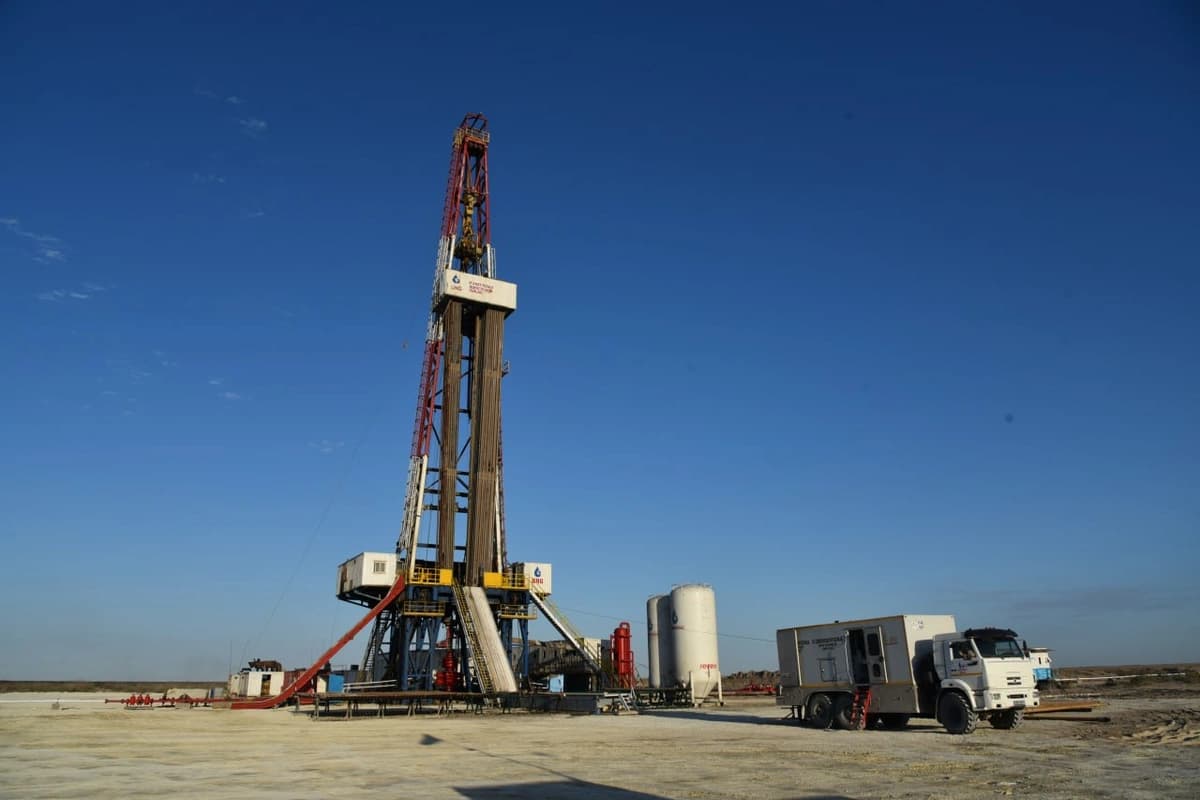
The field on the Ustyurt plateau, being jointly developed by Uzbekneftegaz, Azerbaijan's SOCAR and Britain's BP, has not yet been discovered — the project is still at the geological exploration stage. This was announced on October 27 at a press conference by Nodir Mukhiddinov, chief geologist of Uzbekneftegaz, reports Spot.uz. According to him, drilling of the first well is planned for next year, after which the reserve potential and production prospects can be assessed.
What has been done and what lies ahead
Seismic exploration has been carried out over an area of more than 3,000 sq. km, and specialists are re-analyzing the data obtained. According to SOCAR and BP estimates, the project's prospects are linked to the possible discovery of fields at a depth of about 5,000 meters.
Ustyurt as a key direction and deep horizons
Uzbekneftegaz generally views the Ustyurt region as a key direction for discovering new reserves and increasing gas production. The company is working on deep horizons — more than 5,000 meters instead of the usual 3–3.5 thousand meters. This significantly complicates drilling and raises costs: pressure can reach 1,000 atmospheres and temperature 200 degrees; only a limited number of companies in the world produce equipment for such conditions.
Project context
The project to develop the oil and gas resources of Ustyurt involves Uzbekneftegaz and SOCAR with 30% stakes each, while BP holds 40%. In August Azerbaijani President Ilham Aliyev statedthat the parties expect to begin drilling production wells in 2027 — after receiving the results of exploratory drilling and other geological exploration work. Thus, Uzbekneftegaz's clarification sets a more cautious framework: before exploratory drilling, it is premature to speak of a field discovery and its reserves. Spot previously wrotethat new fields will not compensate for the decline in gas production at old ones — against this backdrop, the results of drilling the first well will become an important test of the hopes the company pins on Ustyurt.