The key facts
- Contra includes two missiles: the Inferno (up to 700 km/h, 20 km) and the Ambush (about 3000 km/h) for intercepting drones that break through
- The system targets Geran-4 and Geran-5 drones flying at 400–700 km/h
- The market launch is planned for the second half of 2027; the system is currently being tested
Two missiles instead of one expensive one
The German defense company Helsing has unveiled the Contra drone interception system, whose task is to reduce the cost of destroying relatively cheap drones with missiles worth several million dollars. This was reported by Kun.uz citing a presentation for journalists; further details were also provided by the outlet Defense News.
System composition and specifications
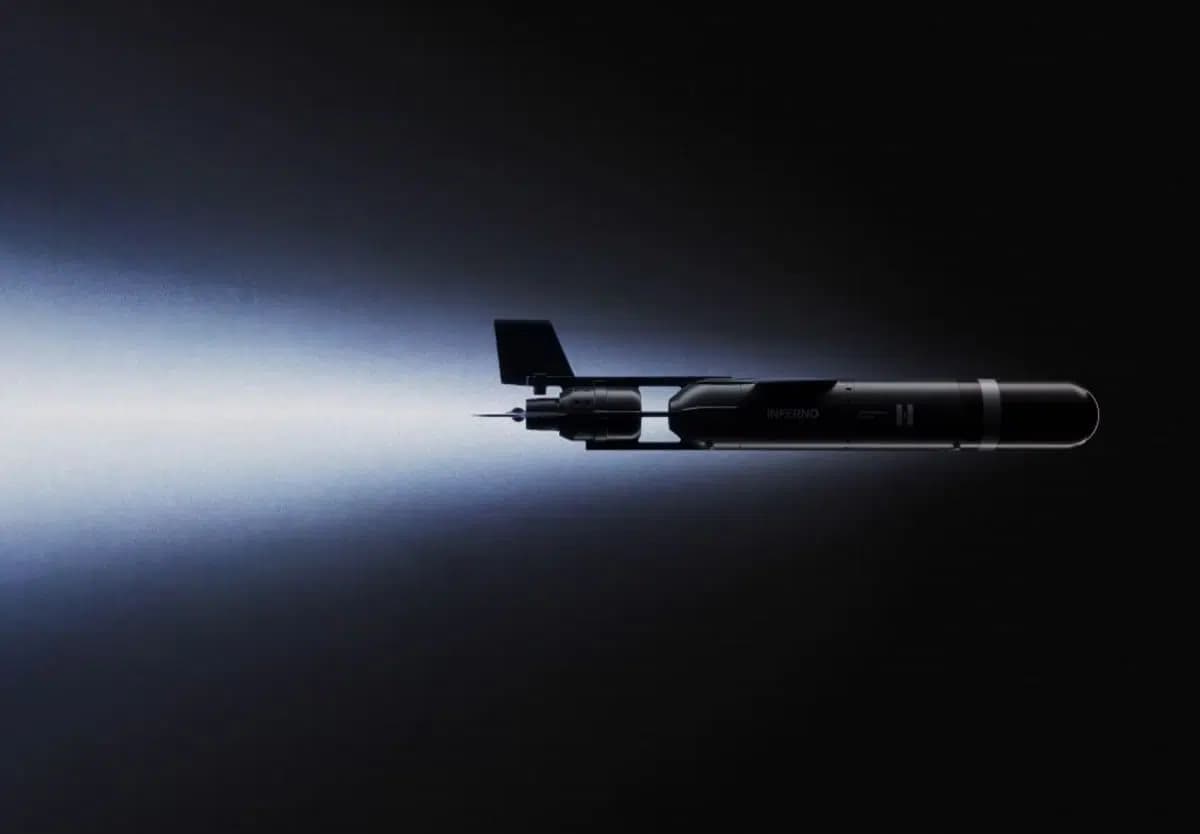
Contra includes two interceptor missiles that complement each other. The AD-1 Inferno, with a jet engine, reaches speeds of up to 700 km/h and operates at a range of 20 kilometers, according to the developer; the company sees it as the primary means against most air threats except the most difficult targets. The AD-2 Ambush, with a solid-fuel rocket motor, flies at about 3000 km/h and is designed for the rapid interception of drones that have broken through the main defense lines. Target acquisition coordination is handled by artificial intelligence-based software.
Focus on the new Gerans and mass production
According to the company, the missiles were designed with the changes in strike drones that Russia is using in its war against Ukraine in mind. The system is aimed primarily at Geran-4 and Geran-5 type drones, which, according to available information, fly at 400–700 km/h and are increasingly close to cruise missiles in their characteristics.
Production and timeline
The missiles' active radar seekers, according to Helsing representatives, are assembled from widely available commercial components — this is expected to simplify the deployment of large-scale production. The company's leadership emphasized that this approach should reduce dependence on China-linked supply chains and help circumvent difficulties associated with US export restrictions.
What is confirmed and what is not
The system is currently undergoing testing, and its market launch is planned for the second half of 2027 — Helsing CEO Gundbert Scherf told journalists at the presentation. It is important to note that the stated specifications and price are so far estimates from the developer itself and have not been confirmed by independent testing; the publications did not report on the results of the current tests.