The key facts
- Georges-Louis Bouchez (MR), in an interview with Anadolu in Ankara, called on Europe to carry out economic and political reforms to preserve its standard of living
- Georges-Louis Bouchez (MR), in an interview with Anadolu in Ankara, called on Europe to pursue economic and political reforms to preserve its standard of living
- He proposed a 'win-win' deal with Turkey: visas, access to the common market, investment, defense and the fight against terrorism
- Trump's policy was called a 'wake-up call' for Europe's sovereignty; Bouchez proposed a 'third way' between the US and China
- Trump's policies were called a 'wake-up call' for Europe's sovereignty; Bouchez proposed a 'third way' between the US and China
Interview in Ankara: reforms for the sake of living standards
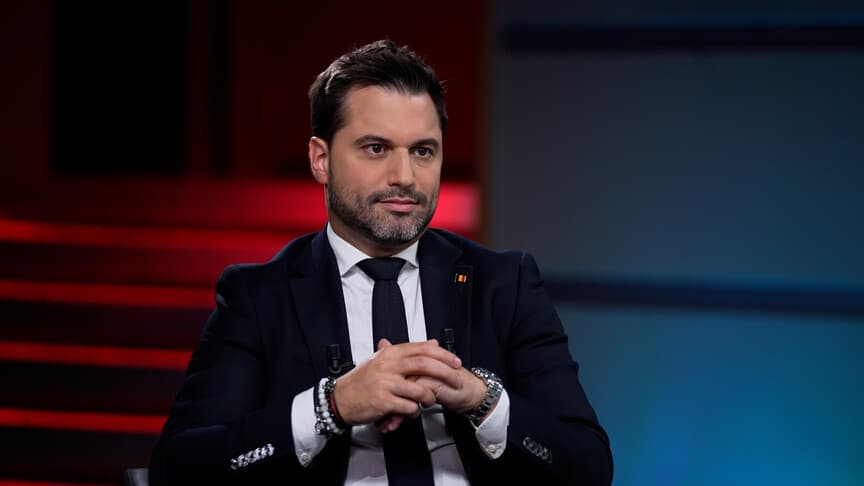
Georges-Louis Bouchez, chairman of the French-speaking Belgian Reformist Movement (MR), during a visit to Ankara gave an interview to the Anadolu Agency, in which he linked the future of the European standard of living to politicians' readiness to make unpopular decisions. In his words, the gap between theory and practice is a matter of courage: many acknowledge the need for reforms but hesitate before difficult decisions. He stated that lowering taxes would require a revision of public spending, including social protection, which, in his assessment, 'spends too much money with insufficient results.' Bouchez emphasized that Europeans must be ready for short-term sacrifices in order to preserve healthcare, education and public services, and that politicians must explain not only which reforms are needed but also why.
Criticism of protests and politicians
Touching on the unrest in France, Bouchez condemned violence during protests, stating that attacks on public infrastructure and businesses admit no justification. He also accused political leaders of excessive concern with popularity: 'Being popular all the time is not necessary. What matters is being serious.' Despite the difficulties, he believes Europe is capable of remaining a world leader in quality of life if governments dare to carry out reforms.
A pragmatic partnership with Turkey
In Turkey–Europe relations, Bouchez proposed a pragmatic approach based on shared economic and security interests. 'What matters now is to strike a deal beneficial to both sides,' he said, naming the visa issue as key for Turkey alongside access to the European common market. In his view, Turkish business could play an important role in strengthening Europe's industrial capacity, and the areas for new agreements are trade, investment, security, the fight against terrorism and defense. He called the Belgian Turkish diaspora a bridge between the two countries. Bouchez also mentioned Queen Mathilde's economic mission and the example of a Turkish industrial company looking for a site in Belgium, stressing that diplomatic contacts need constant follow-up and concrete projects.
A 'third way' between the US and China
Against the backdrop of competition between Washington and Beijing, Bouchez called on Europe to develop its own strategy: a 'third way' — EU relations with special partners such as Turkey. He noted that industry's share of Europe's GDP has been declining for about two decades and proposed priority economic partnerships with Turkey and African countries. Without a more independent approach, he warned, Europe risks becoming a passive observer of the rivalry between the two largest economies. He characterized Donald Trump's policy as a 'wake-up call' for European sovereignty: for about twenty years the US has been shifting its strategic focus to China, and Europe has not adapted. While remaining an ally, Washington, in Bouchez's view, does not remove the need for Europe's independence in energy, defense and industry; he defended nuclear energy for countries like Belgium that lack their own oil and gas, and cited the war in Ukraine and dependence on American communication systems, including Elon Musk's Starlink, as evidence of insufficient domestic capabilities.
Defense and competitiveness
Within NATO, Bouchez described Turkey's presence as a major advantage, pointing to its geographic position, diplomatic ties and growing defense industry; as an example of existing links he cited the cooperation between Belgium's John Cockerill and Turkey's FNSS. Joint military projects, in his view, would improve interoperability and the coordination of allies' defense spending. At the same time, he criticized excessive taxation, regulation and high energy costs in Europe, which, he said, are driving industrial investment toward China and the United States, and he called for faster decision-making and a more competitive investment environment. He described artificial intelligence as a major opportunity for industry, while warning that investment must be scaled up significantly. In closing, Bouchez portrayed Turkey as a dynamic country with a young population at the crossroads of Europe and the Middle East. It should be noted that this is the view of one opposition politician, not the position of the Belgian government or the EU.